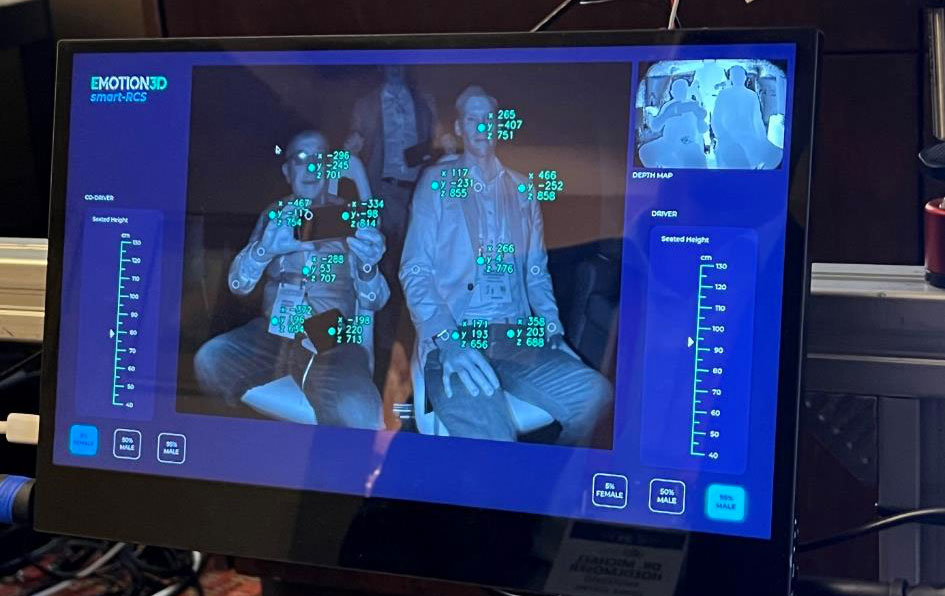
Driver Monitoring Systems – DMS – are a legal requirement for new vehicles in Europe by 2026. According to the EU’s General Safety Regulation (GSR), all new vehicle types must incorporate an advanced driver distraction warning (ADDW) system starting from mid-2024, and this requirement will extend to all new vehicles from 7 July, 2026. This means by that year, every new car sold in Europe must be equipped with a DMS to detect driver distraction and drowsiness, ensuring compliance with both regulatory and Euro NCAP safety standards.
DMS is on the docket of the upcoming DVN Interior workshop in Shanghai on 29 – 30 October, including a Smart Eye lecture. It’ll be a perfect opportunity to catch up on the latest news and developments! To get ready, let’s look at a few numbers:
Drowsiness and distraction contributed to about 4,000 fatal crashes in the U.S. in 2023. DMS is seen as a proactive solution to mitigate these risks, according to the US Insurance Institute for Highway Safety.
Subaru DriverFocus (video) was developed to work in conjunction with Subaru’s EyeSight system to prevent drivers becoming distracted or drowsy. It is a system of dual color cameras and sensors that monitors traffic, optimizes cruise control, and warns of potential dangers. 90 per cent of surveyed Subaru owners use the DMS most or all of the time, with 70 per cent wanting it in their next vehicle. 63 per cent of those whose car has the Subaru DriverFocus System said it helps avoid distractions like adjusting controls or using navigation (though this does reiterate the question we raised last week about whether drivers should really be forced to accept distracting in-car controls.
In terms of regulatory requirements and non-governmental vehicle-rating criteria (e.g., Euro NCAP):

DMS must detect a wide range of behaviors: distraction (phone use, cognitive diversion), impairment (alcohol/drugs), and unresponsiveness. New requirements include child presence detection, smart seatbelt monitoring, and adaptive-airbag adjustment. In general, new updates promote DMS as a key technology for the many possible applications in safety and comfort.
DMS affects a vehicle’s Euro NCAP rating. Only vehicles that can reliably detect this wide range of behaviors and distractions will earn full points. Direct systems (eye and head movement detection) are required, which detect:
- phone use, such as holding, interacting, or looking at it
- whether the driver is cognitively distracted, looking away from the road
- impairment, such as from alcohol or drugs.
- if the driver is unresponsive and take the necessary steps to stop driving.
Child Presence Detection is now mandatory for top ratings, with direct detection (movement, breathing, heartbeat) and active countermeasures. As for smart seatbelt monitoring, checking that seat belts are worn correctly; incorrect use (seatbelt buckle only, completely behind the back, lap belt only) lowers the rating. Automatic airbag adaptation adjusts airbags to occupant size, position, and posture, detect unsafe seating, and deactivate airbags for rear-facing child seats.
In total, vehicles must balance safety with drivability and user experience.
New Developments
DMS now uses in-cabin cameras and AI to track driver attention, eye movements, and facial expressions. These systems can detect distraction, drowsiness, or health issues in real time, and issue alerts or intervene if necessary. Some advanced systems can process driver and passenger behavior at a more advanced level, potentially improving both safety and user experience.
Next, let’s look at what some suppliers are doing:
Seeing Machines
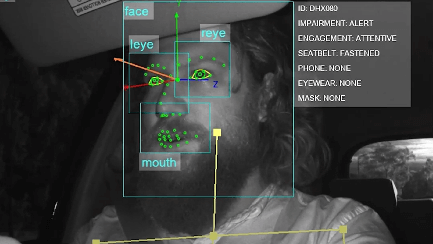
Seeing Machines’ new DMS can detect blood alcohol content) as low as 0.05, targeting the high-risk 0.10+ range. NHTSA statistics show that 67 per cent of alcohol-impaired fatalities included at least one driver with a BAC of .15 or higher. This same system allows the driver to operate hands-free, already detecting distraction and drowsiness. This aligns with EU NCAP 2026 standards and U.S. policy discussions.
In 2024, Seeing Machines submitted a plan as part of NHTSA’s Advanced Notice of Proposed Rulemaking for advanced alcohol detection. The plan suggested a phased roadmap for DMS adoption:
Stage 1: alert the driver to indicate that the system believes he/she is impaired; encourage driver to pull over.
Stage 2: vehicle safety systems be alerted to the presence of driver impairment and would become more visible, robust and intentional.
Stage 3: the vehicle takes more aggressive action by limiting infotainment capability and entering a ‘limp-home’ mode, which also limits speed, a major factor in drunk driving deaths.
Seeing Machines’ Guardian Gen 3 is deployed in Savannah Transport’s fleets via Mitsubishi Electric, demonstrating rapid adoption and scalability. Guardian Gen 3 leverages Seeing Machines’ automotive grade technology with refined microsleep detection and eye-gaze tracking
Tobii

Tobii, headquartered in Sweden, has an industry-first in-cabin sensing software platform to combine driver monitoring (DMS) and occupant monitoring (OMS) from a single camera. It is now entering mass production with a European premium automaker.
Smart Eye
In January 2025, Smart Eye partnered with risk analytics firm Greater Than to study the link between eye movements, distraction alerts, and crash risk. The collaboration leverages Smart Eye’s AIS DMS platform to collect behavioral data and enhance predictive safety algorithms for OEM and commercial fleet applications.
Technology updates

New DMS platforms leverage advanced AI and machine learning to analyze driver behavior more accurately, including eye tracking, facial recognition, and even health monitoring (e.g., detecting fatigue, stress, or impairment). These systems can now process data from multiple sensors (cameras, NIR, biometrics) to provide a holistic view of the driver’s state. For example, Mobileye, and systems like Ford’s BlueCruise and GM’s Super Cruise, use infrared cameras to ensure drivers remain attentive, even when the car is handling most driving tasks. If the driver is not paying attention, the system can slow down the car or issue warnings.
Companies like Mobileye are fusing in-cabin DMS data with real-time road information from ADAS cameras for contextual awareness, enabling the system to distinguish between normal and risky behaviors with greater precision.New DMS cameras and sensors are becoming smaller and more discreet. For example, Queclink Wireless Solutions launched a window-mounted DMS camera in 2025 that is half the size of previous models, making installation easier and less intrusive.
Advances in near-infrared (NIR) and image sensor technology ensure reliable performance in all lighting conditions, including night driving.
All in all, DMS is rapidly evolving from distraction/drowsiness detection to comprehensive impairment and occupant monitoring, driven by regulatory mandates (EU General Safety Regulation), non-governmental rating systems (Euro NCAP, for example) and consumer demand for safety. The integration of advanced technologies positions DMS as a cornerstone for increasing automotive safety, comfort, and automation.


