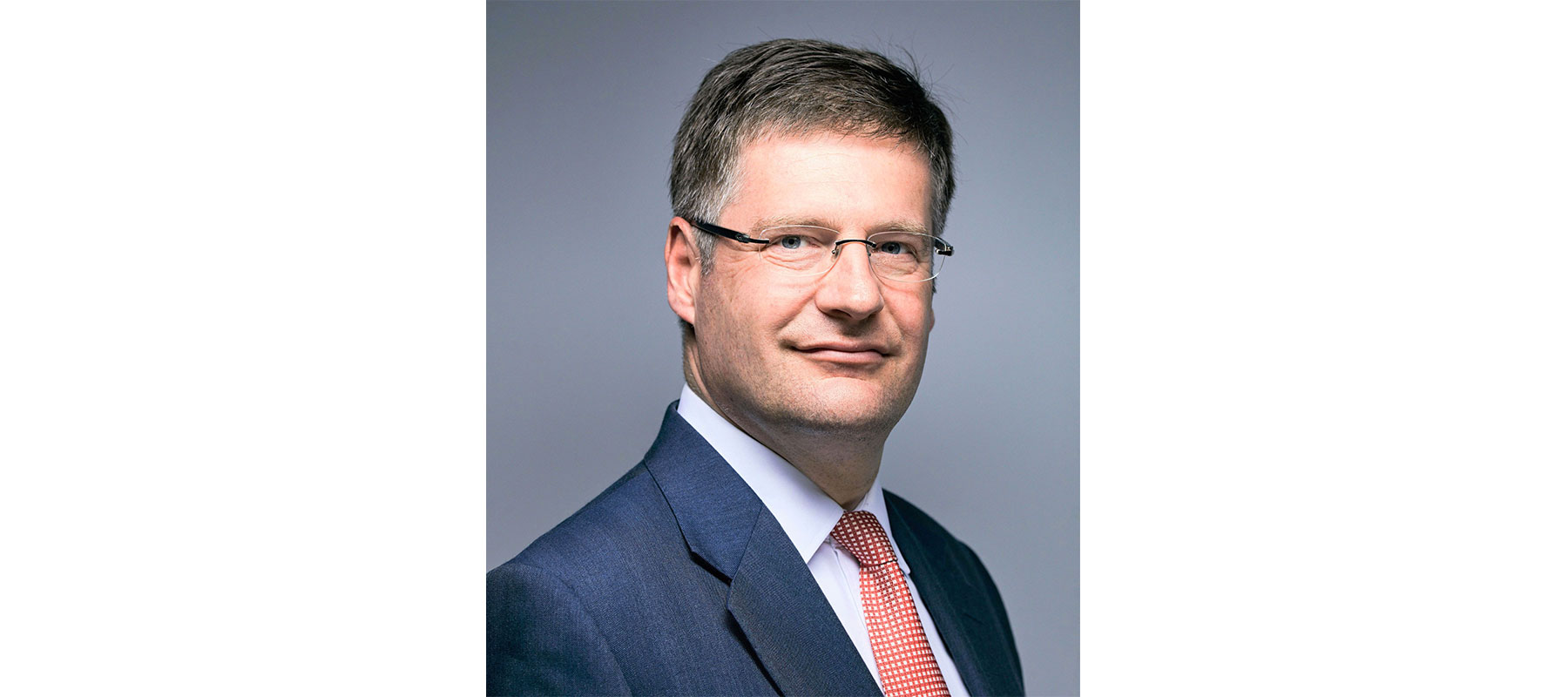
DVN had the privilege to talk recently with Axel Maschka,MobisExecutive VP in charge of global OE business. The scope of his responsibilities includes product planning; marketing; sales, and customer product and project management.
Maschka is majored in electrical engineering and holds a diploma from University of Stuttgart. His 30 years’ experience in the auto industry includes working at Valeo as senior VP of sales and business development and executive board member; at Volvo as Chief Purchasing Officer in the executive management team; at Continental as executive VP and CEO of engine systems; at Bosch as VP of marketing; business development; and Sales; at Booz Allen Hamilton as consultant and job manager, and at Daimler-Benz as aftermarket team leader and product manager. He joined Mobis in November 2020.
Mobis have been a fast-growing global automotive parts supplier for 45 years, since 1977. They are ranked № 6 in the field, with USD $34.8bn annual sales in 2021. Headquartered in Seoul, Korea, Mobis is providing automotive parts from 44 production sites, with five sales offices and five R&D centres globally. They’ve been in the lighting business since 1993, with six plants; five R&D centres, and four sales offices around the world.
DVN: Hi, Axel. What can you tell us about the scope of Mobis’ supply?
Axel Maschka: In addition to lighting, we are a tier-1 supplier for most of the core vehicle components, such as in-vehicle infotainment; ADAS; electric powertrain; chassis; safety (airbags and control units), and modules. All these components are manufactured worldwide with customer portfolio of more than 20.
DVN: What are your strengths in lighting?

A.M.: From styling to manufacturing production, lamp development and manufacturing are in progress. Since Mobis has business on peripheral lighting-related parts such as ADAS sensors and bumpers, we can create a synergistic effect in developing new lamp technologies. This is how we developed AADB—Advanced ADB which receives ADAS; steering wheel, and navigation data—and bumper-integrated grille lamps by co-working together with our ADAS and bumper teams respectively. We possess various slim technologies (down to 12mm-height ADB, shown here) that are being introduced into the market, hence the recent rapid growth in the lighting business.
DVN: and what are the challenges in lighting?
A.M.: Mobis’ portfolio was mainly focused on Asia and the market share in Europe was small. However, we are aggressively trying to enter the European market to increase the portion through active communication by designating a key account executive in charge of European OEs, including myself.

We have received a lot of orders from Europe recently and are focusing on them.
We have a sales force in Europe with over a hundred engineers at design and quality centres, and over a thousand employees at the Czech plant shown here.
DVN: After three troubled years due to the pandemic and other global drama, how do you see the short-term future of lighting activity?
A.M.: It was not easy to have face-to-face meetings with customers, and most of the exhibitions, conferences, and workshops were postponed or transformed into online events. We focused on developing digital contents for a while. We have created Mobis Connect, an online platform where you can stay up to date with Mobis newsletters, product movies, and much more.
We believe on- and offline events will coexist for some time, and we intend to continue creating digital contents and utilise them for such events. However, we strongly believe meeting directly with customers is more effective especially for lighting, where seeing the actual products to check the styling and performance is important. There is no doubt about that. Hence, this is the reason why we will participate [at the DVN Paris Workshop with an expo] booth for the first time to display our wonderful technologies.
DVN: What do you see as the main challenges for the lighting industry in the short term?

A.M.: One challenge is the need for integration of parts. As vehicle systems get more complicated and the number of components increases, the need for lighting-integrated bumper grille is emerging. To make a seamless front-end design, we are studying solutions to integrate the headlamps inside the bumper grille.
As a full-vehicle solution provider, Mobis can work very closely within the departments creating synergy. Our UTILe (United, Transformed, Interactive, Lighting) bumper system announced in DVN in April 2022, and our lenticular grille lamps shown here are some of the integrated solution examples.
DVN: How do you balance the competing demands on lighting development—better safety (more power) and lower CO2 emissions (less power)?
A.M.: This, I believe, is a topic we need to continuously ponder and solve along with our customers as this may involve quality or safety issues. Mobis, just like others, is committed to making a sustainable future and we have a goal of achieving net-zero emissions by 2045. Reducing the weight of parts or utilising recycled materials help reduce the CO2 level; however, it may incur other safety issues. So, we have already verified quality related issues in using recycled materials. Various tests such as leak and thermal have been performed, and we are attempting to use recycled materials on housings, which are non-æsthetic products. However, this is a topic we need to closely cope with customers.
DVN: ADB is the greatest innovation this decade. What can you tell us about Mobis’ involvement?
A.M.: Currently, we possess various ADB lineups from six segments to 104 pixels and 1.3 megapixels DMD, and 25.6-kilopixels is currently under development. Moreover, our new development of the AADB system allows the headlamps to have more accurate and precise ADB performance. Since our first matrix ADB on the Genesis G80 in 2020, we are actively developing matrix ADB lamps and many more are to come. As ADB has recently been legislated in the US, ADB lamp promotions are being actively conducted for North American OEs as well.
DVN: Many ADB technologies are currently competing for traction in the market. How do you foresee it shaking out?
A.M.: In the current market, matrix ADBs are already in mass-production Based on IHS market research data in 2022, the 9- to 40-segments ADB headlamp will account for 9.8 per cent of total headlamps in 2027. Among ADB, this seems to be the most favored number of segments. The ADB of 500 segments or more will be increased 7.5× in 2027 compared to 2022. In the future, HD microLEDs are expected to increase significantly; they will be in the market from this year with over 25.6 kilopixels. For the next five years, we will focus on microLED developments.
In the case of DMD, it is expected that it will not be popularised within five years, and it will be applied only to luxury vehicles in a very small volume.
DVN: What can lighting suppliers do to convince people to get ADB when they buy a vehicle?
A.M.: I had the same question when DRL was legislated. However, after several years, statistics have proven how important DRLs are and how they prevent accidents. ADB seems to be in the same situation. Drivers do not recognise the importance of ADB because ADB naturally does not work in cities where there are many streetlights and vehicles. However, when driving on a country road without streetlights or a quiet road without cars, ADB will be considered an essential element when you know that visibility is greatly increased.
DVN: Do you think there’s a realistic chance ADB could be mandated?
A.M.: Similar to the answer to the question above, it is essential for those who drive on roads where there are not many cars, such as country roads. If ADB is no longer a premium-oriented function and spreads to all vehicle segments, it will be recognised as an essential application function like DRL.
DVN: Laser technology is used for high beam boost and now for ADB scanning and communication. How do you see the future of laser-based vehicle lighting?
A.M.: Laser is a great technology that could be applied to specific technologies as mentioned. Its high intensity yet low thermal dissipation allows to have a compact package. The effect is expected to be greater if an appropriate optical scanning technology is applied. Mobis also reviewed this technology and confirmed its potential, but the laser-scanning requires a huge investment and there are still some technical limitations. We need to focus on HD microLED and DMD technologies for now.
DVN: What’s in Mobis’ playbook for functions like road projections; illuminated grilles and grilleboards and logos?
A.M.: As you will see at the Mobis booth at the DVN Paris Workshop, we have already completed the development of new technologies such as road projection and illuminated grilles. In the case of road projection for the front lighting, after we first introduced the DMD headlamp using a Xenon bulb in 2011, we have been studying various road surface functions using HD microLED with over 25.6 kilopixels and with DMD.

In the case of rear lighting road projection, backup guide lamps are scheduled to be mass-produced soon, and demand from [automakers] for similar rear road projection function application is expected to increase in the future.
Our illuminated grille was developed based on the hidden lamp concept which appears like a grille when it is unlit, but the lamp is visible when lit. It gave a strong impression on the vehicle.

Since then, various developments have been made, such as grilles using lenticular lenses; RGB LEDs, and many more. We own a full grille lighting lineup that can meet the various tastes of customers, from low prices to high prices.
DVN: How do you predict car lights will change in the next decade?
A.M.: Based on the IHS 2022 data, the lamp volume CAGR over the five-year period from 2022 to 2026 is 4 per cent with a modest growth. However, from a revenue perspective, high value-added lamps are expected to increase. In the midterm, headlamps and rear lamps will be developed into HD lighting and pixel lighting thanks to the development of Micro LED and mini-LED. In the long term, as purpose-built vehicles become popular, there will not be a distinction in head and rear lamps; they are likely to be ‘all-around lamp’ as a means of communication.
DVN: What do you think of sensor integration in car lights? Is there a future for it, as lights get slimmer and slimmer?
A.M.: In terms of the overall design of the car, the lamps mounted on both the front and rear corners are a very suitable place to hide the sensors. The hard-coated clear lenses protect sensors and there is a washing function to keep them clean. We have tested and verified sensor integrated lamps; however, there were several problems in terms of its performance—the lens curvatures; moisture on lens, and the relative high temperature inside the lamp cause low performance of camera and lidar sensors, and the surface treatments on bezel cause similar problem on radar sensors. On top of that, sensors need to be slim to fit in the slim design lamp. However, we will continue to review and find solutions.


