Hesai
Hesai Technology won a CES Innovation Award this year for their ultra-thin, long-range ET25 lidar.
Designed specifically for placement inside the vehicle’s cabin behind the windshield, the ET25’s ultra-thin form, low noise levels, and high performance are said to be significant advancements.
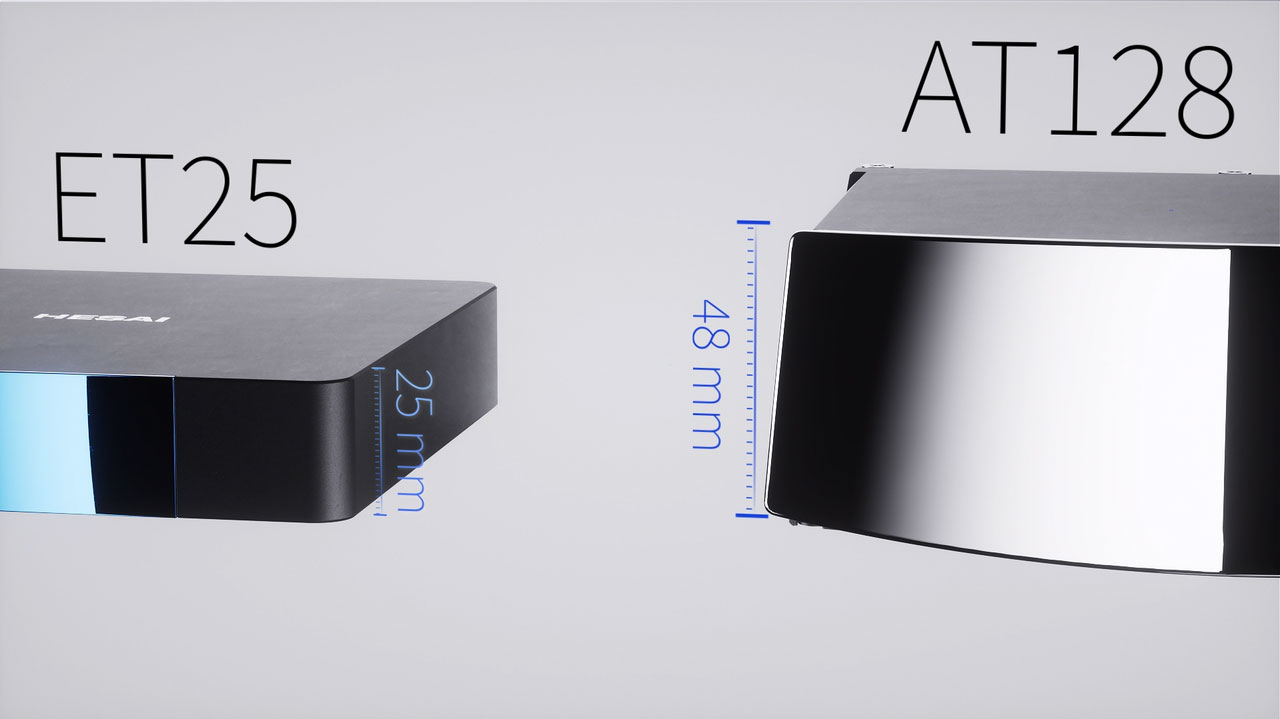
The size difference from Hesai’s popular AT128 is quite striking—its height has been nearly halved. And upgraded laser receivers increase the ET25’s sensitivity over the previous unit; its range has been improved to 250 m (with no windshield in front of it; 225 m with), versus the AT128’s 200 m.
The new lidar has a 120°H × 25°V view field, a point frequency over 3 megapoints per second, and resolution of 0.05° × 0.05°. It’s only about 2.5 cm tall, and very quiet at 25 dBa—both figures suiting it well for in-cabin placement—and it uses just 12W. It’s a 905-nm unit, and while its 3-megapoints-per-second performance might sound low, it’s said to suffice for hands-free systems like GM’s Super Cruise and for enhanced automatic emergency braking systems. LRather than a rotating mirror, it uses a proprietary beam steering system which Hesai are keeping quiet about.
And then there’s the new AT512, a high-performance item for mounting above the windshield, like the Luminar units on Volvo, Polestar and SAIC vehicles. But unlike the 1,550-nm Luminar lidars, all Hesai sensors use 905-nm lasers; they cost less, but their power output has to be limited to avoid causing eye damage.
Despite the lower power, Hesai claim a detection range of 300 m for a 10%-reflective target, and resolution of 2,400 × 512 pixels over a 120°H view field-rate. The AT512 has 8 times the resolution of the existing AT128, and is slightly more compact. It can generate 12.3 million points per second at 10 fps.. The product’s sleek physical design measures just 160x100x45mm
Lumotive
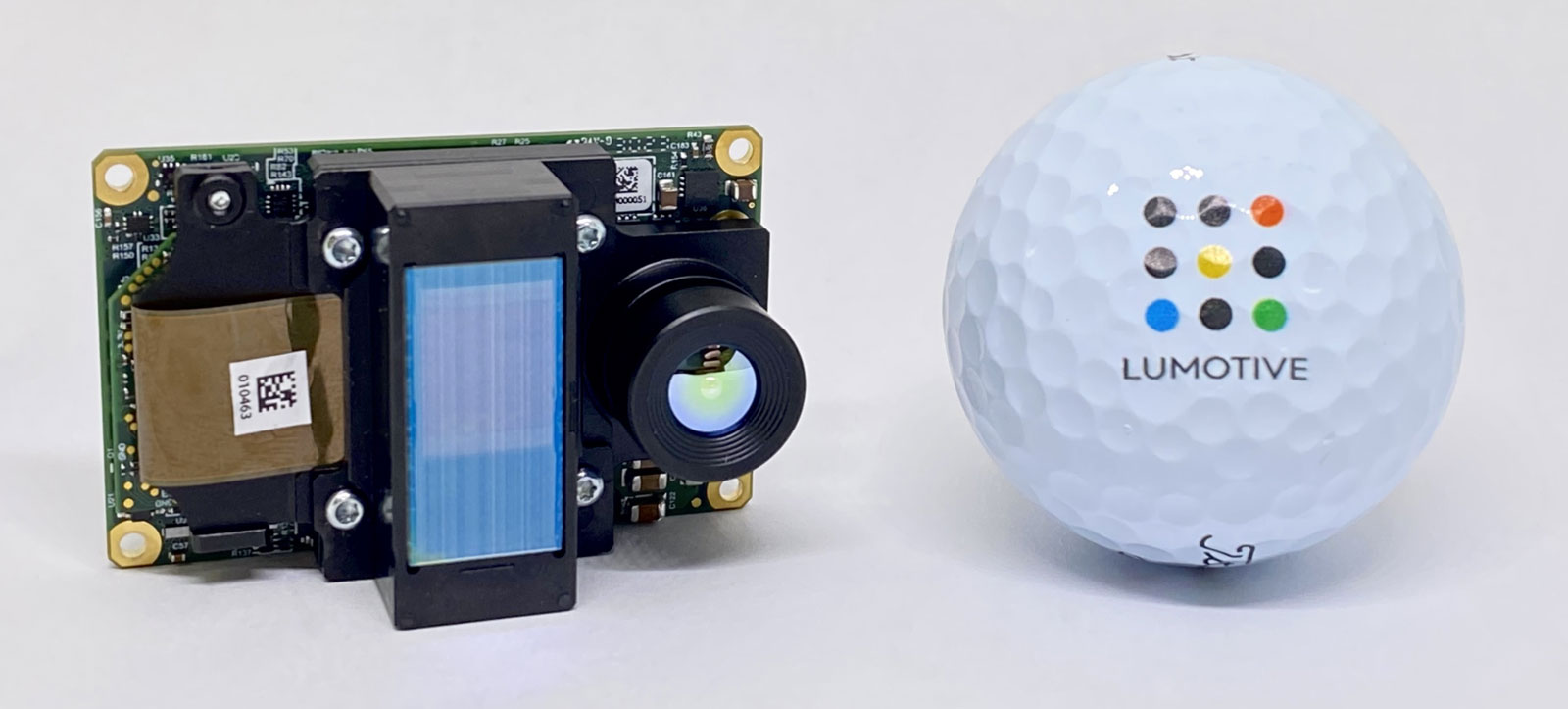
Lumotive won a CES Innovation Award for their LM10 LCM Module, which they call the world’s first commercialised optical beam steering semiconductor. They say it offers true solid-state, zero-inertia beam steering, an ultrawide view field of up to 180° (with expansion optics), an 11 × 9 mm active aperture area to fit easily in a variety of system designs, and compatibility with all laser types, including VCSEL and EEL.
The LCM-enabled digital beam steering is said to deliver the performance of a scanning lidar sensor without the associated cost, bulk, and reliability questions of mechanical systems. Lumotive say this is the key to new kinds of lidar to make high-quality 3D sensing more readily accessible. To demonstrate the point, Lumotive presented their M30 Lidar Reference Design, built round the LM10 digital beam steering chip. The photo above, with a standard golf ball next to the M30, shows its remarkably small size.
Zvizion

Chinese lidar provider Zvizion showed off their latest SPAD lidar, the EZ6. It’s targeted for long-range ADAS applications. The maker says its ‘novel architectural design’ (which seems a bit bulky compared to the Lumotive M30 we just finished talking about…!) attains high chip-level integration for lower cost, (about USD $280). With 192 channels, the EZ6 achieves point cloud characteristics with imagelike quality and improves the identification of low-lying obstacles.
It is said to be resistant to dirt accumulation and, in the event dirt does build up, it has advanced dirt-detection algorithms.
SOSLAB

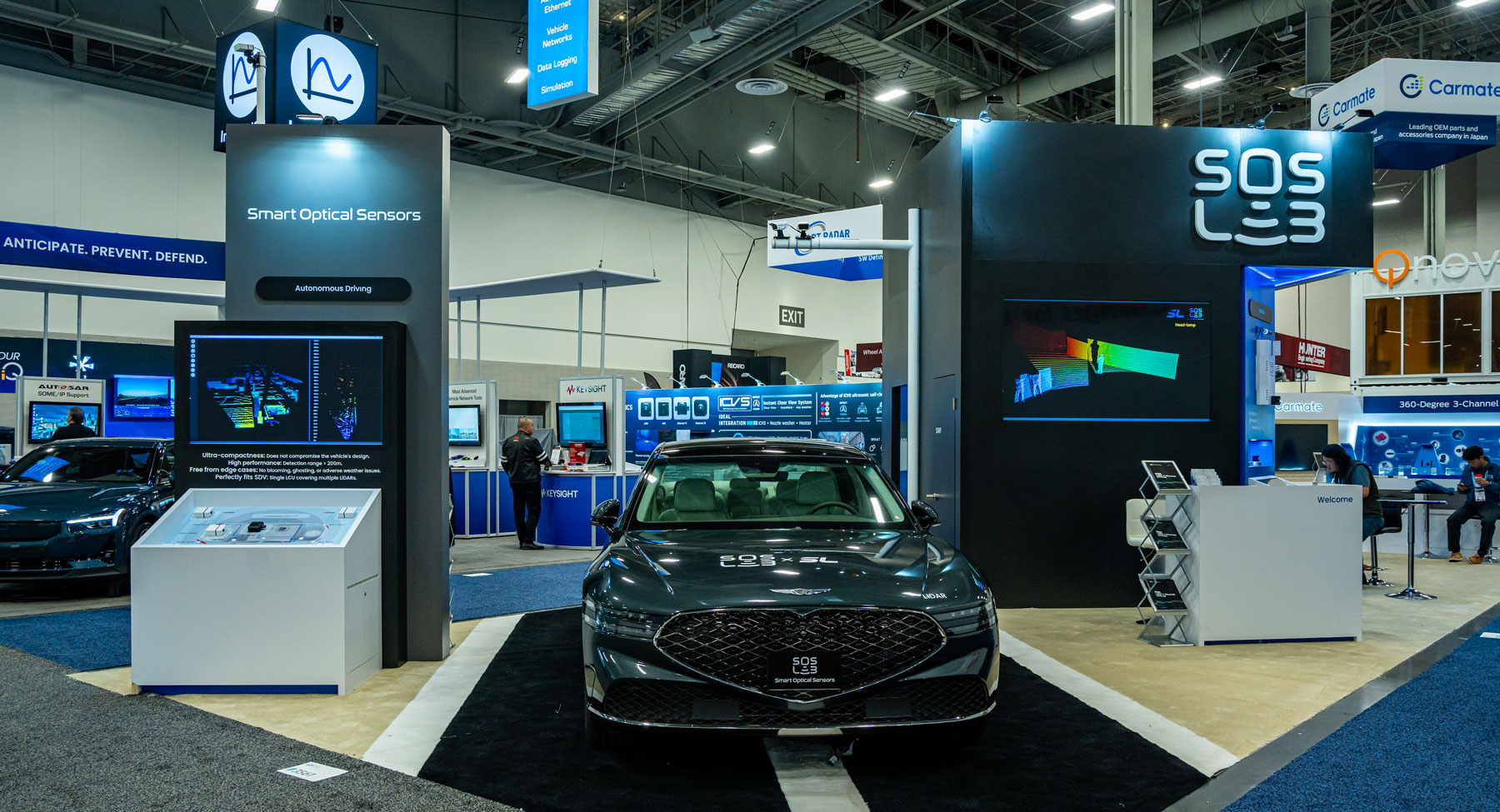
SOSLAB’s seventh (and largest-ever) CES booth had a section devoted to autonomous driving, where they showed off their 3D solid-state lidar technology, seamlessly integrated into the front and rear lamps of premium sedans. Commercialisation is planned in coöperation with an established vehicle lighting supplier. They also showcased their ML-A (for “Mobility Lidar”), a complete 3D solid-state lidar solution which takes modular optics to adapt the view field to the needs of the application.
The company are preparing for an initial public offering on the Korean KOSDAQ market in the first half of this year.
Robosense
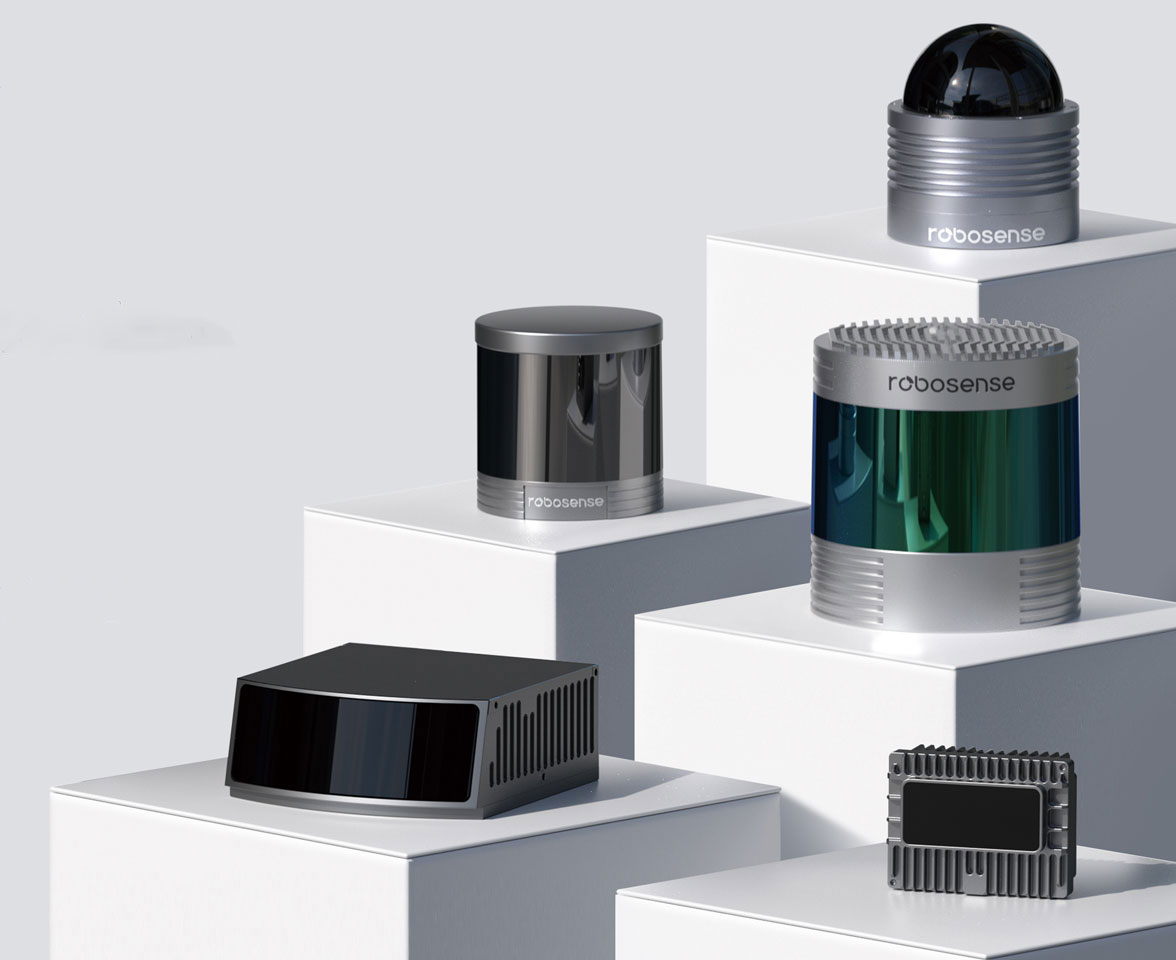
The Robosense booth bristled with automotive technology, including the M Platform second-generation smart MEMS lidar; the E1 solid-state lidar with Robosense-developed chips; the Helios customised lidar platform including 16- and 32-beam lidars; the Ruby Plus upgraded 128-beam lidar customized for commercial L4 AVs, and the Bpearl 360° × 90° short-range blind spot lidar.
The Helios series is Robosense’s new generation of customized multi-beam lidars. They’re built with a new modular architecture. Compared to the RS-Lidar-32, a Helios lidar 29 per cent smaller and 60 per cent lower in cost. It supports customisation of beam number
distribution; the 32-beam Helios 32 is available in three subtypes to meet the needs of different applications: one with a 26°V FoV, with vertical angular resolution up to 0.5° and long perception distance…one with 31°V FoV offering uniform 1° vertical resolution…and one with 70°V ultra-wide FoV meeting perception and blind spot detection needs, thus simplifying on-board sensor placement. The 16-beam Helios 16 offers 30°V FoV, and has been extensively upgraded in performance and functions versus the previous RS-Lidar-16.
The E1 is billed as a solid-state blind spot lidar with Robosense-developed chips. It boasts a 120°H × 90°V FoV, and is meant for use in forward-looking M-series products to achieve panoramic perception and eliminate blind areas. It’s got an ultra-fast frame rate of 10 to 30 Hz, and stronger range detection capability: 30m @ 10%.
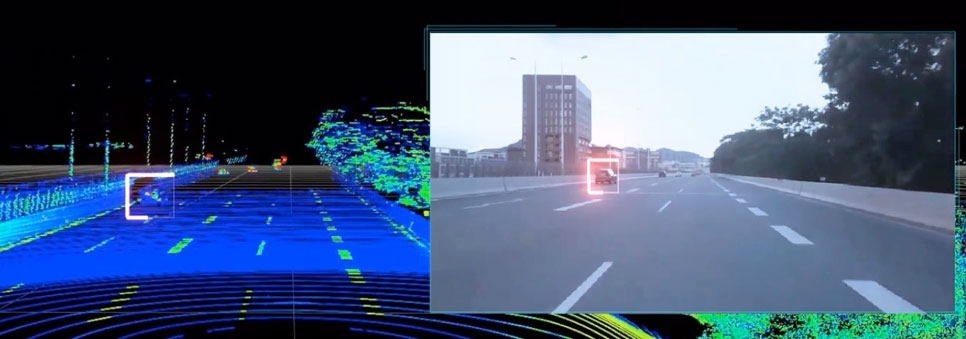
The M3 is designed to be used in L3 vehicles. It uses the 940-nm wavelength, rather than more costly 1,550-nm technology. It is said to be able to detect a 10-per-cent-reflective target at 300 m and work at up to 120 km/h, and Robosense claim it achieves better performance than 1,550-nm lidar despite being as much as 70 per cent less expensive, half the size, and consuming 30 per cent less power. Its modular design will allow will allow customers to upgrade seamlessly to future iterations without vehicle design changes
The M2, for its part, is more or less a lower-cost version of the existing M1 and M1 Plus. Robosense say it can detect a 10-per-cent-reflective target at 200 m.
Asensing

Ten-year-old Chinese supplier Asensing debuted their A2 lidar sensor. It is compact, with customizable features. It’s designed specifically for ADAS and AD and is slated for scalable production and shipment this year.
The A2 was showed alongside positioning products and solutions including their “P-Box” integrated navigation system, their IMU inertial measurement unit, and their High-Precision GNSS Positioning Module.
Mobileye
Mobileye announced cumulated orders for an expected lifetime volume of 3,65 Mveh for Supervision systems (vs 2 Mveh last year) and 600 kveh for Chauffeur Systems (first orders in 2023). Main customers are Porsche, Geely, FAW and a western OEM not yet public.
Mobileye’s main product launch this year was their DXP (for Driving Experience Platform), designed to allow automakers to provide a customised, brand-specific driving experience without costly, resources-intensive in-house program development. Mobileye say the platform, along with universal general-needs components, provides automakers with “AI tools” to program the vehicle’s functionality. This facilitates software-sharing across multiple models, cutting down on the need to develop software for each and every vehicle.
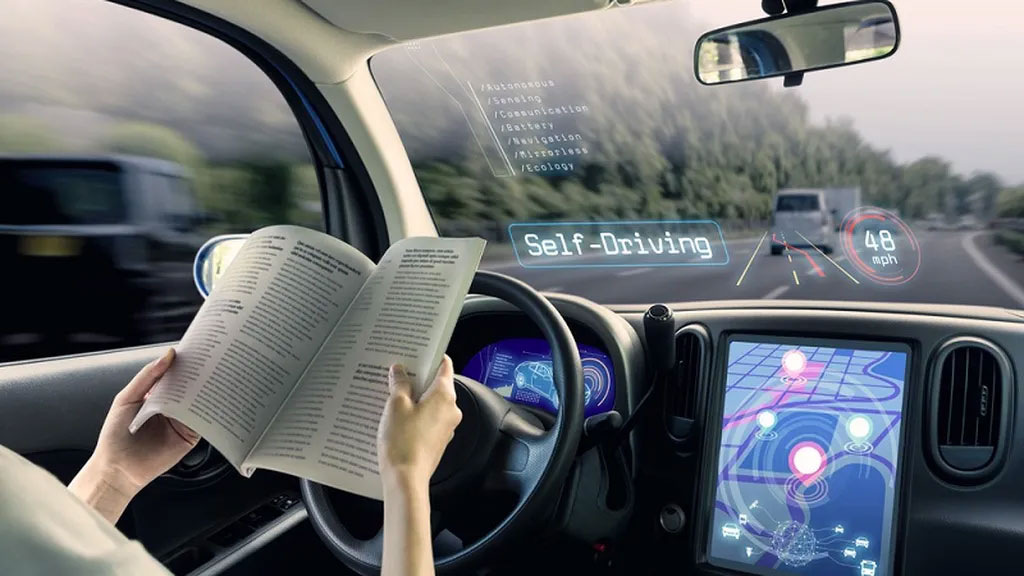
The platform comes preloaded with thousands of adjustable parameters, providing a wide range of options to tailor the self-driving system to their specific requirements and preferences.
Mobileye also proudly announced new supply agreements, including with ‘a major Western automaker’, particularly for Mobileye’s SuperVision, Chauffeur, and Drive products, to be applied in 17 combustion and EV models starting production in 2026. Chauffeur offers hands-off/eyes-off autonomous driving in defined ODDs; it works with input from radar and lidar sensors. Mobileye and the unnamed automaker also will work toward commercialising fully autonomous vehicles incorporating the Mobileye Drive platform, designed to produce purpose-built vehicles for use as robotaxis and mobility-as-a-service operations. Drive integrates computer vision, lidar and Mobileye imaging radar, with initial driverless deployments targeted for 2026.
All systems will use the Mobileye EyeQ6H systems-on-chip designed for powerful but efficient computing to integrate all sensing and REM crowdsourced mapping with safe driving policy. Mobileye also announced an expansion of their existing relationship with India’s Mahindra & Mahindra. There, too, it’s all about cooperative development of solutions based on Mobileye’s EyeQ6 SoC and sensing and mapping software, including an intent to build a full-stack autonomous driving system.
The strategy of Mobileye is to develop systems “on the shelf” including standard sensors, to reduce development costs and speed-up reliability and performance improvements over a complete fleet of vehicles. Following this strategy, Mobile announced its high-resolution radars (corner radar and long range radar) will hit the market by end 2025 and plans the launch of its high resolution Lidar in 2028.
Valeo
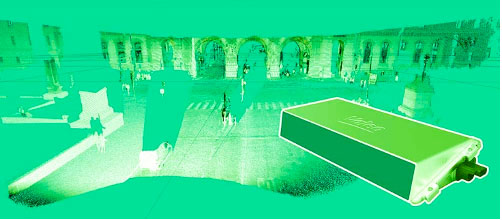
Valeo picked up yet another CES Innovation Award for their seemingly unstoppably-popular Scala-3 lidar, the high-density point cloud and perception software of which enables high-speed autonomous driving—including in the only L3 passenger cars authorised in Europe.
Valeo also showed their tele-operation solution in a BMW iX; the car, way over yonder at the BMW booth, could be driven by visitors at the Valeo booth. And there was an Audi Avant with Valeo’s creative multimedia interior concepts.
Luminar (+ Webasto)
Luminar put on a slick demonstration in the Convention Center parking lots, where their Iris+ lidar-centred Proactive Safety system, in Luminar’s words, provided “higher-confidence detection, faster and farther than today’s most advanced camera and radar powered ADAS (and shows) how new automatic emergency steering capabilities can help avoid collisions at high speeds without driver intervention”.

It has a single eye-safe 1,550-nm fibre laser and what Luminar call “the most sensitive, highest dynamic range InGaAs detector in the world”. It uses 2-axis scanning mirrors with 120° × 28° FoV, and scans only the laser rather than spinning the whole lidar device. Two vehicles lined up side-by-each, one with and one without Luminar’s lidar tech. Once they were up to speed, a rigged dummy pedestrian darted out from behind a parked car. The Luminar SUV swerved to avoid the dummy. Then the other vehicle, went. Without inbuilt Luminar tech, it hit and ran over the dummy in its lane.
Luminar’s outdoor exhibit also featured Kodiak Robotics and Plus autonomous trucks with Luminar lidar. And another exhibitor, Webasto, tidily integrated a Luminar long-range lidar into their Roof Sensor Module (RSM), where the elevated position is best for ensuring reliable monitoring of the vehicle’s surroundings.
Aeva
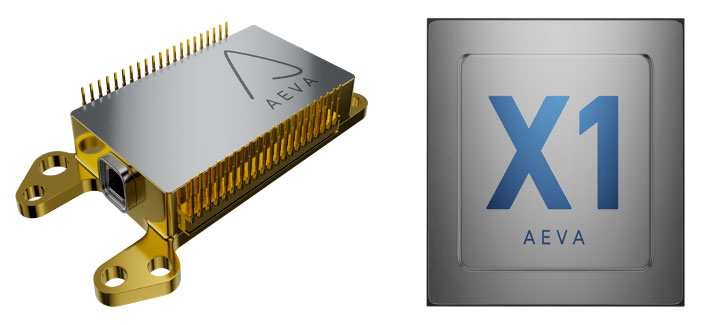
Aeva gave ride-along demo drives through the trafficky streets of Las Vegas with real-time visualizations from the supplier’s Aeries II 4D lidar—including instant velocity measurement, ‘Ultra Resolution’, long-range object detection, simultaneous velocity and 3D position detection, and immunity to interference.
They also unveiled their new Atlas, which they call the first 4D lidar sensor designed for automotive mass production. It leverages Aeva’s innovations in custom silicon technology including their newest CoreVision lidar-on-chip module, and their new X1 SoC lidar processor.
Aeva expects to release Atlas products for production consumer and commercial vehicles starting next year, in 2025.
Opsys
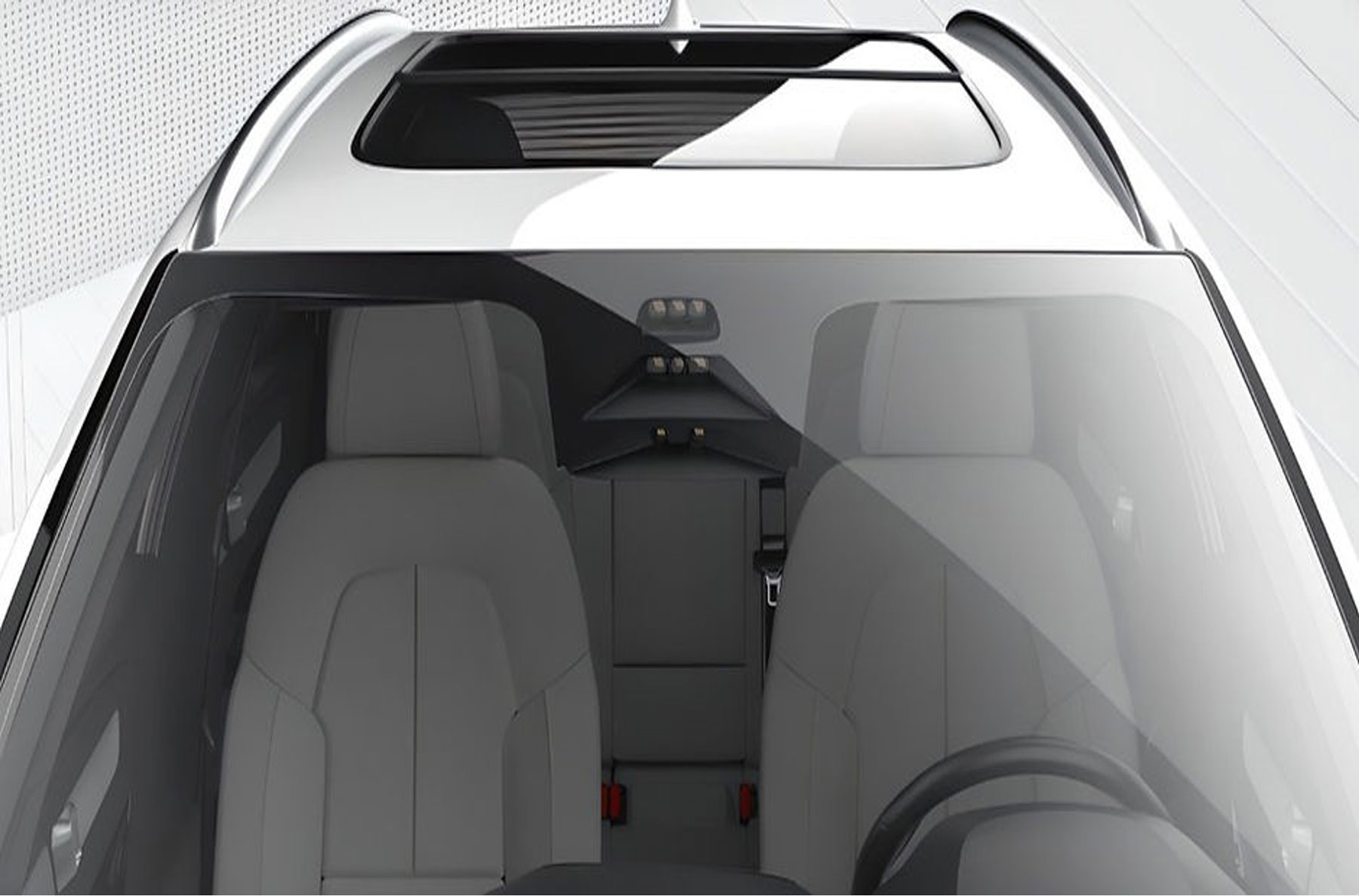
Opsys’ SP3.0 lidar, a windshield-integrated design developed in collaboration with Wideye by AGC, will be available for the market this year.
The setup integrates high- and low-resolution sensors to support long and short-range detection for Highway Pilot and high levels of autonomous driving (AD). The capability to integrate a lidar behind a windshield addresses three key long-standing challenges: the lidar is not on the roof; it works behind glass, and it produces little heat.
Opsys’ true solid-state scanning lidar, with a precise beam pattern, can compensate for potential distortions introduced by a windshield. The lack of any moving parts in the Opsys sensor keeps things cool and silent during operation and makes the technology more reliable and easier to mass produce as it keeps costs down. It delivers all specs across the full field of vision with no installation limitations.
Even for challenging cases, such as a 70° windshield angle, the lidar still delivers sufficient performance to detect small highway debris according to Highway Pilot specifications. Opsys’ SP3.0 lidar for windshield provides a B-sample level of maturity, ready to support any customer project.
Two independent lidar modules are embedded into a common structure with multiple cameras, rain/light sensor, and RFID antenna, to create a low-volume package behind the rearview mirror. Great attention was taken to ensure the driver’s view remained unimpaired, so that the overall width of integration is within the legal limit.
Seyond (Innovusion)
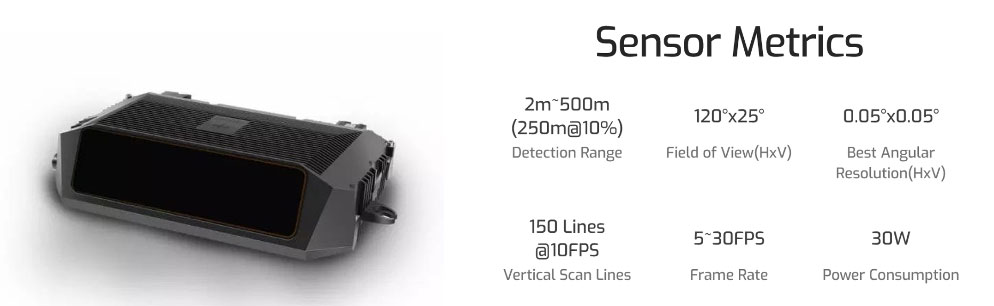
Seyond (formerly Innovusion), showed a Nio ET7 EV equipped with Seyond’s Falcon sensor, as well as a new, fully functional prototype of Wideye’s practical and visually seamless integration of lidar systems behind vehicle windshields, developed with Seyond.
Seyond recently passed a significant production milestone, becoming the first lidar provider to deliver 200,000 total units for vehicles. The company is one of the leaders in the lidar industry through key collaborations with companies including Nio and Wideye among others. Seyond’s automotive-grade product Falcon, is currently being used in eight Nio models. Seyond’s medium-range, wide-angle Robin-W sensor is also being used in the Nio ET9 model in tandem with the Falcon.


