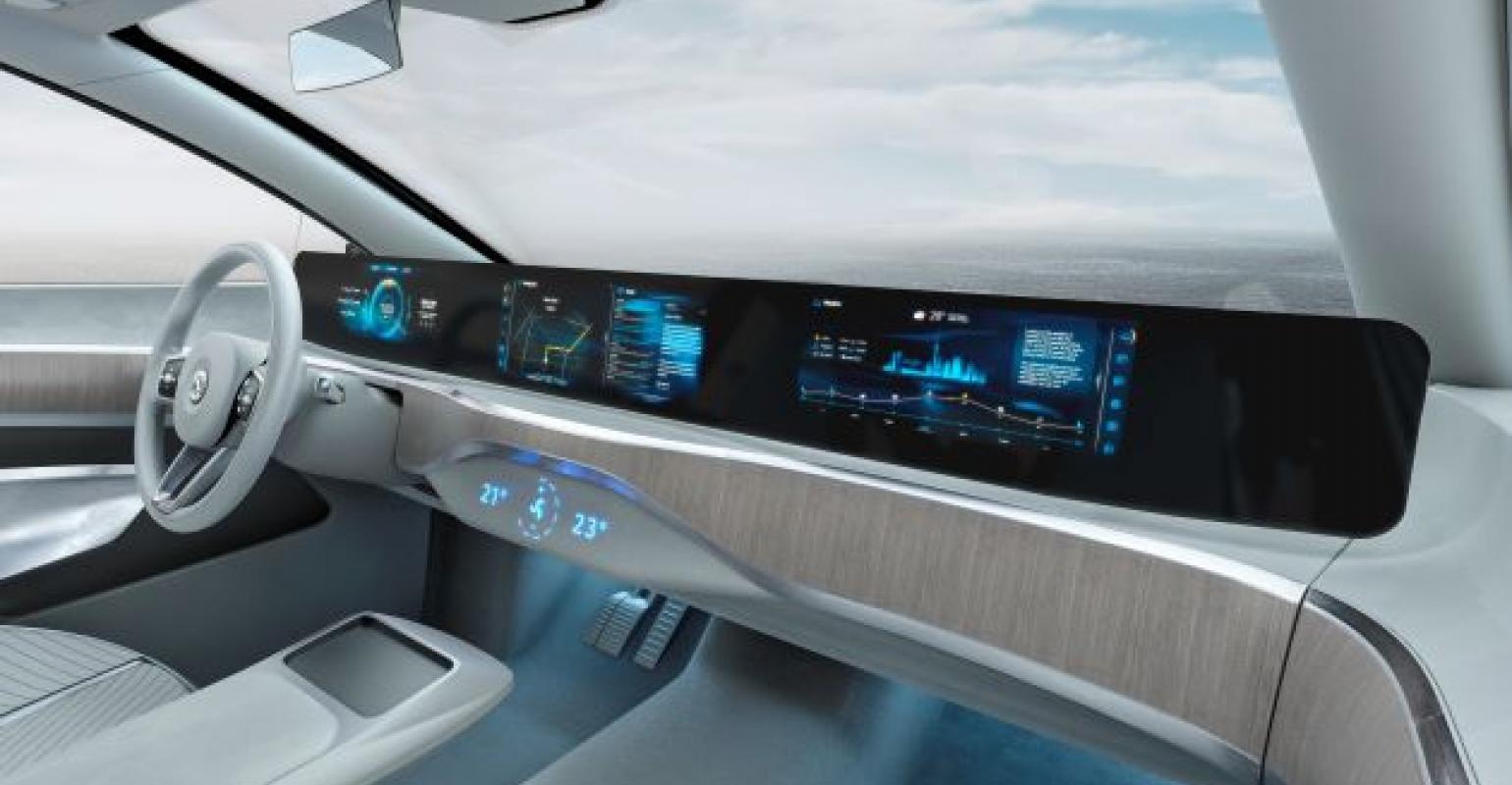
Continental’s integrated display spanning from one A-pillar to the other provides space for a growing number of vehicle functions, digital services, and communication and infotainment applications.
Continental received their first order from a major automaker for a display solution extending across the entire width of the cockpit in a high-volume production vehicle. Volume production is to begin in 2024.
This integrated solution turns this suite of displays as a central visual interface between the driver, co-driver and digital driving experience and marks another step in the evolution of the car into a smart device as part of the internet of things, according to Continental.
Navigation, warning signs, movies, news, social networks, office applications, and booking apps to plan the route are amongst the fully immersive content displayed across the entire width of the cockpit. “A driving experience that is digital and safe is becoming the most distinctive feature of modern cars. The size of the displays and their intuitive operation play a central role here,” says Jens Brandt, Continental North America’s Head of Human-Machine Interface. “In short, while horsepower used to be the gold standard for vehicle differentiation, now it is screen diagonals and user experience.”
Considering all the multiple new vehicle functions and digital services going into cars with increasing connectivity, traditional instrument panels and center consoles have become a dialoguing tool between occupants, the car, and even the external world. An exclusive focus on the driver also is no longer appropriate for the wide range of communication and infotainment services now available to all vehicle occupants. Therefore, displays have been getting bigger and bigger for years. With a few high-performance computing capabilities expected to replace the previous large number of dedicated control units in the future, Continental thinks their pillar-to-pillar display is the next evolutionary step and an expression of the increasing transition of the car into a mobile data center.


