RSE—rear seat entertainment—first started to develop along with the expansion of the minivan market in the mid-late ’90s.

Vehicles like the Chrysler Voyager, Opel/Vauxhall Zafira, and Renault Espace/Scenic were emblematic in that sense.

The first video setups used CD/DVD readers packaged in the vehicle: complex, bulky, expensive, and cumbersome. Then wearable devices took over until tablets came along in the 2010s to be the solution at that time. And now, progressive automation of vehicles and advancing display and connectivity technologies are refining rear-seat entertainment again. All the major automakers and their suppliers are working toward providing screens and media to entertain and to facilitate work and leisure activities. Passengers’ road focus is decreasing, in parallel with reduced human-driver accountability. People have more time and thinkspace available for more than just looking out the windows. And for the matter of that, as front seats and their head restraints have grown taller and taller, it’s grown essentially impossible for the rear passengers to have any kind of front view through the windshield.
The whole industry is focusing on new activities for the driver while they’re not driving. Most of this work, especially with pillar-to-pillar screens, is also taking care of the other front occupant. That still leaves rear occupants to think of, beyond just attention to their safety (e.g., rear presence detection systems for kids left unattended in a hot car).
In parallel with what’s happening up front, in the back seats the passengers are well placed to be catered for by rear seat entertainment systems. Screen size and resolution improvements are obvious enablers, and the gradual move towards advanced levels of autonomous functionality is set to herald tectonic shifts in the way the technology is integrated and used. Future cars may have screens in the rear, or even projections on any flat surfaces, if not in the air with a holographic environment (the Star Trek holodeck in real life?). As an example, Nio’s ET7 has a second-row multifunction rear seat control with HDR touchscreen—so they say, but their commercial focus is not yet there, as it seems; they’ve shown no pictures.
VNC Automotive, based in Cambridge, England, is a technology spinoff working in the world of vehicle connectivity and telematics software. Their infotainment and telematics software is deployed in over 35 million vehicles, across 20 of the world’s largest automakers including VW Group, Toyota, Honda, and PSA. It is also supplied across the automotive ecosystem to equipment suppliers such as Bosch, Panasonic, Clarion, and Pioneer, as well as device vendors like Sony, HTC, LG, and Huawei. VNC’s efforts go toward helping automakers and suppliers to enable time spent in a vehicle to be more entertaining and more productive than ever, while—of course—respecting all safety and security needs and protocols. In a recent published report, VNC predicted explosive growth of RSE, from its origins as the preserve of passengers lounging in high-end, premium vehicles.

VNC Product Engineering Director Peter Galek explains that RSE has already become less of a premium-only product and is a key factor influencing the decision of car buyers of the most popular models. The company’s Cobalt Share solution, which targets RSE and BYOD (bring your own device) users by sharing multimedia content from multiple mobile sources to vehicle screens, which hints at the evolving requirements of today’s car passengers.
There are parallel enablers to this RSE development:
• Digital TV, streaming, and gaming have changed the way we use media at home, and even in public transport. It’s logical, then, for these same trends to expand to personal transport. Ofcom, the UK communication regulator, have data showing 12 million new signups occurred during Covid-19, and that viewing times on these services have risen by 71 per cent over 2019’s figures, confirming a kind of revolution in in-vehicle content consumption. See DVN Interior (in-depth, 20 May 2021) on infotainment’s future through media content.
• One-click is driving new generations; it means that everything should be done with just one click (or tap), even when travelling: emails, texts, social media, videos—we have been spoiled by immediate availability of everything, so now we demand it. The pandemic has further accelerated this shift to remote working and reduced the reliance on physical communal office space. An ability to swiftly connect to a vehicle’s screens, as widespread travel resumes, means that this work doesn’t have to be completed at home or an office, but remotely from the back of a taxi or a mobility shuttle.
• The pandemic also has shown that working location is not terribly important; work can happen at the office, at home, at a summer house, at the beach, and when traveling. Work-from-car is the missing link, and permanent connectivity, RSE, and a table-like hub are the key ingredients of this recipe.
• Automakers, suppliers, MaaS providers, ride-hire providers, and the whole rest of the industry are all looking for new revenue streams, and RSE opens up potential for advertisements, targeted campaigns, and public service announcements.
Here are some examples of RSE integration in recent-model vehicles, starting with:
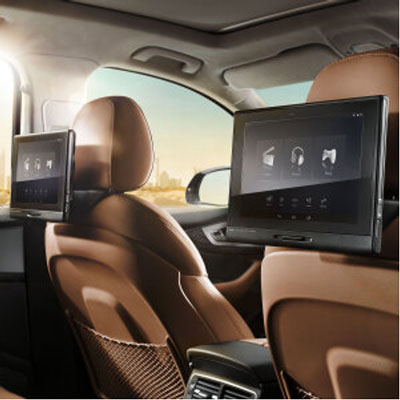
Audi
Named Audi Entertainment Mobile, it includes a 10.1″ touch display in 16:10 format with excellent picture quality even in poor lighting conditions. It features a host of interfaces for connecting modern storage media and can also be used outside the vehicle. The players can be used separately. Using the function “Mirror screen” it is possible to display the same contents on both screens at the same time. They meet all global crash regulations.
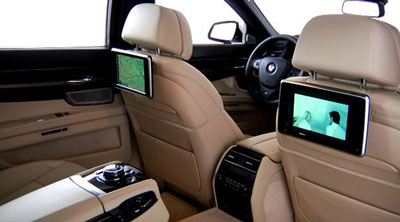
BMW
In the new 7 Series, BMW’s RSE has a screen on the back of each front seat, and an iDrive-style controller on the central armrest—just like up front, only with a different mix of functions (rear-seat riders don’t need to select transmission gears).
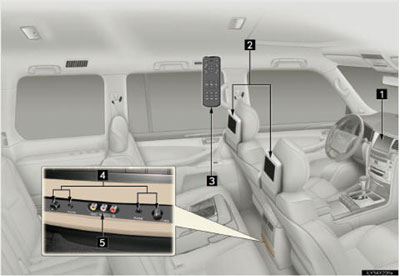
Lexus
The rear seat entertainment system is designed for the rear passengers to enjoy audio and DVD video separately from the front audio system. When audio-video equipment is connected to the A/V input port, rear passengers can enjoy different audio sources on each display.
Porsche

Porsche’s system is built with dual 10.1″ color touchscreen displays integrated into the front seat backrest. It includes USB and HDMI ports. Video telephony is possible thanks to a built-in camera, while video can be displayed to both screens through the WiFi Crosslink Streaming function, with sound sent via Bluetooth to a couple of wireless headphones.
Mercedes
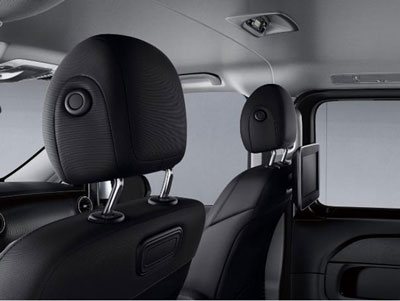
The Mercedes RSE system provides passengers in the 1st row of rear seats a wide range of entertainment and information options. It consists of 2 high-resolution 10″ touchscreens, attached to the head restraint mounts of the front seats. Mobile devices can be connected via USB, AUX and HDMI, and an internet browser is included.
Faraday Future

Faraday Future’s FF91 EV has a 27″ rear seat screen with a video conferencing feature. See DVN Interior 27 May 2021 for more detail.
Aftermarket Products
Many aftermarket products are available. Security (hacking?) and safety performance (crashing?) can’t be guaranteed to OE levels; it’s strictly caveat emptor in China’s flooded market of car interior gadgetry.

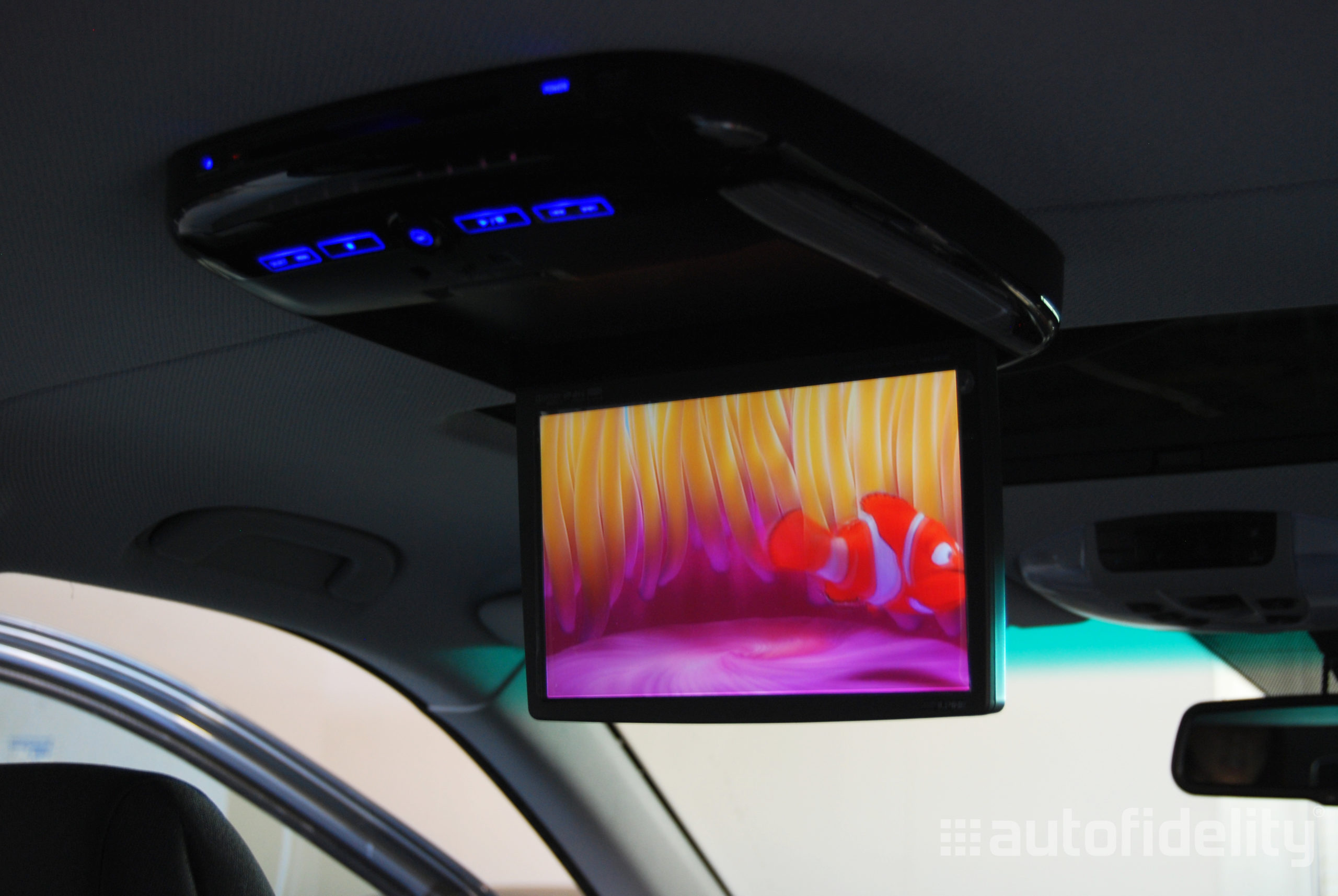
Less dodgy examples can be had, as well, such as this one with headliner integration and one screen for all rear passengers:

RSE can’t work without supporting technology, starting with connectivity, so 5G should be the boon of communication. Screen size and resolution is the second major need, where OLED technology is pushing past the threshold of attractivity. Zonal audio and directional sound are becoming available from many audio companies; obviously these are necessary to provide RSE without annoying or distracting other vehicle occupants.
Integration into the rear seat environment remains the stumbling block. It includes design, hardware certification, crash safety validation; fit and finish—all the parameters automakers and suppliers have large and growing expertise in.
Augmented reality, surface projection, and holography would be the next technology steps to truly make the vehicle an extension of one’s living or work space.


