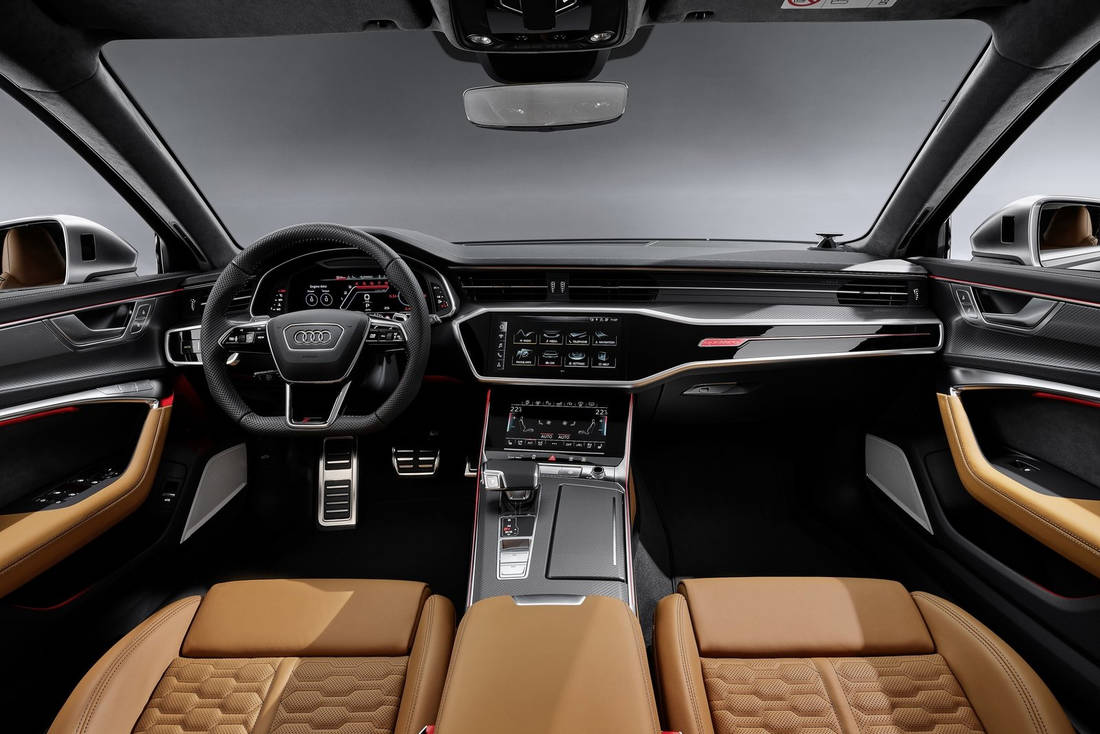
Following up on our last Design Lounge installment, we will focus on how specific OEMs are designing their future interior environments regarding UX/HMI and the emergence of the EV. The initial focus will be on the Volkswagen Group as they are represented as not only the largest manufacturer but are now launching a new EV product line with the ID series about to be introduced this month.
So we’ll look at the VW Group over the upcoming DVN-I Design Lounge instalments this way:
- Audi (today’s overview)
- VW (including the new ID series)
- SEAT/Cupra and Škoda (the entry-level brands)
- Porsche, Bentley, Lamborghini and Bugatti (the premium and performance brands)
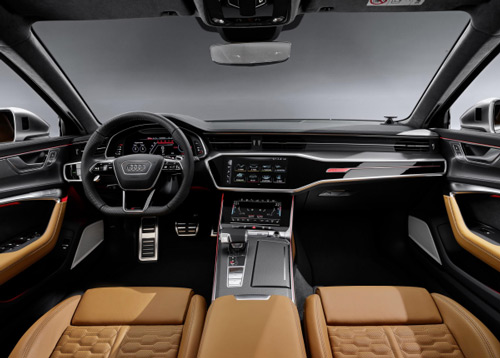
Audi’s latest design language and direction is best visualized with the RS6 shown above the empowers a strong trapezoidal form language within a horizontal theme.
A key element is the use of glossy black integrated touch screens and a dominant center console section. This is a departure from their more massive form vocabulary (the first-generation Audi TT, for example) and layered approaches used on their mid- to upper- segment vehicles such as the A4.


Comparing the implementation of this new design direction to the A1 series, we can see how the friendly but massive and traditional IP forms have been replaced with an angular and more aggressive trapezoidal form language that highlights the central display and IP ventilation functions. The traditional HVAC controls are still retained due to the price segment.


With the latest A3 sedan, we can see how Audi has replaced the circle motif that was used for the steering wheel center, vents, and UX/HMI controller with trapezoidal forms. The layered IP and floating central display now dominate the interior environment so much that the traditional shifter is now a tertiary element of the design.


Although introduced only a few years ago, the Q2 is the last evolution of the previous Audi TT theme development. With the latest Q3, we can see how the fundamental feel of the interior environment has changed. The friendly, sporty heritage coming from the TT is replaced by an angular and more aggressive, tech-oriented approach.


This is more obvious by comparing the previous gen A5 and the newest A6. Though the tunnel/floor console was always a dominant element, the latest A6 further reinforces its width by eliminating the aluminum trim breakup that was used in the previous generations and adding two displays located between the console and the IP.


With Audi’s top line/premium models, we can see some variations in detail form execution but also how the tunnel console and lower IP, due to the UX/HMI integration, have come to dominate and define the interior space.

Because of this new UX/HMI technology which will be used throughout the entire VW Group, how Audi differentiates themselves will be critical. This will be discussed in the final episode of this series.


