By Gerd Bahnmuller, DVN senior advisor
In November 2025, with over 150 participants from 15 international automotive manufacturers, 8 Tier 1 suppliers and numerous other industry partners, Reichle and VOTTELER’s TechDay 2025 demonstrated how combining in-mould coating with polyurethane (PU) and laser texturing can revolutionise vehicle production. For two days, everything revolved around one vision: the elimination of traditional vehicle painting – and thus a decisive step towards sustainable, efficient and design-oriented manufacturing.
An event that covers the entire process chain
TechDay 2025 was deliberately designed as an international, two-day industry event to showcase the new technology along the entire value chain – from material development and mould construction to application in vehicle exteriors in conjunction with completely new design trends.
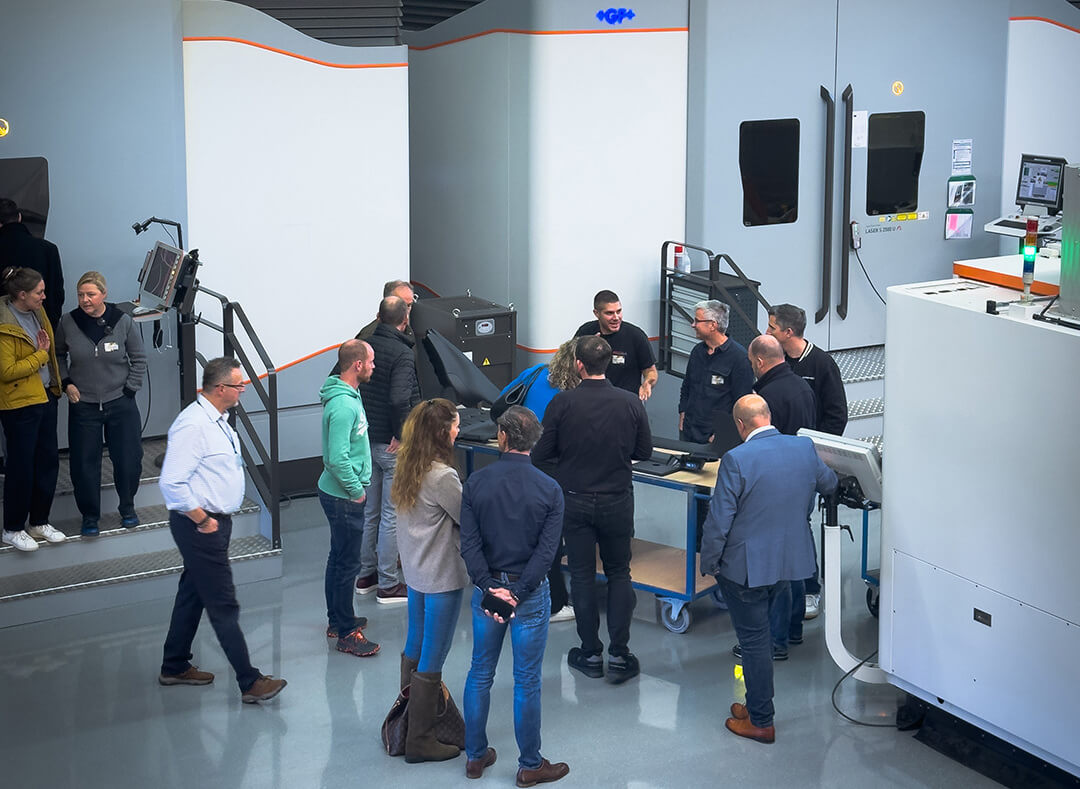
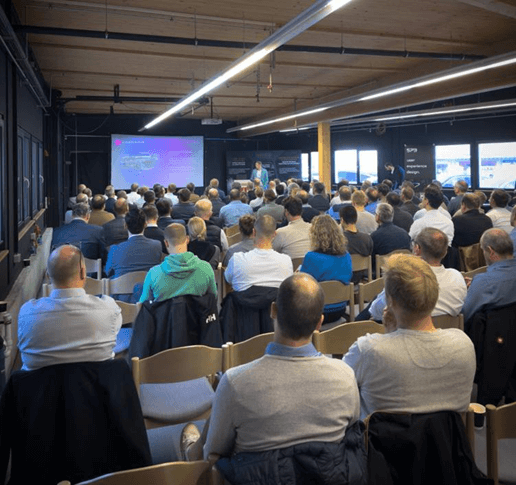
Day 1 took place at VOTTELER in Korntal-Münchingen and focused on the chemical and process engineering fundamentals of in-mould coating. Technical presentations by VOTTELER, KraussMaffei, Engel and Cannon highlighted the advantages, challenges and industrial implementation possibilities of PU flooding with PURIFLOW®. During guided tours, guests were able to experience the technology live in the Technikum and see for themselves the variety of colour development options available using samples.

Day 2 took participants to the Reichle Technology Center in Bissingen an der Teck. Here, the focus was on surface technology, design and toolmaking. Contributions from Summerer Technologies, LEONHARD KURZ and Reichle impressively demonstrated how precise laser textures interact with PU flooding of components, opening up new possibilities in terms of function, texture and light integration. A particular highlight was the premiere of a laser-textured, PU-flooded component – a tangible example of the possibilities offered by the developed technology for illuminating exterior components on vehicles.
PURIFLOW® meets laser texturing – design freedom meets sustainability
For decades, vehicle paintwork has been considered a standard process, but at the same time one of the most expensive and energy-intensive steps in automotive production.
The combination of PU and laser textured tool surfaces now offers an industrial alternative that completely replaces this process stage – with up to 40% lower CO₂ emissions and cost savings in the hundreds of millions.

The exact replication of the tool structure in the PU-flooded component creates a surface that looks painted but is not spray-painted. Laser textures create matt-gloss contrasts, 3D effects, holograms, logos or satin structures that are not only visually appealing but can also be functional – for example, through self-healing surfaces, radar and lidar permeability or integrated lighting concepts in the exterior.
In the PUR coating process, plastic components are coated (flooded) with a polyurethane (PUR) layer directly in the injection moulding machine. The thermoplastic carrier is first formed in the injection mould and then immediately coated with a thin, high-gloss PUR layer in the same mould cavity. This in-mould coating process combines the advantages of injection moulding and surface finishing in a single process step, eliminating the need for downstream painting or coating processes.
In automotive exteriors, PUR coating opens up new possibilities for high-quality, scratch- and weather-resistant surfaces. Typical current applications include trim strips, pillar trims, spoilers and radiator grille elements. The PUR coating not only provides a deep gloss and a ‘piano black’ effect, but also offers UV stability, chemical resistance and excellent ageing resistance. The process also enables complex 3D geometries and seamless transitions between painted and unpainted areas, allowing new design freedoms.

A particularly dynamic field of application is automotive exterior lighting. Here, PUR coating is used for light covers, bezels and decorative lighting elements. Thanks to the optical clarity and high reproducibility of the PUR coating, translucent or transparent surfaces with excellent optical quality can be achieved. In addition, the hydrophobic PUR surface improves cleanability and reduces dirt adhesion, which is crucial for long-lasting lighting functions.

However, there are limitations when it comes to complex geometries that require slides in the injection moulding tool. The PUR material is very thin – almost like water – and can easily penetrate slide running surfaces, which can lead to rejects or increased cleaning effort. In addition, the equipment used to manufacture injection-moulded parts with PUR coating is very complex and capital-intensive. Mechanical post-processing is also usually required to remove excess PUR material at the mould parting lines.
Overall, despite these challenges, the PURIFLOW process contributes significantly to the functional integration, weight reduction and design quality of modern vehicle exterior components – an important step towards more efficient and aesthetically appealing vehicle concepts.
Technology with industrial precision
PURIFLOW® reproduces the tool surface almost 100%. This requires maximum precision in the micrometre range: deviations of more than 5 µm can already affect colour, gloss or homogeneity. This is where the strength of laser texturing comes into play – a fully digital, reproducible and highly precise technology that replaces traditional, environmentally harmful etching and enables perfect textures with consistent results.
The conclusion after two days of the event
TechDay 2025 demonstrated that the combination of in-mould coating and laser texturing in exterior applications is not just a concept for the future, but already represents a sustainable and economical approach to vehicle production that is ready for series production. After two days of input, specialist presentations and technology demonstrations, the response from participants was clear: this technology has the potential to fundamentally change the automotive industry – moving away from spray painting towards integrated surface solutions with maximum design freedom.


