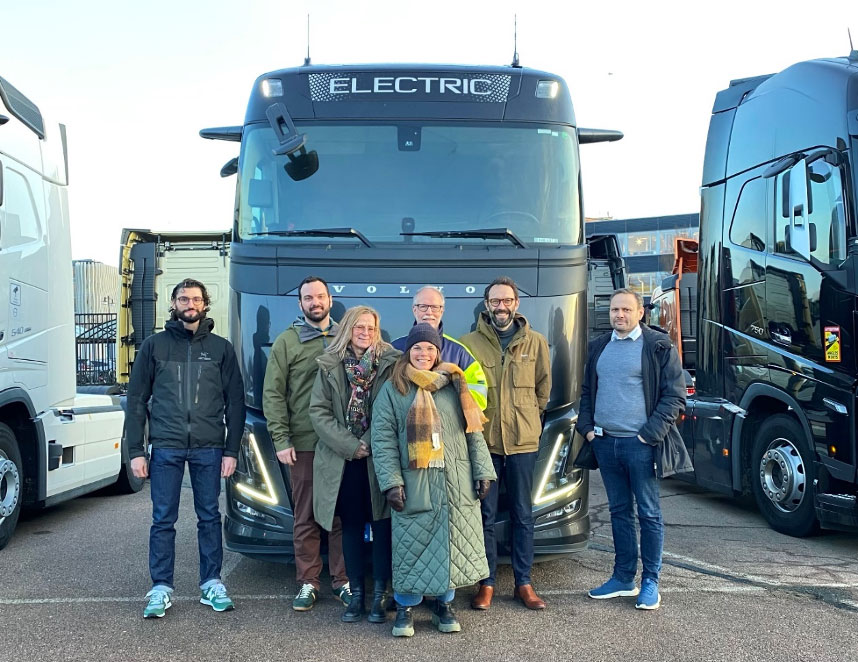
By Paul-Henri MATHA
Just before Christmas, during long and dark Swedish winter days, I visited Volvo Group R&D lighting and ADAS in Gothenburg to exchange about our common passion for lighting. I was accustomed to meeting Stig Elofsson and Sara Engdal during SIS meeting in Sweden to prepare for GTB meeting every six months. The main topic we wanted to discuss was the ADB system they have developed, in mass production from 2021.
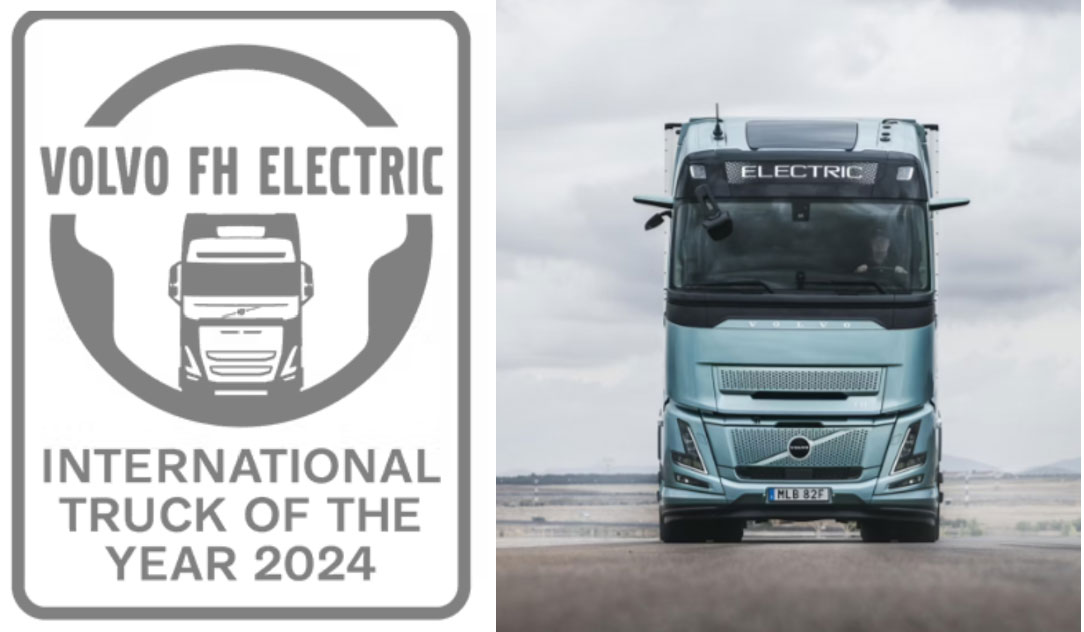
When we talk about headlamps, even if exterior design can be equivalent between automotive and truck lamps, a lot of things are different:
- Lamp aiming: Access is totally different between a truck and a car. There’s no hood to open on a truck. On this Volvo truck, access is from behind via the wheel well for the main lamp, and from the cabin for the auxiliary additional high beams in the roof.


- Vibration proofing: The lamps have to endure rough-service operation around the clock, every day. Lamps are assembled directly on the chassis and must resist constant vibration and mechanical shock, much harder compared to passenger cars.
- 24-volt line voltage (in Europe and Japan; in North America big trucks run 12v electrics like passenger cars): That means a different ECU for lamps, and different light sources.
Reliability is the biggest difference I see between cars and trucks. Cars see maybe 10,000 to 20,00 hours’ usage over a 15-year service life, truck usage is also 15 years, but 7 days per week and 24 hours per day, so around 130,000 hours—or ten times the passenger car usage! EC102 qualification for LEDs is not enough. Same for stepper motors, DC motors, and fans. Then truck makers are requesting to be able to exchange all these components from the lamp. Headlamp design is affected by this requirement that generates totally specific designs. With recycling requirements coming in 2030 in Europe, car makers would do well to investigate how lamp design is done on trucks, and adopt or adapt similar guidelines.to be able to replace components. Truck service shops have been equipped and trained with ESD protection, for a practical example.
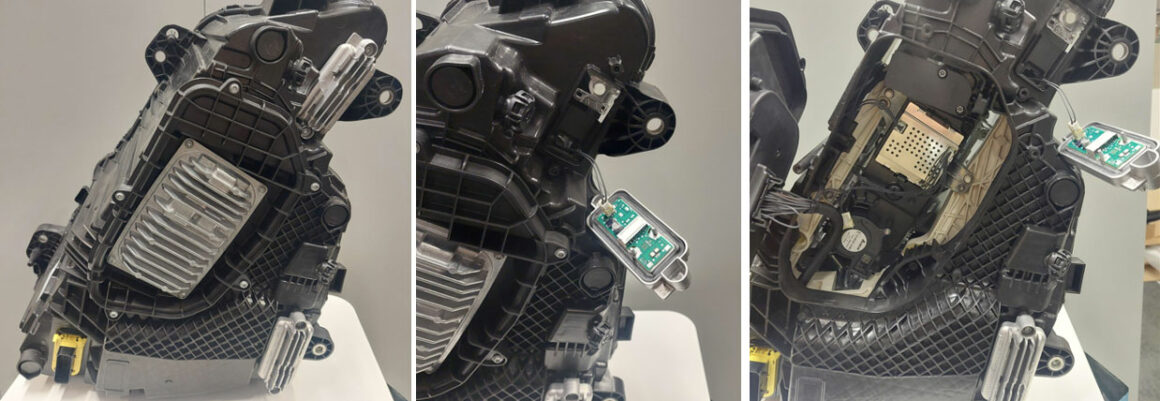
On the FH truck we tested, low beams needed a cleaning system due to very high flux, higher than 2,000 lumen per lamp.


The lamps are by ZKW, including a 12-segment ADB system.

High beam field of view is ±20° H × ±7° V, with Imax 112,500 cd, to give a visibility range of 200-250 metres without the additional high beams switched on.


The ADB system has been tuned with specific requirement for trucks. There’s no real need to have a high resolution system or a very long range in ADB. What is important is to have the largest possible beam at low speed, even in semi-bright environments, to be able to detect obstacles and animal on the side. To meet those needs, the main focus was placed on low-speed activation (from 10 km/h), fast reactivation of high beam (Ramp-up 500 ms), and careful tuning on ADB deactivation to avoid false triggering by streetlights, for example, or by roadside traffic signs.
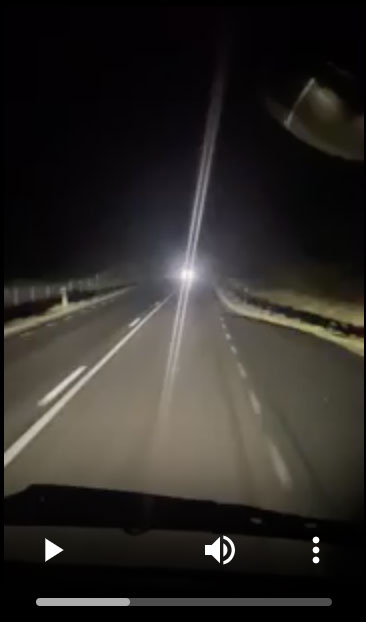
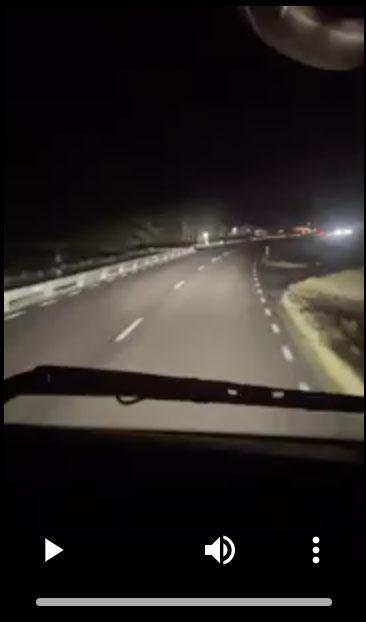
To avoid glare on motorways, Volvo use side radar to anticipate segment deactivation during overtaking. When no cars are detected, it is possible to manually switch on the roof-integrated extra high beams for additional range.
This ADB system works very well. We did not dazzle any cars during the night drive, and the visibility was very good. This system will surely increase safety a lot.
To read more, you need to log in as a DVN Lighting member.
Not a DVN member yet? Contact us now to join the DVN Community!


