By Paul-Henri Matha, DVN COO and Lighting General Editor
Changzhou Xingyu Automotive Lighting Systems—Xingyu, for short—was established in 1993. They make exterior and interior lighting components; around 13 million headlamps and 24 million rear lamps per year. Production is fully integrated, with 95 per cent in-house production. They’re headquartered in Changzhou, Jiangsu, China, and have over 8,000 employees. Their customer portfolio includes BMW, Mercedes, Audi, VW, Nio, Toyota, Honda, Nissan, Mazda, Xpeng, Chery, Geely, FAW, Li auto, and more.
Xingyu’s revenue grew from USD $584m in 2017 to $1,129m in 2022, which is more than double over five years’ time. The company pride themselves on their family culture, established by founder and Chairwoman Sally Zhou.
In addition to their five plants in China, Xingyu opened their first plant abroad in 2022, in Serbia. With 200 employees, it’s intended to supply European automakers including BMW, Mercedes, VW, Audi, and Škoda; the new factory specialises in rear lamps and small lighting components.
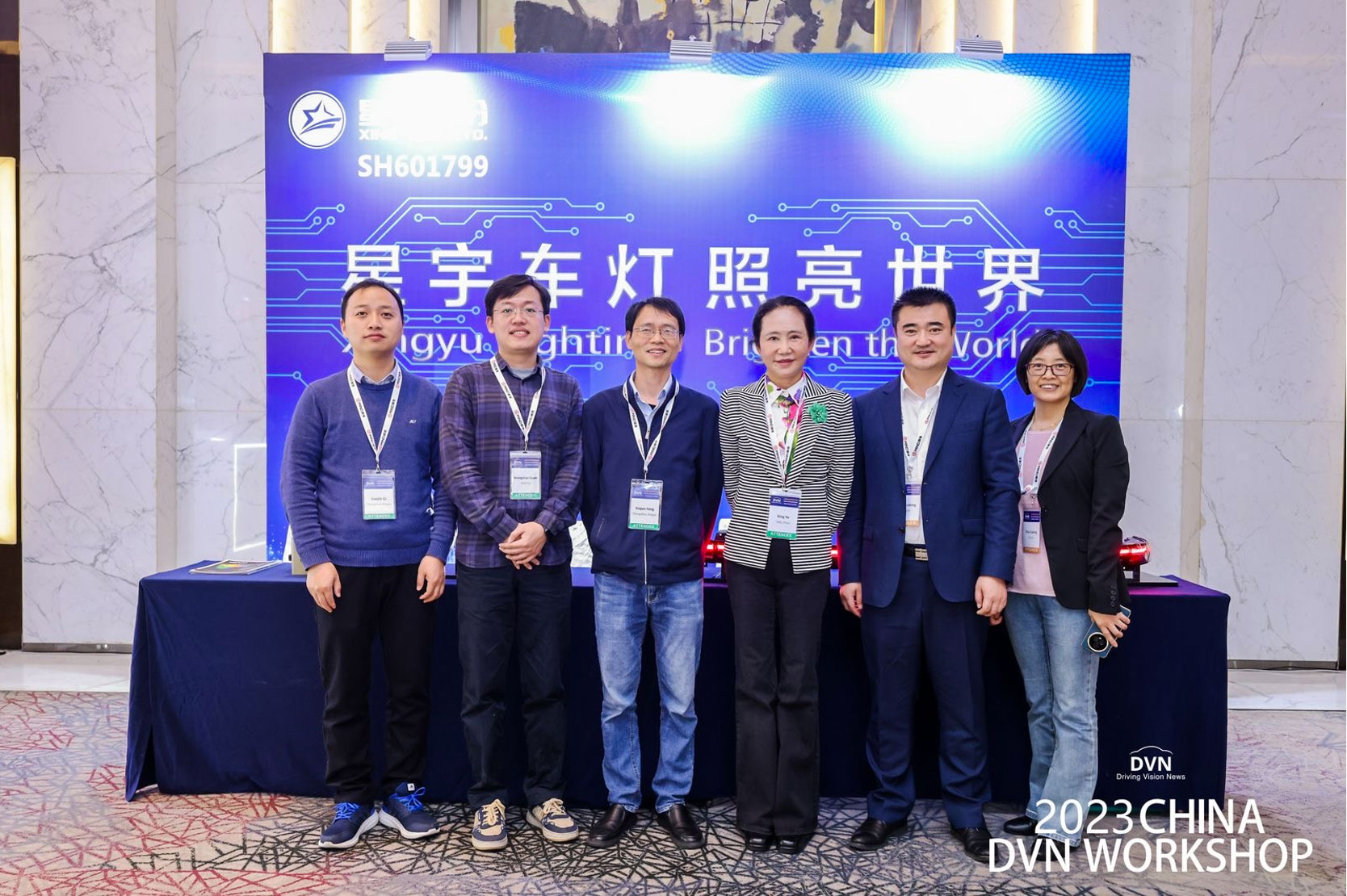
During the 2023 Shanghai DVN Workshop, two innovations really grabbed my attention, and I talked them over with the Xingyu team: their miniLED display, and their signalling road projections.
They gave an interesting presentation about rear lamps with miniLED technology. Xingyu have already produced a lot of lamps incorporating interactive signalling displays, but the miniLED aspect is new.


So, their presentation focused on the miniLED technology they’re developing.

So far, possible colours on the display are red and white. Luminance is around 2,000 cd/m2, with a pitch of 0.93.
The 84,240-pixel miniLED module can put up a lot of different messages such as welcome/farewell, temporary parking, or whatever the vehicle user might want to say.
Electrical communication with the vehicle ECU is done by CAN, and the controller of the light source board inside the lamp is done not with FPGA, but with SPI for its lower cost; its relatively low bandwidth is adequate. Xingyu makes the complete ECU inside the lamp to translate CAN to SPI.
As to the sample at Shanghai workshop, the display can meet the relatively low intensity requirements of the position light function. They say in the near future, when semiconductor companies will solve thermal dissipation issues in the harsh end-of-vehicle environment and increase the available intensity, it will then be possible to do other signalling function such as stop, turn indicator, and daytime running light.
The second Xingyu technology that caught my attention was signalling road projection. Xingyu presented different technologies they have developed; some are already on the road. According to their presentation, there is a real need in China for projection, and they’re responding with a range of options including a super high performance, high-end setup with DMD; a medium-cost arrangement with MLA, and a low-cost option with traditional film-based lamp.
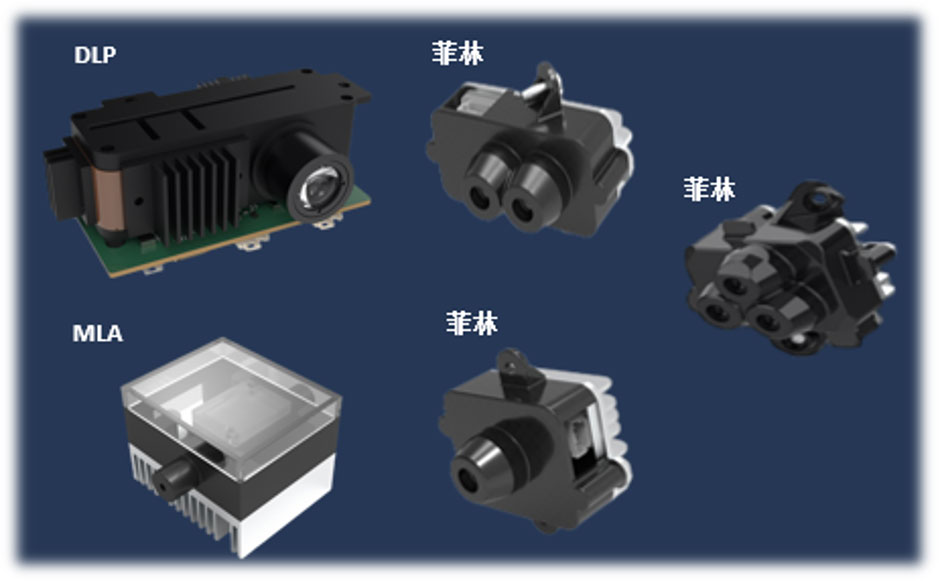

According to Xingyu, products such as ground-projecting headlights, digital grilleboard lighting, dynamic projection lights, and display taillights with strong interactivity and good user experience will become of great interest in the future—certainly in China, and probably in other markets (where and when allowed by regulations).
Another point of their presentation: the market is placing more importance on energy savings and smaller carbon footprints, so products with higher efficiency and energy-saving features will eventually become the norm. Accordingly, industry is putting effort into iterative upgrades to micro- and miniLED technology.


