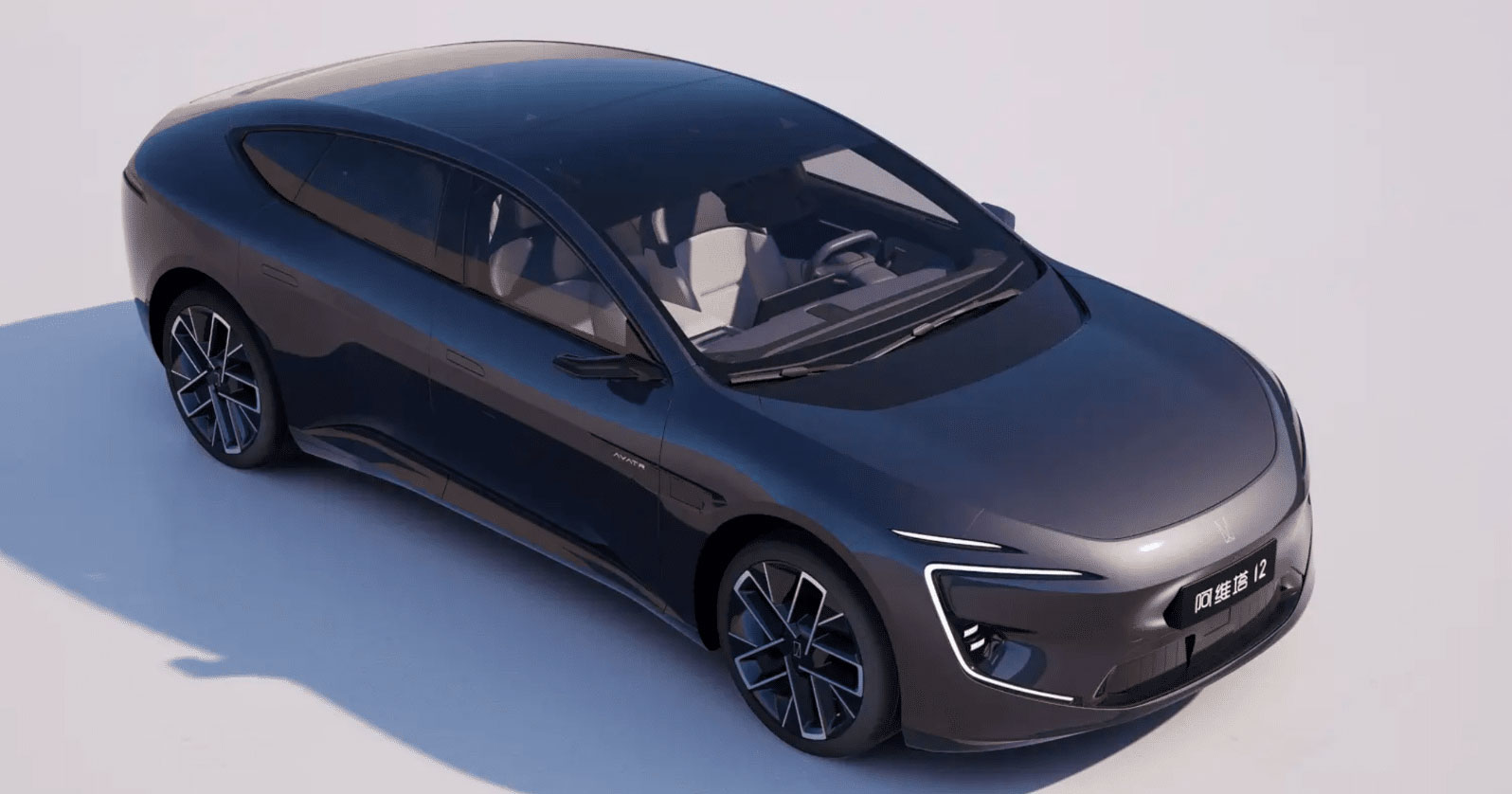
The Avatr 12 is officially being delivered in 40 cities around China. The electric sedan has 578 hp, lots of Huawei technology, and no backglass. Since its November launch, it received over 20,000 orders.
Avatr Technology is a former joint venture between Changan and Nio, established in 2018; each party held 50 per cent. Nio withdrew in 2020, due to financial troubles. In 2021, Changan introduced a new partner who replaced Nio: battery giant CATL.
The Avatr 12 (pronounced “one-two”) is the brand’s second car and sells for C¥300,800 to 400,800 (USD $42,100 to 54,800) in China. It is a large sedan, measuring 5,020L × 1,999W × 1,460H mm with a wheelbase of 3,020 mm. It has two powertrain options: RWD 230 kW and AWD 425 kW. The AWD version can accelerate 0-100 km/h in 3.9 seconds.
Both versions store electricity in a 94.5-kWh battery from CATL, which provides 700 km and 650 km CLTC range, respectively. The car can charge enough to go 200 km in 10 minutes with its 750V ultra-fast charging support.
Inside the car, there’s an enormously long 35.4″ CD screen stretched from driver to passenger. It also has a15.6″ central control screen. The vehicle is powered by Huawei’s cabin SW HarmomyOS 4.
Three lidar units send input into Huawei’s ADS 2.0 ADAS suite, which doesn’t need HD maps and covers 90 per cent of urban driving scenarios, according to Huawei. The self-driving capabilities are one of the car’s biggest marketing promotional points.

The Avatr12 also has a dimming sunroof, electrically-powered doors, digital rearview mirrors, hidden door handles, frameless windows, and R21 wheels with Brembo brakes. The main remarkable lighting component is the display between the hood and the windshield, shown here displaying birthday wishes.
Avatr have a design centre in Munich, Germany, where the 12 was created. Changan lean heavily on Europe for design; their other EV brand, Deepal, has a design headquarters in Turin, Italy, led by General Motors veteran Bertrand Bach.


