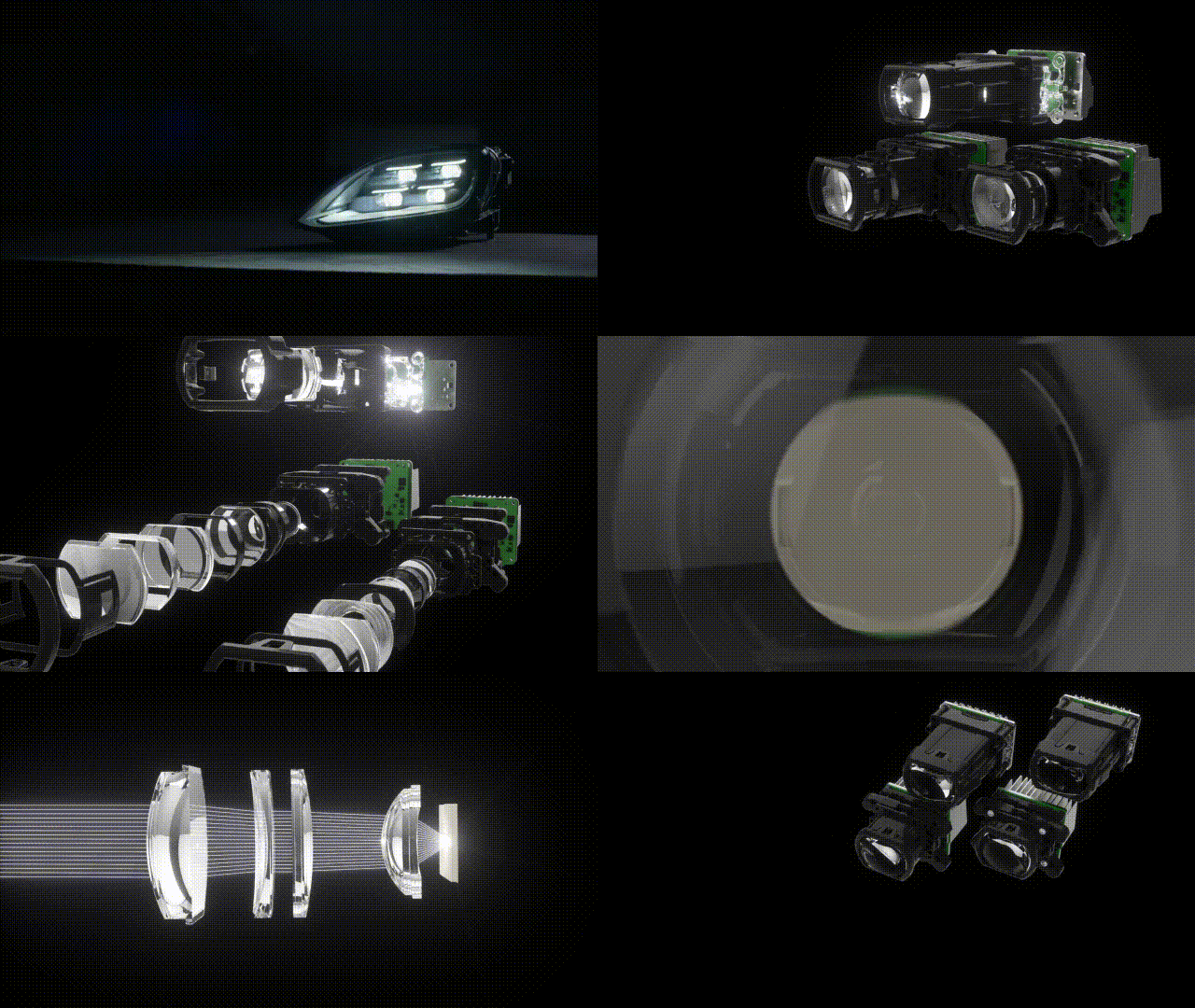
Porsche have developed new high-resolution HD matrix headlamps. The core element is a chip that combines over 16,000 individually controllable microLEDs onto a surface area the size of a thumbnail. Two of these arrays are in each headlamp, for a high-resolution light distribution up to twice as bright on a surface four times larger than previous top-notch systems.
There are innovative functions such as lane illumination; construction and narrow-lane light, and adaptive motorway high beams. The high-performance high beam turns night into day at a distance of up to 600m. A new non-dazzling high beam function is used in traffic; large areas to the right and left of the anti-dazzling gap become significantly brighter.
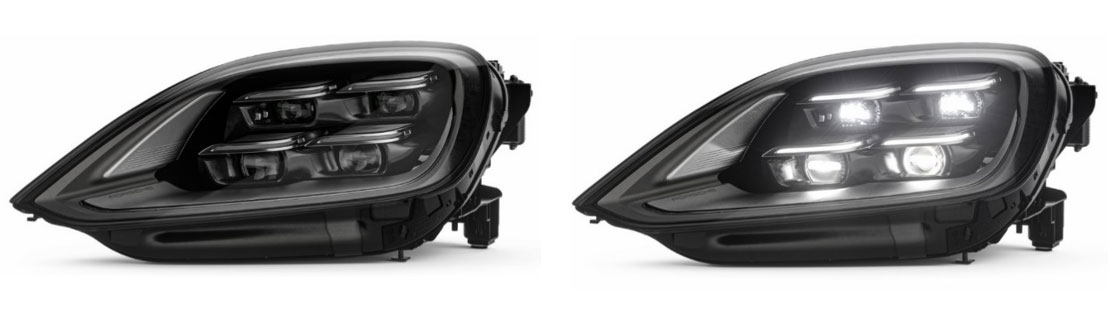
In addition to four-point DRLs and static cornering lights, the new Porsche headlamp includes two of the new HD matrix modules and two bi-functional modules for courtesy lighting and the auxiliary high beam. These four main light sources are arranged in a four-point design characteristic of the brand. The previous top headlight from Porsche, by contrast, features four courtesy modules and a central Matrix module in 84-pixel technology.
The new HD matrix technology also stands apart in terms of design: for the first time, the characteristic Porsche four-point signature of the DRL can also be seen at night when the new system is used – with both low and high beams. The HD matrix headlights will be introduced successively in different model lines with identical module technology but adapted designs. In the development process, Porsche submitted over 25 patents for the innovative technology.
The design of the headlamp is clearly structured: four almost squarely-arranged light modules, each complemented by a narrow daytime running light strip above the module, trace the brand’s characteristic four-point design by day and by night. The two upper bi-functional modules are identical and provide the courtesy lighting and auxiliary high beam with three LEDs each.

The heart of the new HD matrix technology is the two lower light units. Each features an identical LED array with integrated ASIC LED driver which generates an unprecedented high-resolution luminous flux in an area of just 12.8 × 3.2 mm. The system controller, comparable to a powerful graphics card, activates and controls the brightness of each of the 16,384 individual LEDs per array, in 1,024 steps.
Lenses with specifically ground optical glass complete the two HD modules; the lenses produce different illumination angles. The wide-angle lens of the outer HD matrix module’s illumination covers 40° of width and 10° of height. The inner module with ‘telephoto’ lens has a 20° wide by 5° tall beam—half as high and half as wide, with significantly higher intensity. The light distributed by the two HD modules overlap in the centre.
The performance leap in light technology can be attributed to this efficient generation of light and the combination of the two HD matrix modules with the two bi-functional modules. With a total of 32,768 individually-controllable pixels per headlamp, the HD matrix modules generate direct high-resolution light. Only the light that is actually required is generated; this is why it is known as active-matrix light.

The HD matrix light illuminates the entire 40° × 10° field with over 1,400 lumens. It covers the entire high beam range and begins just in front of the vehicle. The light can be distributed in any way within this area and this flexibility makes it possible to improve existing functions and introduce new ones—always with the aim of offering the driver the best possible seeing in any situation.
If the system does not detect any vehicles ahead, and the automatic high beam is active, the HD matrix modules switch from low to high beam, and the auxiliary high beam of the upper bi-functional modules is automatically switched on. This ensures an increase in the beam length and increases the performance of the high beam, which reaches out more than 600 metres! If the camera detects a vehicle ahead or an oncoming vehicle, the auxiliary high beam is deactivated, and the vehicle is selectively masked out by switching off the corresponding pixels of the HD matrix modules. The energy that this frees up is converted into additional, functional HD light. The full width of the available HD light is used to optimise the illumination of the non-dazzling high beam and to improve the driver’s ability to see, without dazzling other drivers. When anti-dazzling is activated, the amount of light from the HD matrix module to the right and left of the anti-dazzling gap is doubled, resulting in significant brightening of the remaining high beam range.
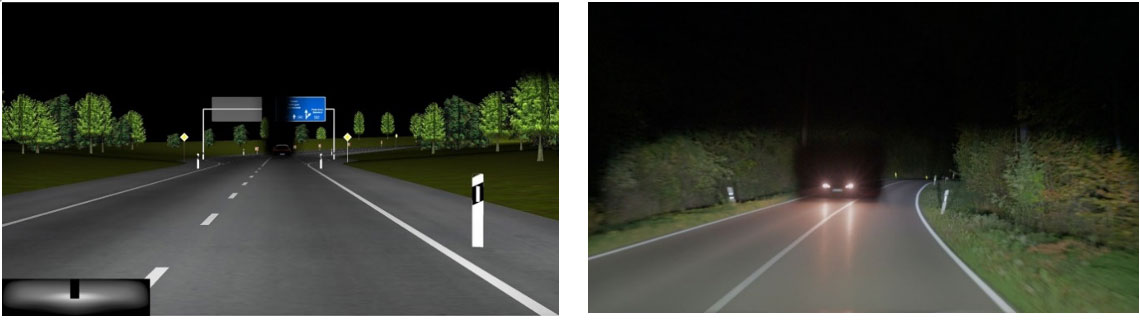
This function is used for better illumination of the vehicle’s own lane in the form of a light carpet. The lane between the road markings becomes significantly brighter. And this regardless of the vehicle’s position in the lane. Whether the vehicle is further to the right, further to the left or in the middle, the light carpet adheres to the road markings as if it were a magnet. The function is activated exclusively on motorways or comparable roads. It enables early detection of hazardous objects and reduces lane changes by other, less attentive drivers into the vehicle’s own lane. In the case of deliberate lane changes, the light carpet is briefly widened to cover both lanes when the marking is crossed, before subsequently illuminating only the new lane more brightly once the lane change is complete.
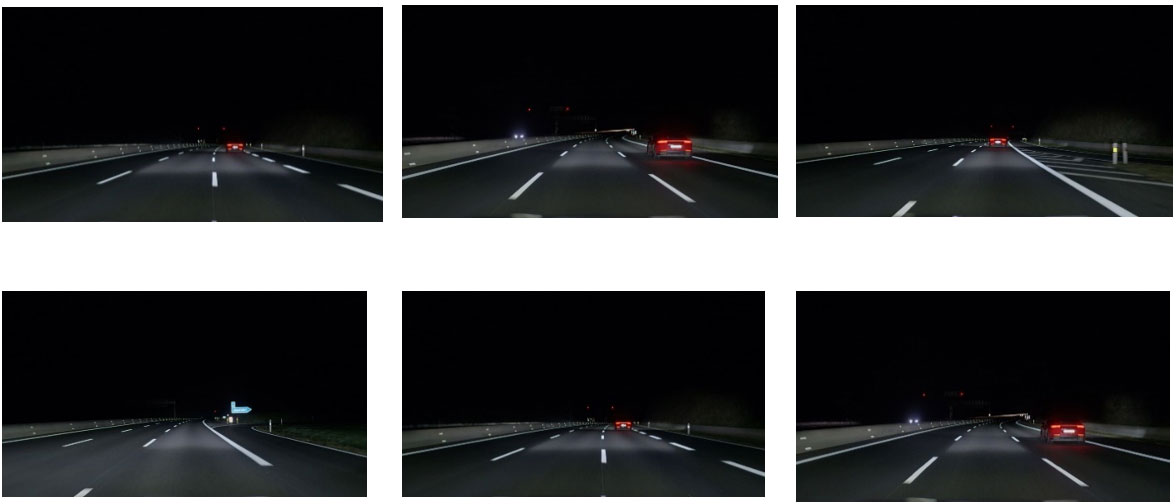
When construction zones or narrow areas are detected, the light carpet is automatically reduced to the same width as the vehicle, including mirrors, to brighten the lane and thus make it visible to the driver. This visual support enables drivers to better assess their position in the narrow lane as well as overtaking manoeuvres. Steering and speed corrections are demonstrably reduced, with lane keeping and road safety being enhanced as a result.
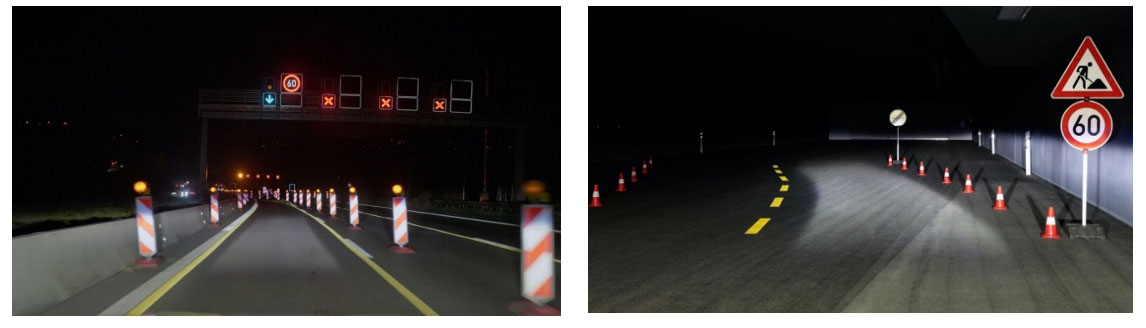
On motorways and comparable high-speed roads, the control system ensures the best possible illumination of the driver’s lane while also optimally adapting the light distribution to the conditions on the motorway. The illumination is cut off with a soft transition towards the median strip, which prevents drivers in the oncoming lane being dazzled.


