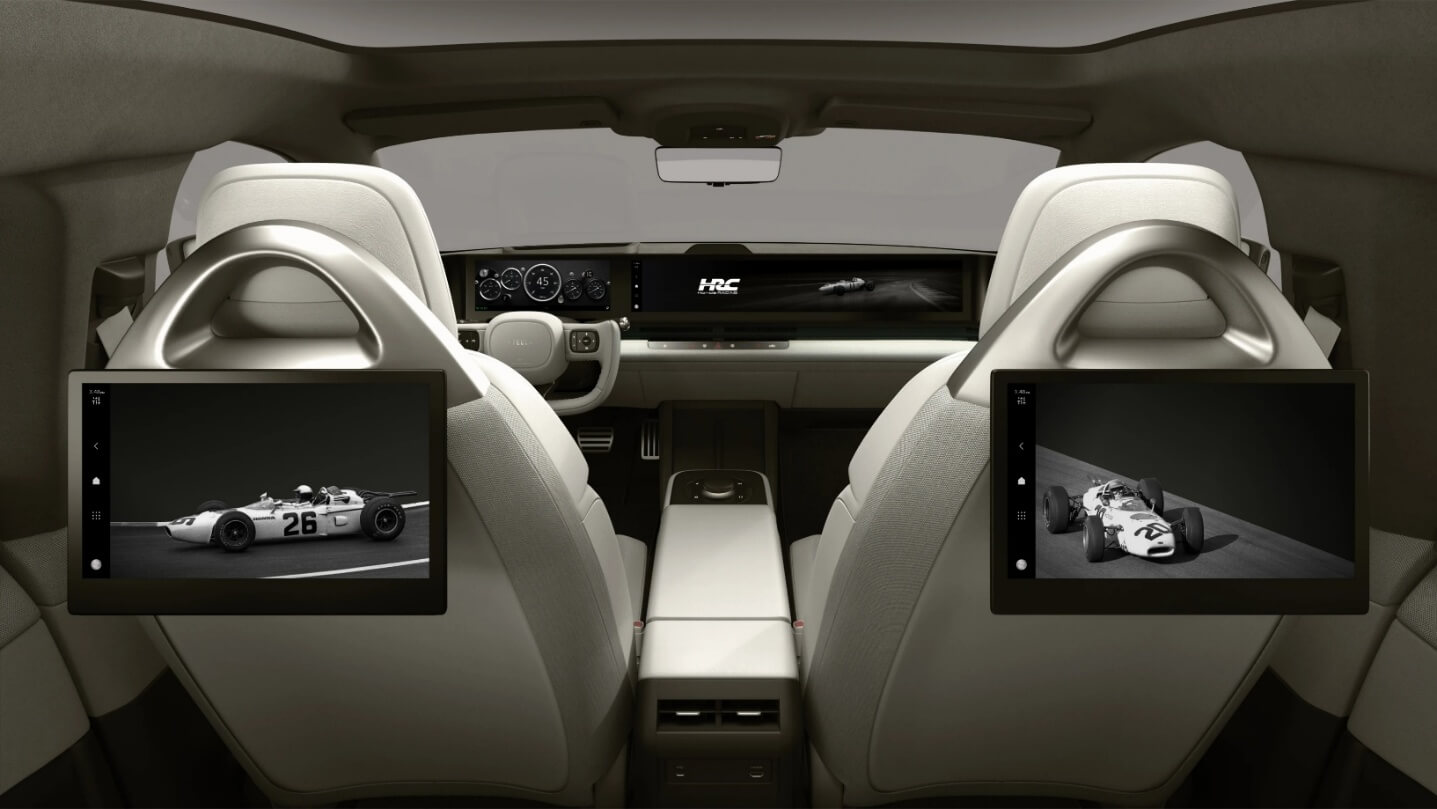
Is there a new center of gravity in the automotive universe? For years, our industry treated the interior as a territory of design, ergonomics, and perceived quality. That was and is correct, but it is no longer sufficient.
When Toyota allows the Chinese cockpit paradigm to shape the product overall, that’s more than just market adaptation; it signifies that local expectations can no longer be met at the end of the program through graphic calibrations or trim variation. Local preferences, wants, and needs now influence the architecture, services, and digital continuity of the car itself. No longer a mere application layer, the cockpit is becoming the core of perceived product value.
BYD pushes that logic even further. With the Great Tang, the industry is no longer designing an enriched driving station; it is organizing onboard cohabitation. Four screens, a multi-zone logic, a second row treated as a territory – the question is no longer how many screens but how good is the experience.
And Europe is bringing back a less spectacular but equally decisive truth: without industrial sovereignty, sourcing discipline and control over the components that genuinely create value, there is no durable cockpit vision. In the end, we are no longer just choosing an aesthetic direction or a UX philosophy. We are deciding what the industry still wants to control: the experience, the value chain, or both.
Our First Agenda for our Interior Köln event is here. It reflects tensions, challenges, and innovations in HMI, interior lighting, and design, in context of the strategic battle for value inside the cabin. Come join in; contact Emilie Bonnet or Laurent Sérézat.
Take care,



