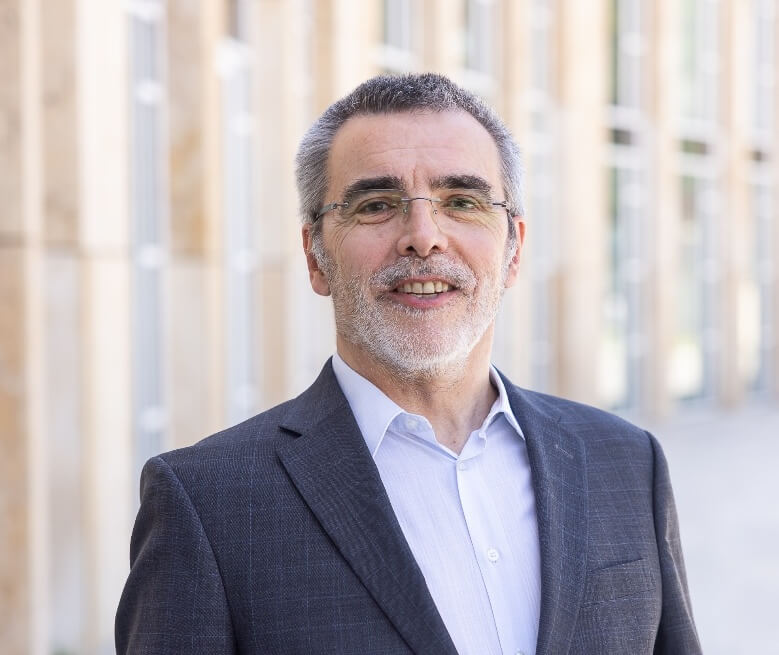
We will continue the discussion during the EE session DVN Munich next week event to see how SDV and Ethernet are impacting our lamp and ECU architecture. To moderate it, I invited a well-known expert in the field, Alfred Vollmer, to bring his valuable insight and energy to the discussion.
Alfred is a freelance journalist and moderator. Even though he is an electrical engineer with a German Dipl.-Ing. degree, he has 40 years of experience in business-to-business journalism. While his main attention was in professional electronics, mainly industrial, during the first years of his career, he switched his focus to automotive at the beginning of the new millennium. Before he decided to start his own business to concentrate on what he likes best – automotive and power – he had been editor-in-chief of five electronics B2B media outlets (magazines and websites) including the famous Automobil-Elektronik magazine, where he e.g. interviewed hundreds of top-level automotive executives.
Two years ago, he became a freelancer to write in-depth stories about solutions, companies and events, but he is also an industry advisor who can look at automotive electronics solutions, processes and products from an (almost) neutral semi-outside perspective. And, of course, he really likes networking, meeting people and moderating automotive events.
Alfred’s Credo is “It doesn’t make sense to reinvent the wheel; concentrate on your true strength. So, cooperate when necessary and differentiate where you can make a real difference.” Keeping this in mind, he has always been building bridges and opening doors throughout his extensive network and even beyond.
I took time to ask Alfred three questions, while preparing the Munich event and EE session with him:
Paul-Henri: Why have you accepted to moderate the panel discuss?
Alfred: First of all, it is an honour for me to be actively involved in this event. On the other hand, this is a real challenge: Even though the trend towards digital lighting control is clear, there are several different approaches and protocols on the market which are all suitable. Representatives of these different approaches will participate in my session at the DVN Munich event – complemented by an OEM and tier-1 suppliers. That’s why I’m looking forward to a lively discussion.
Paul-Henri: What do you think about lighting evolution during the last 10 years
Alfred: Lighting has changed radically from analogue heat sources with light as a side effect, the light bulbs, to digitally controlled multi-colour LED elements. With these new electronically-controlled LED solutions, optical designers have gained new degrees of freedom to design while electrical design engineers are facing new challenges in terms of EMC, heat management, embedding the novel solutions into the overall E/E architecture etc. This enables totally new scenarios in the interior and exterior lighting. For example, in ADAS (advanced driver assist system) multi-pixel matrix LED or projector headlight systems pave the way for much more effective lighting solutions providing huge benefits to both the driver as well as all other road users. Within the cabin the designers are now able to use light as a major design element. And all over the car we are just at the beginning of a new world of lighting experiences.
Paul-Henri: How do you see the future and what are the main challenges for you?
Alfred: The main challenge for the optical designer is to adequately express the OEM brand experience all across the entire car, and lighting has established to be a major element of this experience. Finding the right balance between innovation and statements on one side and an exaggerated light show on the extreme side will require a lot of work, especially when you consider different consumer expectations in different world markets.
However, the SDV (software-defined vehicle) will facilitate this significantly from the electronics and E/E perspective as well as on the manufacturing shop floor and during potential OTA updates over the lifetime of the vehicle. Designers of electronics and E/E systems have to provide solutions which allow the effective but cost-conscious integration of the lighting electronics into the OTA-updateable SDV by combining light, digital, power, analogue, communication, EMC, thermal and other elements.
I personally doubt that we need four different protocol solutions for lighting control as these only drive volumes down and cost up. Examples like CAN, LiN or Ethernet have clearly shown the benefits of standardization. However, one big question is still remaining, and it should be answered ASAP: How should this new standard look like, and how does it integrate into the SDV, which is updated permanently over the lifetime of a vehicle?


