A DVN Special Report
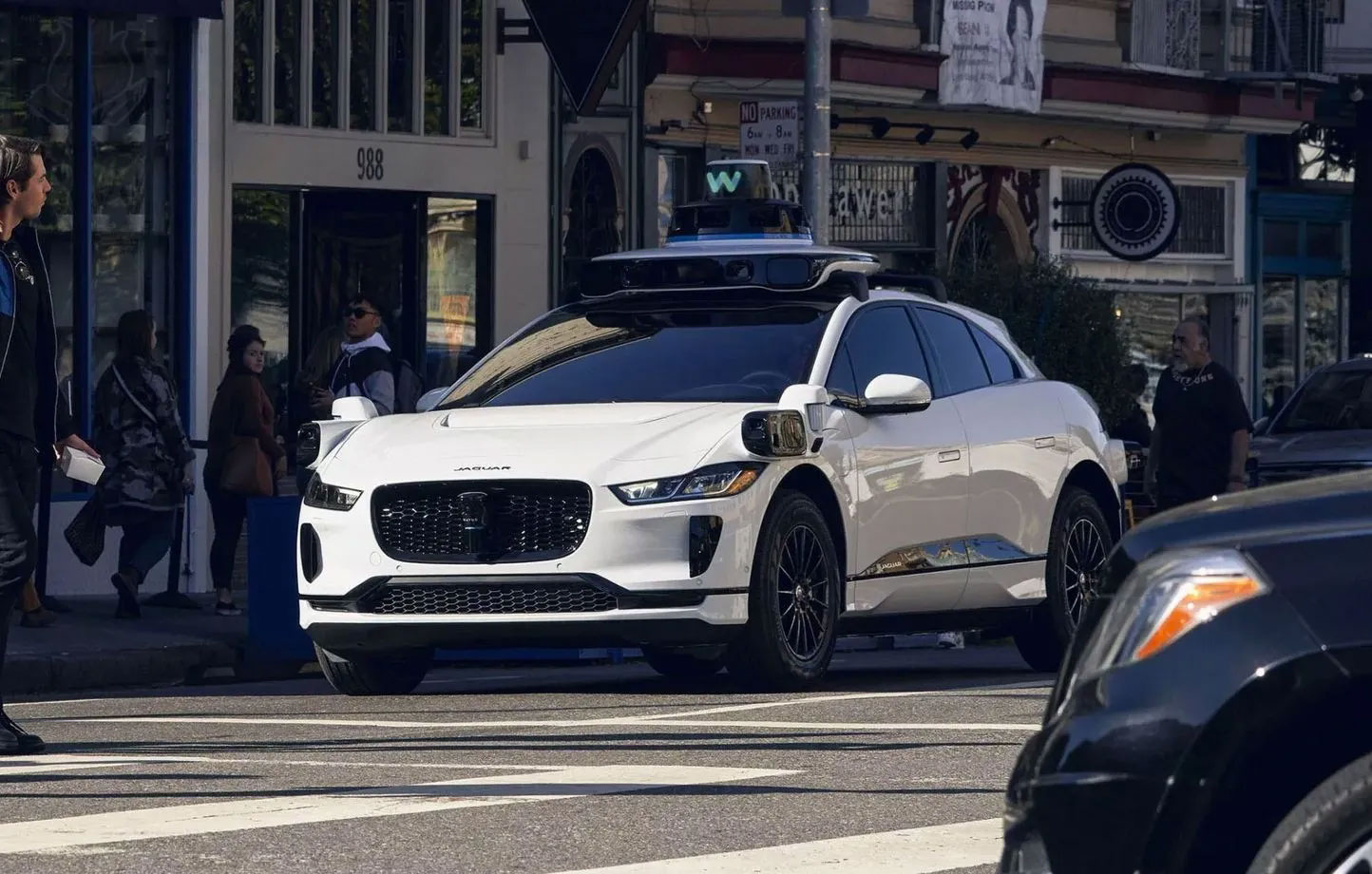
Waymo recently closed a $5.6bn investment round, led by Alphabet, to accelerate the growth of Waymo One ride-hailing services and improve their Waymo Driver ‘AI’-powered AD system.
Expansion will cover cities like San Francisco, Phoenix, Los Angeles, and new markets such as Austin and Atlanta through a partnership with Uber.To support the expansion process and improve the transparency of its operations, Waymo has recently launched a safety impact hub to offer insights into how the Waymo Driver affects road safety.
Waymo is in the process of scaling up their commercial operations and could begin contributing to Google’s bottom line within the next few years. So, it is time to think about the effects for the lidar Business.
Waymo’s Operations: Key Data

After 15 years of R&D, more than $8bn of investment, and multiple pilot programs, Waymo’s robotaxis have become a business booking more than 150,000 rides a week with a fleet of around 700 vehicles.
Waymo is nearly alone in offering a commercial service to customers. Assuming an average fare of $20 per ride, this means an annual revenue of $100m per year.
- Customer drives: 150,000 customer drives per week (San Francisco, Phoenix). Waymo has expansion plans for LA, Austin, and Atlanta.
- Safety: after over 7 million customer rides, 84 per cent fewer airbag-deployment crashes.
- Distance per disengagement close to 20,000 km—similar to Pony, Weride, and Cruise. Zoox is far ahead with 100,000 km.
- Social Acceptance: So far, no critical behaviour or accident with humans (vs GM’s Cruise, who lost their license after one of their robotaxis rolled over and dragged a pedestrian). There have been a few incidents of vandalism in San Francisco, and the cars have caused traffic jams and blocked emergency vehicles responding to calls.
- Local Approvals: The California Public Utilities Commission approved paid service on San Francisco freeways in May, but San Mateo county has so far not done that, which would be required for Airport service. Right now, only the DMV (state department of motor vehicles) is allowed to issue permits for autonomous vehicles. California Senate Bill 915, which would have regulate autonomous-drive services, was pulled in June after the Assembly Committee made major amendments to give the power to regulate this to the hands of the local city/county governments.
- Validation requires millions of miles on public roads and billions of miles of simulations. The sixth generation of Waymo’s driver was released in 2024.
- Investment: Alphabet CFO Ruth Porat said earlier this year that the company will invest another $5bn in the self-driving unit over several years.
- Operations: Waymo has suggested the cost of their vehicles will come to around 30¢ per mile, excluding maintenance, service costs, and depreciation. The complete cost might be as high as 50¢ to 60¢, versus the average cost per ride-hailing mile in Western ride-hailing markets of around $2.40, and the cost of a personally-owned vehicle at about 70¢ per mile. Today, the price per ride is set at around 20 per cent more than an Uber ride.
Customer voice – Driving in SF

Business Insider’s Lloyd Lee wrote this past July: “The touchscreen center console shows riders the maneuvers the Waymo drive is making, such as a lane change or yielding to a pedestrian.
Waymo’s 5th generation autonomous driver could be best described as a safe but not annoyingly cautious driver. It maintained the city’s speed limits, caught yellow lights from a reasonable distance without speeding, and could make a succession of lane changes smoothly on busy streets.
What impressed me more, however, was how it handled riskier drivers on the road and maneuvers necessary to execute in SF.
For example, double-parked cars are a common sight in the city. Sometimes, this means drivers will have to briefly move into the lane of opposing traffic to get around a vehicle.
The Waymo driver knew how to do that, recognizing that the car in the opposing traffic lane stopped to give us the right of way.
The Waymo also appeared to detect a person on an e-scooter coming from behind and inched a little to the left of the lane to give room for the scooter rider. It did the same thing to give itself more room when it detected a large, parked bucket truck slightly in Waymo’s lane.
In one instance, when another driver cut off Waymo, the autonomous driving system handled it with poise since the other driver had plenty of room to go in front of the Waymo.
At yellow lights, the Waymo made good judgment calls about whether it had enough space to catch the light or stop without pressing the brakes hard.
The expectation I had that the Waymo driver would be stiff, as the term ‘robot taxi‘ might suggest, was dispelled throughout the rides”.
According to the J.D. Power 2024 U.S. Robotaxi Experience Study just released:

“Consumers report high satisfaction with robotaxi rides, citing technology as a key factor. Although initially skeptical, Consumer confidence when riding in a fully automated, self-driving vehicle is 56 points higher among those who have ridden in a robotaxi (76 per cent) than in the general population who have not had the experience (20 per cent).
Key findings of that study include:
- Consumers seek safety features. When asked what the ideal robotaxi service should offer, the most important items are emergency button to connect with local emergency services; share location with authorities; ability to select a vehicle that has the safety features they want; and the ability to set the route beforehand.
- Unmet needs drives novelty usage: currently, consumers are using robotaxis as a novelty, as they do not fulfill the riders’ needs pertaining to the service area coverage and cost of the services. Until robotaxi providers can fulfill these and other needs, the service will remain a novelty transport mode.
- Obeying the law: Attributes in the technology category that score highest among robotaxi riders are vehicle obedience of traffic laws (8.36 on a 10-point scale) and the vehicle’s performance maneuvering in normal traffic conditions (8.30).
- Robotaxi vs. rideshare:When given a series of scenarios assuming the cost for either service would be the same, 77 per cent of riders say they would prefer a robotaxi service without a human driver when they need to have a private conversation in the vehicle (a bit incredible, given extensive in-car monitoring –DVN), while a ride-hailing service like Lyft or Uber is preferred when traveling in an area they don’t know well.
Can we expect quick deployment of Waymo robotaxis?
To speed the deployment of Robotaxis, Waymo needs to complete many validations
- Critical use cases: Waymo’s software is tested on private test tracks, where complex scenarios can be staged. Waymo has completed over 40,000 unique scenarios in closed-course environments.
- Public Road tests & simulation: the company has performed extensive testing and continues to scale up their fleet, for a total of 20 million self-driven miles on public roads by 2020 and over 10 billion simulated miles. The total real-world miles might reach close to 100 million by the end of 2024.
- Data collection: Waymo’s approach isn’t as data intensive as Tesla’s. Waymo is using a redundant and complementary sensing suite with vision, radar, lidar, which gives good detection data in all conditions, in contrary to Elon Musk’s singular insistance that his camera-only systems are superior. Multimodal sensing means a more robust system which doesn’t need millions of hours of validations.

- Validations to operate in new cities: One of the potential weaknesses of Waymo’s approach is that new geographies must be mapped in detail before Waymo can deploy their vehicles. This is because custom 3D maps, along with real-time sensor data, are used to determine the vehicle’s exact location. But Google is used to roving mapping operations.
- Time to Market: With a robust detection technology, Waymo can complete the validations faster than the likes of Tesla, and be first on the market. What Waymo must do is to expand their service step by step, maybe in 3 or 4 new cities each year, to operate in 20 cities by 2030.
Performance & Safety: Can Tesla Compete?
Autonomous vehicle companies must be able to offer a safe service which makes riders feel comfortable and is commercially viable. So far, Waymo’s service appears to be safe, and early consumer feedback is generally positive.
• Miles per disengagement: Waymo is at the level of most competitors with about 20,000 km per disengagement. Zoox is ahead but the data are not necessarily comparable. For example, Waymo has tested their vehicles on freeways (with safety drivers) for more than a decade, but still doesn’t allow their robotaxis to use freeways.

Tesla is far behind for safety; their so-called ‘Full Self Driving’ L2+ system has not proven better than the standard ADAS systems for the same category of vehicles, and also for miles per disengagement.
And while Tesla’s cars get in whole categories of crashes most other cars avoid, Waymo has a good safety record. The most recent update—September 2024—shows that Waymo offered over 22 million rider-only miles driven through the end of June. Most of these have been driven in Phoenix (15.4m) and San Francisco (5.9m), with some in Los Angeles (855k) and Austin (14k). In all those, Waymo robotaxis have been involved in 84 per cent fewer crashes with airbag deployment, 73 per cent fewer injury-causing crashes, and 48% fewer police-reported crashes than human drivers.
Most notably, Waymo robotaxis have been assessed as 3.65 times safer than human drivers in Phoenix and San Francisco, with 0.82 injury-reported crashes per million miles compared to 2.92 for human drivers.
Airbag deployment crash rates were 0.23 per million miles for Waymo versus 1.45 for human drivers. This translates into one airbag-deployed crash for every 4.35 million miles, beating Tesla handily.
Does Tesla Have a Plan to Compete with Waymo?
Well…maybe. Leaving aside Elon Musk’s perpetual claims (“soon”, repeated year after year after year), here is a theoretically possible plan for the launch of Tesla’s long-promised robotaxis, based on Yole’s Computing & AI for Robotic Mobility report, 2024:

A validation roadmap is a huge challenge for Tesla, and prospects look murky. Tesla’s current ‘Full Self Driving’ has a failure rate much, much worse than what it needs to be in order to be operated unsupervised.
Zoox CTO Jesse Levinson recently said that he uses Tesla ‘FSD’ regularly and he is impressed by what it can do, but he is afraid that it can create complacency: “Usually it does the right thing, and then it sort of lulls you into this false sense of complacency, and then it does the wrong thing. You’re like, ‘Oh, my God!'”.
When can China be Ready?

China had more than 7 million registered ride-hailing drivers as of the end of May, according to the Ministry of Transport; that country is saturated with taxis when compared to the U.S. which had nearly 400,000 taxi and ride-hailing drivers, shuttle drivers, and chauffeurs in 2022.
China wants to catch up for the robotaxi market, and authorities there have so far issued 16,000 autonomous-vehicle testing permits and opened 32,000 kilometers of public roads for autonomous vehicle testing.
In November 2023, the Chinese Government introduced regulations to pilot market access for AV products that have passed technical tests and are ready for mass production. Once approved, these vehicles can be insured, registered, and used in pilot programs within designated areas. The relevant ministries have jointly issued a notice detailing management measures for road traffic safety and cybersecurity, promoting the application of ‘vehicle-road-cloud integration’ systems.
Baidu CEO Robin Li told investors in May that more than 70 per cent of Apollo Go robotaxi rides in April were fully driverless, with no human staff inside. He predicted that figure will reach 100% in the coming quarters, and allow Apollo Go to break even in Wuhan first.
Wuhan is the largest operational region for Baidu’s Apollo Go, one of the largest robotaxi operators in China. The company has more than 500 robotaxis operating in the city and plans to increase that to 1,000 by the end of the year. This is a similar number of robotaxis as Waymo.
It is very likely that Baidu will become one of the key players in the robotaxi market in China and will gather a similar experience as Waymo, if not larger.

Conclusion
Waymo is currently the clear leader in the self-driving space. Even if competition increases over the next few years, it is difficult to see the market transitioning to price-based competition any time soon, as self-driving vehicles will only represent a fraction of the market in most places.
If the scale-up of Waymo’s operations goes well, the company could break even over the next few years, although it will be some time before Google recoups the enormous investment they have made in self-driving technology. Particularly given the large capital investment that will be required to build a large fleet.
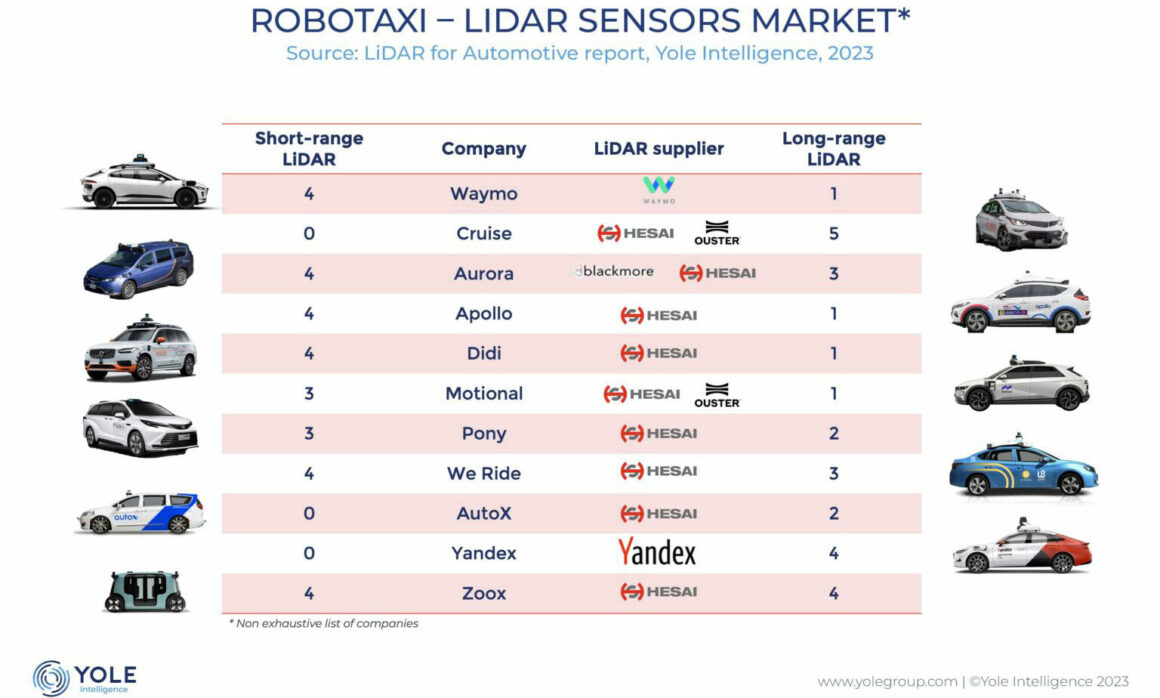
Assuming Waymo needs a revenue of $2bn per year to be profitable, that means a fleet of about 15,000 robotaxis each equipped with 5 lidars—a total of 75,000 lidars. The additional market for lidars is not that big in the short or mid term, but the revenue might look better with a higher lidar price than for cars.
It is also expected the market will develop fast in China, with giants like Baidu and Didi leading the way.
So it’s not yet an emerging market for lidar but the progress is significant since 2023 and we can expect 2027 to be the year when robotaxis will become an emerging market.


