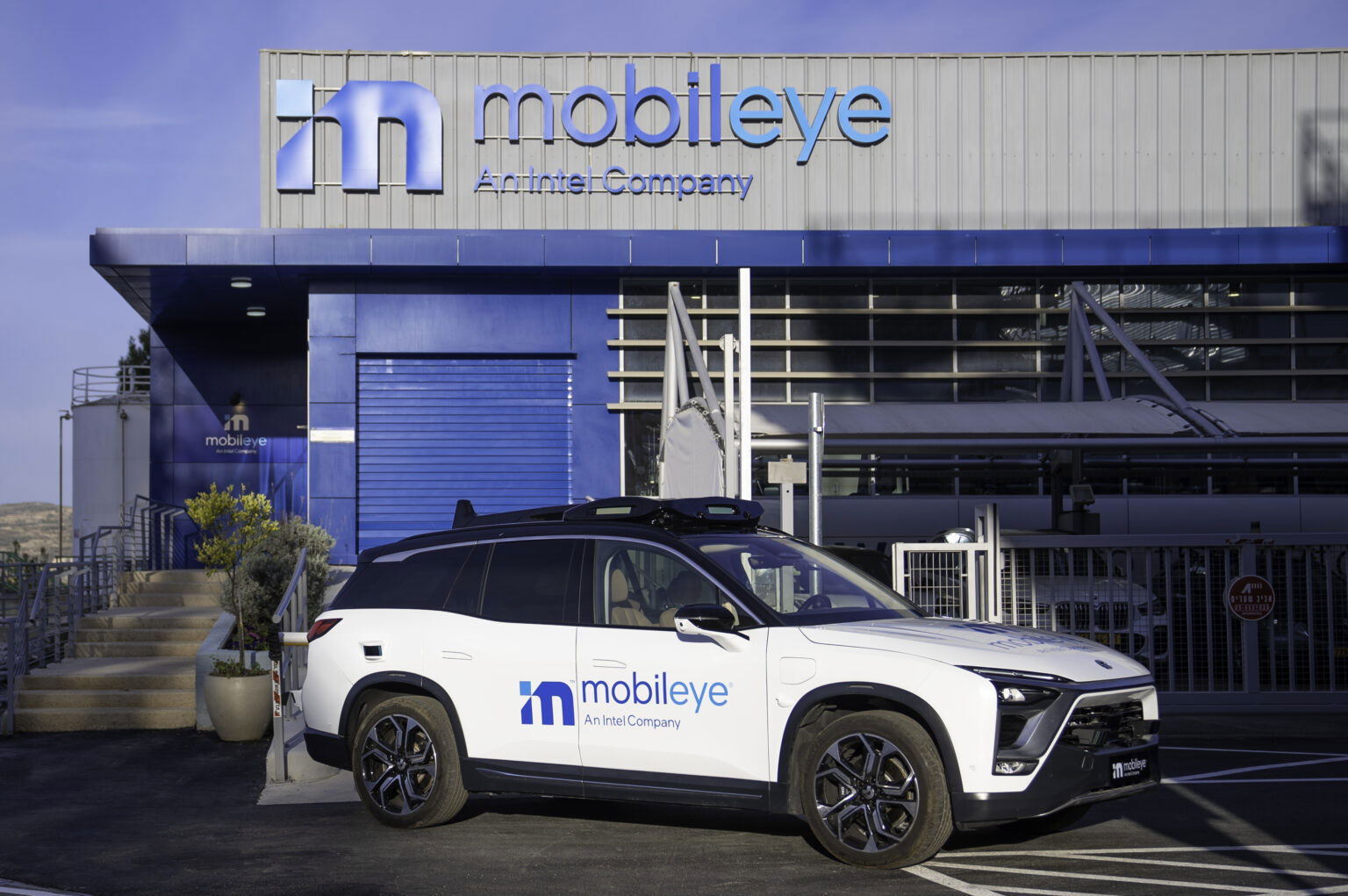
Mobileye, an Israeli company responsible for numerous advancements in automated driving technology will close their lidar development unit by the end of the year, lurching about 100 employees.
Mobileye had been developing FMCW lidar, which can be miniaturized to chip size and can detect both the position and speed of objects around a moving vehicle, but now say they consider FMCW lidar less critical for their eyes-off-the-road autonomous drive systems: “This decision was influenced by several factors, including significant progress with our EyeQ6-based computer vision perception, increased clarity on the performance of our internally developed imaging radar, and continued unexpected cost reductions in third-party time-of-flight lidar units”.
Silicon photonics also played a role in Mobileye’s previous lidar development plans. CEO and founder Amnon Shashua outlined these efforts during a keynote at CES in 2021, saying FMCW lidar would be implemented by 2025. This approach stemmed partly from earlier silicon photonics research at Mobileye corporate parent Intel, aimed at making lidar chips encompassing both active and passive optical elements.
Instead of merging inputs from cameras, radar, and lidar sensors to view the dynamic environment around a moving vehicle, Mobileye’s strategy has been to create two separate viewing channels—one generated by the camera suite and the other from a mix of radar and lidar data.
Ahead of the expected introduction of FMCW lidar, the company stated they will use Luminar’s sensing systems for robotaxi applications. Mobileye has been investing around $60m annually in lidar research, out of a total company development budget of around $1bn. They said the pivot won’t affect any customer product programs or general product development, and reaffirmed their dedication to the development of their in-house imaging radar, which meets performance specifications based on B-samples and is scheduled to enter production next year as planned, adding “imaging radar remains a strategic priority. This foundational technology is expected to provide a competitive edge for Mobileye-based eyes-off systems through the optimisation of cost/performance and scalability”.
DVN comment
FMCW lidar offers advantages over conventional direct-detect lidar, including:
• Improved range resolution, enabling the measurement and separation of multiple closely spaced surfaces.
• Improved dynamic range, enabling the measurement of both bright and dim objects simultaneously.
• Single-photon sensitivity, enabling small apertures, long range operation, and obscurant penetration.
• Velocity sensitivity, enabling the ability to detect and quantify motion.
The development resources required for FMCW technology are quite costly, which is one reason why MobilEye has opted to focus on conventional ToF lidars instead.


