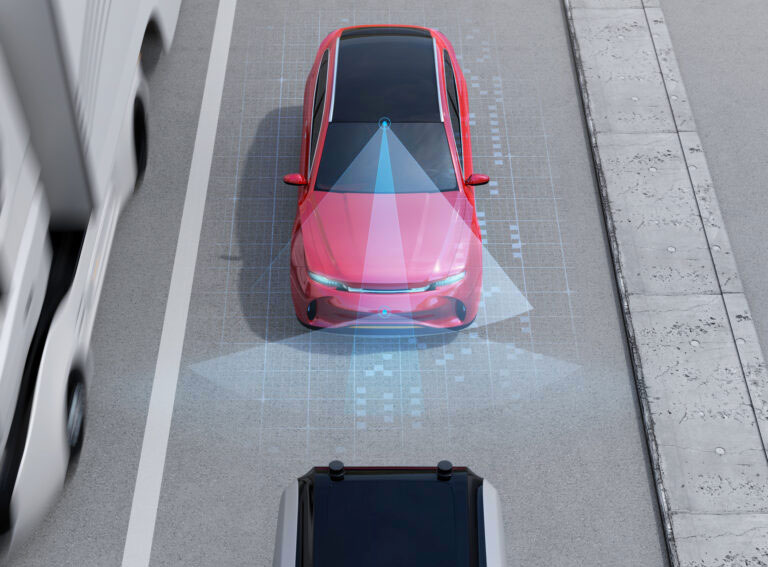
NHTSA’s newly issued Federal Motor Vehicle Safety Standard, FMVSS 127, requires that by September 2029, all new passenger cars and light trucks with a weight limit of up to 10,000 pounds must have AEB and pedestrian AEB systems. These systems must prevent rear-end collisions at speeds as high as 62 miles per hour; identify pedestrians during day and nighttime, and activate at up to 90 mph when a frontal collision is likely and at up to 45 mph in the presence of pedestrians.
NHTSA says the regulation will significantly decrease rear-end and pedestrian crashes, potentially saving at least 360 lives and preventing around 24,000 injuries annually, while reducing damages and expenses related to crashes.
The Alliance for Automotive Innovation, however, is appealing to the agency to ease off on parts of the regulation. AAI CEO John Bozzella wrote to NHTSA saying the required speed standards are not achievable with available technology, and might result in an increase in rear-enders. He said the regulation will add burdensome costs of between $200 and $4,200 for manufacturers (and therefore higher prices for car buyers), for updates to hardware and software, without improving safety for either drivers or pedestrians.
Bozzella noted that data from NHTSA indicates only a single vehicle passed the stopping distance criteria set out in the final regulation. He suggested that NHTSA should implement a standard similar to one used in Europe that detects potential frontal collisions, alerts the driver, and initiates automatic braking to prevent or mitigate a collision by leveraging currently-available crash prevention systems.
Bozella lamented in his letter that “after a decade of shared and substantive work on AEB and a billion dollars invested, NHTSA inexplicably changed course and issued a rule that automakers indicated was not feasible with widely used braking technologies”. Auto Innovators has suggested the rule’s maximum test speeds should be lowered and that certain terms be clearly defined, like ‘imminent’ in the context of crashes.
AAI’s petition contends the final rule contains requirements that are not practicable or objective—U.S. law requires vehicle safety standards to have both of these characteristics—and that the final rule did not consider comments that brought up issues regarding the feasibility, practicability, and potential unintended effects. It says the rule also lacks a clear explanation for its adopted requirements, and is an unexplained departure from long-established precedents in regulating vehicle stopping distances.
DVN comment
the Alliance for Automotive Innovation includes members like BMW, Cruise, Ford, GM, Honda, Hyundai-Kia, JLR, Mazda, Mercedes, Mitsubishi, Nissan, Porsche, Stellantis, Toyota, VW, and Volvo. It will be interesting to see how this difference of opinion resolves; NHTSA, in devising their regulation for Adaptive Driving Beam headlighting systems, rejected proven worldwide practice and diverged sharply from broad consensus among automakers, suppliers, safety experts, consumer groups, and subject-matter experts, whose subsequent objections and appeals were largely rebuffed. Despite the severe flaws in the US ADB regulation, industry has set to work devising compliant systems, while acknowledging as a sort of open secret that US-compliant ADB systems will be more expensive and less performant than rest-of-world systems. Perhaps FMVSS 127 will wind up as a similar story.


