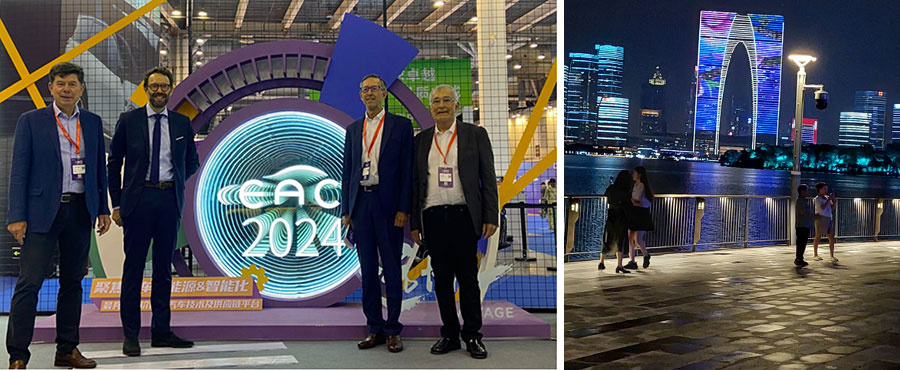
The AEC Lidar Tech Expo is the biggest lidar expo in the World. This year it was co-organized by DVN and Enmore. DVN is now present with events in the EU, the US, and China.
DVN brought about 20 companies, including seven speakers—Valeo, AGC-Wideye, Sony, FKA, Siemens Simulation, Voyant, and Baidu Apollo), three exhibitors (C3nano, RCoola, and Konrad), and multiple visitors from Mobileye, Luminar, Onsemi, AMS Osram, Dexerials, Koito, Forvia Hella, Suna Opted, Schott, LG Innotek, and Robo-technik.
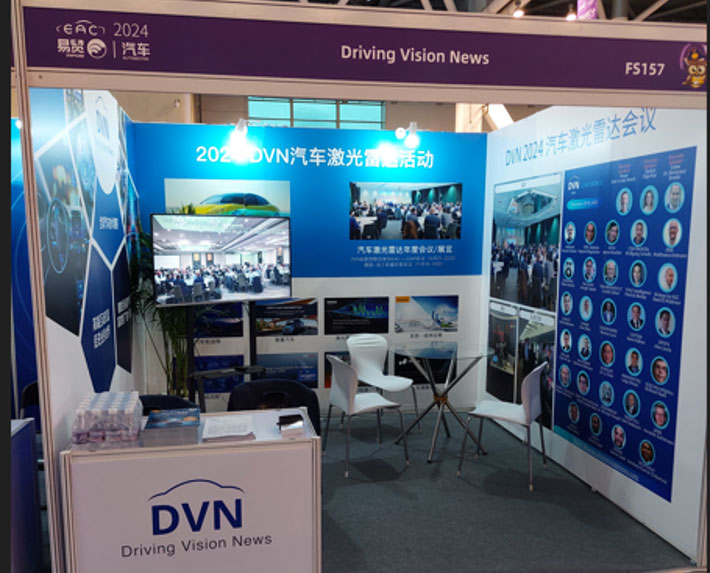
This was a unique opportunity for DVN to better understand why Lidar is so popular in China. We met with lidar suppliers and automakers at the DVN booth, and after the expo we visited the facilities of Robosense and Seyond and meet with Professor Ling Ming, who leads the International Conference for Automotive Lidar, to discuss standards and regulations.
Here are key takeaways:
- Yole revised the size of the lidar business in 2030 to take into account the steep cost reduction curve of lidar in China.
- Buyers of Luxury cars: some buyers are young and like high-tech cars. Most Porsche buyers, for example, are 30 to 35 years old.
- OEMs tried last year to replace Lidar by more vision or imaging radars, but this year no OEM is questioning the value of Lidar (assuming the cost can go down).
- Hesai has been promoting the safety benefit of lidar, which can increase the maximum speed for AEB by 50 per cent, and the development of L3 applications in China (9-model pilot project already under way).
- Seyond: L2+++ applications expanding to urban and highway environments, just a step away from L3. Seyond has found the mean time between human-driver interventions is improving fast, and already exceeds 100 km on highways.
- Vanjee is launching a premium lidar with 300m range and up to 0.15° × 0,08° resolution in the ROI (80° × 12.5°) – see our lidar technology articles.
- Lidar is getting cheaper and cheaper for L2+/NOA applications (0.1 – 0.2° resolution), expected at $200 in 2025 and with a target of $150 or less in 2026-27.
- To go further in the cost reduction, there are investigations to integrate vision and lidar together (Tanway, DJI…), with installation behind the windshield.
- Huawei will become one of the key suppliers for lidar.
- FMCW: Scantinel announced representative prototypes next year and possible SOP by 2027. Lidwave, a startup from Israel, has shown a simplification of the design, as has US startup Voyant using a design based on mature components from the telecoms industry and also targeting a 2027 SOP.
- Vueron mentioned they are ranking first in the list of Waymo perception software suppliers.
- FKA promoted their research project related to the extension of the first DIN-SAE spec of lidar for bad weather conditions.
- Professor Ling Ming is concerned by the steep price reduction curve of lidar, which might be difficult to manage by startups (e.g., Robosense, Hesai) in case they do not achieve profitability within the next two-three years.
- Robotaxis: Baidu Apollo is operating a fleet of 500 robotaxis without any safety driver, like most of their competitors (Weride, Pony, Didi, Auto X…) but using remote-control monitoring. There are concerns about the business model, given today’s low taxi fares. On the other hand, a improvement of traffic conditions might become a priority (smart roads) and support the deployment of robotaxis in some areas.
- Robotrucks are also making progress. The convoying solution might be relatively easy to implement and generate profit.
- Imaging radars are geeting cheaper—they’re well below $100—but the resolution is still much higher than lidar (0.6° in best case).


