By Daniel Stern, DVN Chief Editor
There is no success without failure, and the lighting industry is not exempt. Plenty of ideas over the years just haven’t worked out. Some were technically unfeasible, some were too costly, some posed too much of a threat to existing segments of industry, some came at the wrong time, and some—perhaps most vexingly of all—have nothing at all wrong with them, but just failed to gain traction.
In this new Retroreflections series, we’re taking a look at some of our industry’s commercially unsuccessful highlights and lowlights, which not only are technically interesting but also still have lessons to teach us. If any of them catches your fancy, send a message to resident technology historian Daniel Stern for more information. This week, we’re looking at DC HID systems: one that was commercialised but shouldn’t have been, and the other that was never commercialised but should have been.
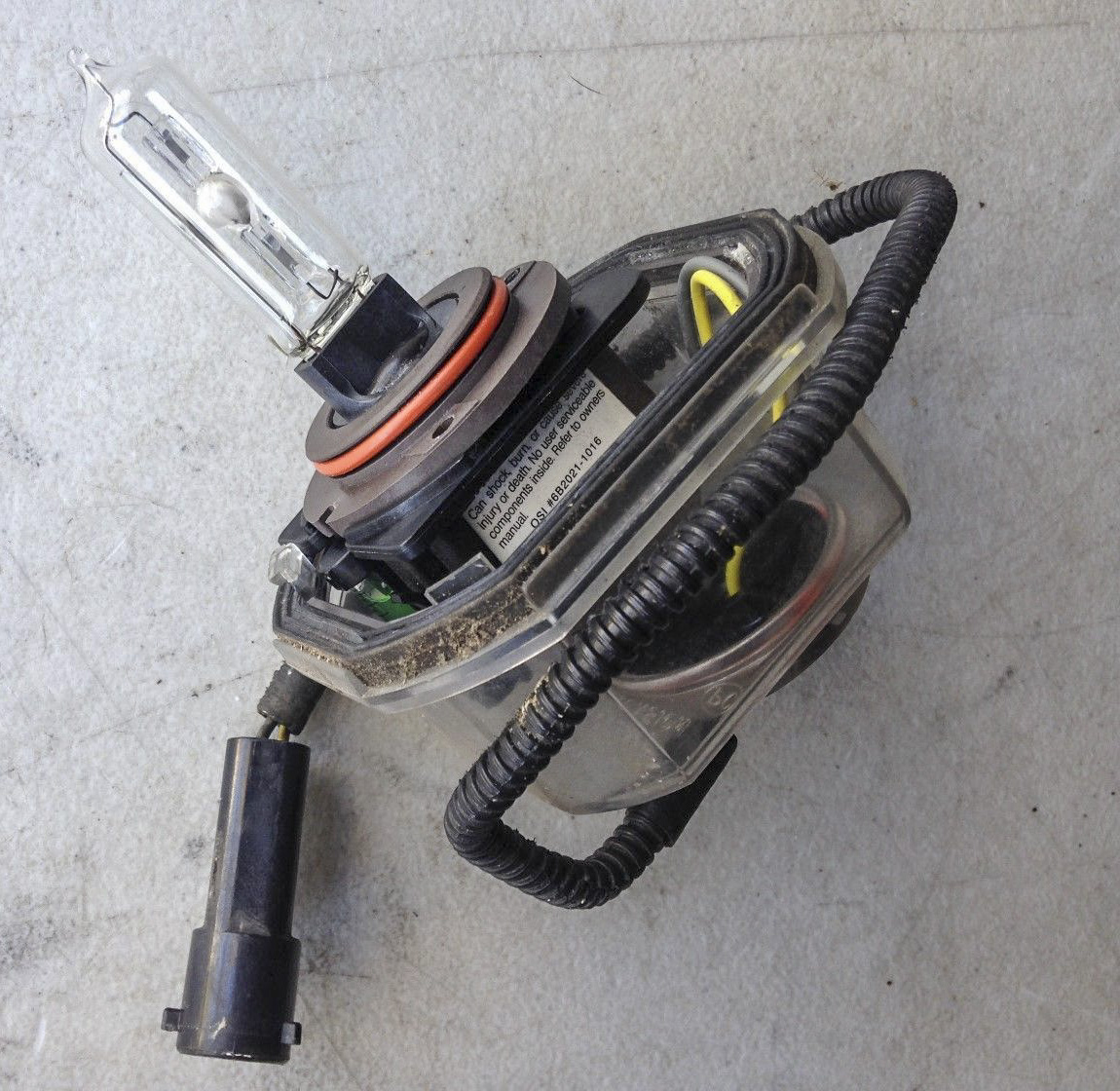
DC HID, Take I
One of the last automotive lighting innovations by GTE-Sylvania was an HID headlamp light source system. This, called the Type 9500, had an unshielded arc tube with integral ignitor and divorced ballast—conceptually similar to the D1S, but with DC rather than AC arc operation. Only two headlamps were ever designed to use the 9500 system: those for the 1995-’96 and 1997-’98 Lincoln Mark VIII luxury coupé models made by Ford in the United States. These were second on American roads with HID headlamps—first having been BMW’s E32 7-series, as in Europe. But the 9500 system failed with alacrity; it was so problem-prone that parts and instructions were issued to dealers for retrofitting conventional halogen headlamps. The high failure rate and almost-none application conspired to make considerable trouble for those owners who elected to keep their HIDs—eventually there were no more replacement bulbs or ballasts to be had. Present prices for new old-stock units, when they can be found, hover around USD $400 per bulb, and enterprising (or desperate) enthusiasts of the vehicles have designed adaptors to use D2S bulbs instead. Osram inherited this costly-to-support system when they bought Sylvania from GTE in the late 1990s, and no further development or marketing was attempted; all subsequent HID headlamps were designed with the world-standard AC bulbs and electronics.
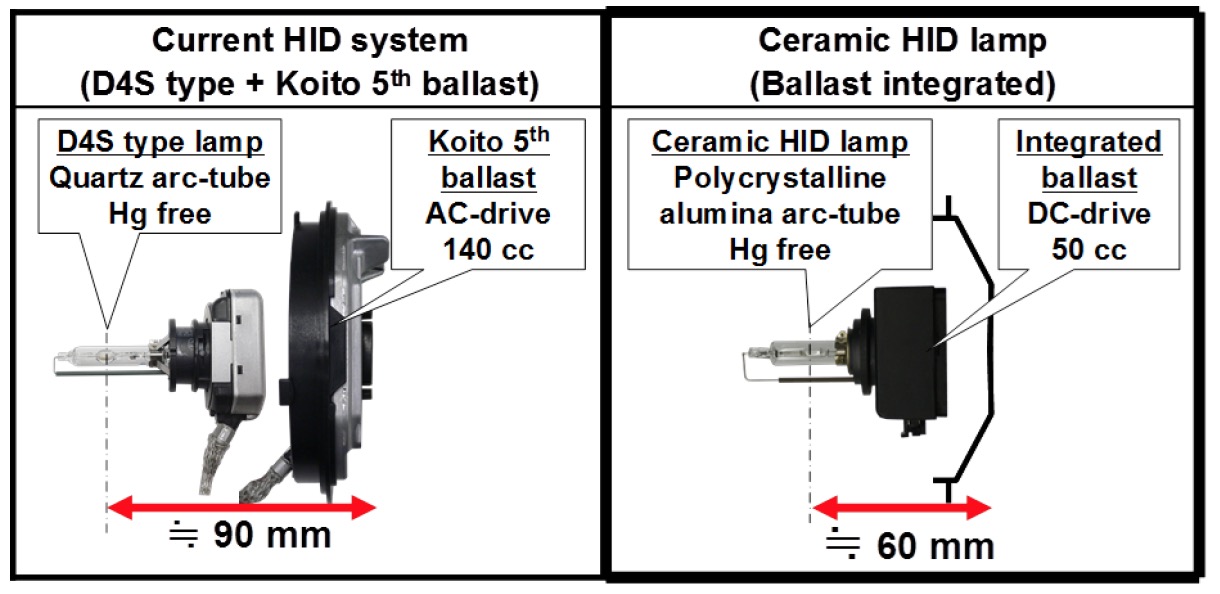
DC HID, Take II
At the 2011 ISAL, Koito presented a revolutionary new ceramic HID light source and DC ballast system with significant performance, power consumption, lifespan, mass, efficacy, efficiency, and cost advantages over existing AC systems. Regrettably, it was never commercialised, for it came too late; the industry had already turned its attention to rapidly developing LEDs.


