By J. Dickmann, Independent ADAS/AD Engineering Consultant
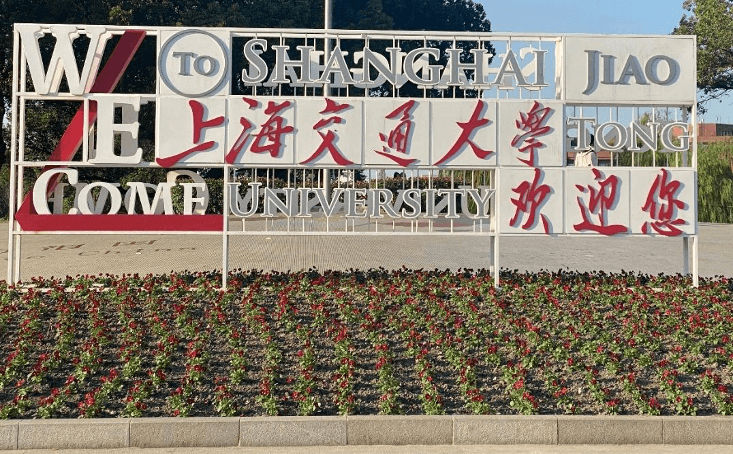
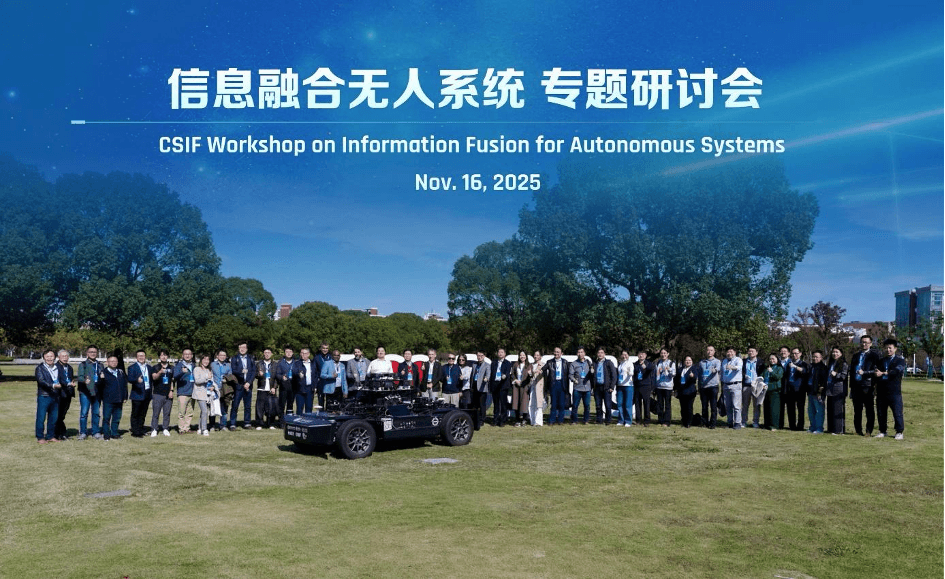
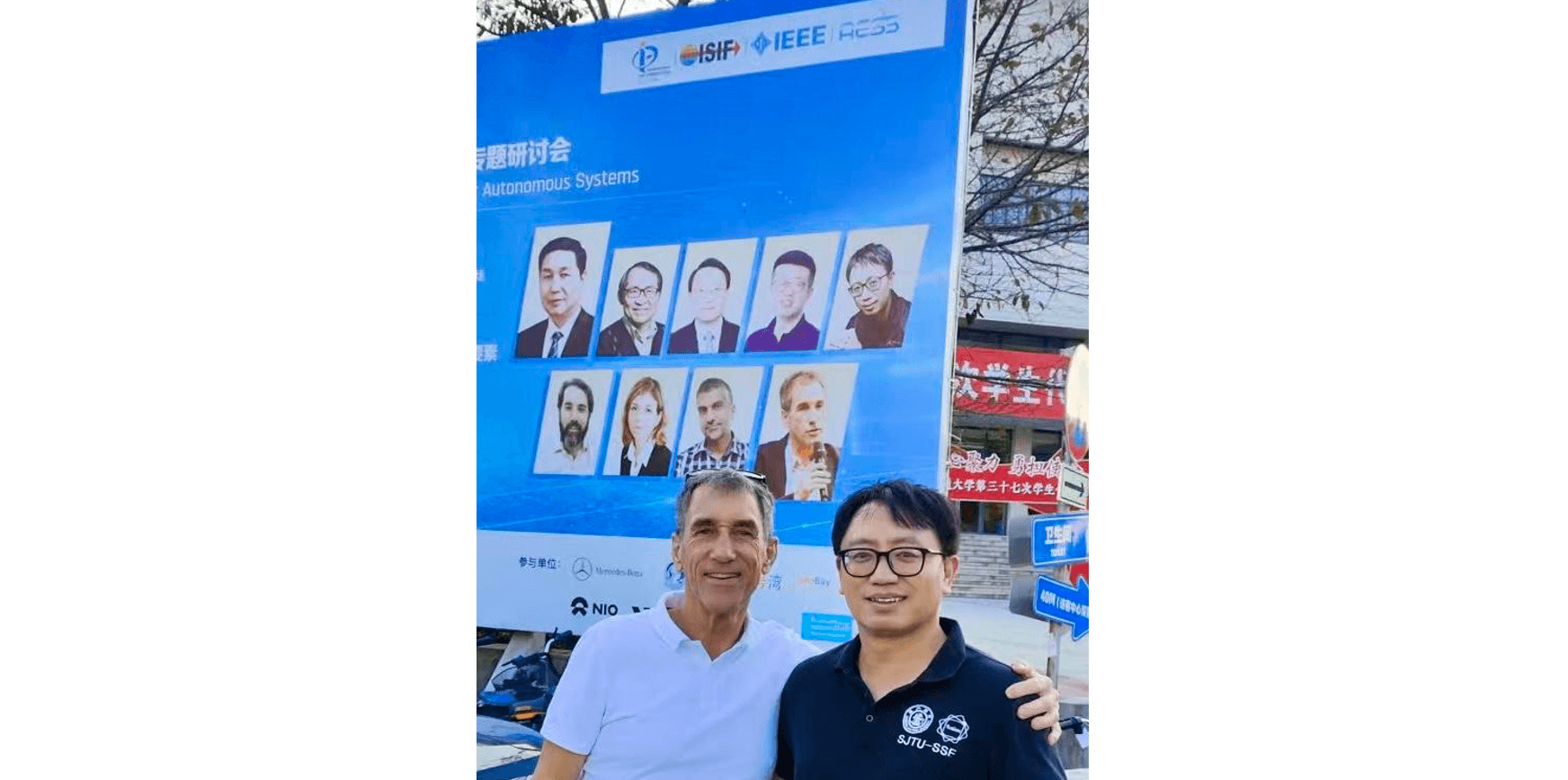
Shanghai Jiao Tong University (SJTU) has marked a significant step in the global autonomous systems landscape with the establishment of its Information Fusion for Autonomous Systems special committee. This initiative, jointly hosted by the Chinese Society of Information Fusion (CSIF) and the International Society of Information Fusion (ISIF) at SJTU’s Smart Sensor Fusion Laboratory in November 2025, aims to accelerate the deployment of fusion technology across the Asian region and foster international collaboration. Professor Ting Juan was the protagonist that initiated and guided all that. The academic significance of the event is documented by the high- calibre participants from the Chinese administration: Dr You He, Academician of China, and Dr Haibin Guan, Vice President of SJTU.
1. Strategic Importance and Global Collaboration SJTU’s move is highly significant, positioning one of China’s premier institutions at the nexus of fusion research and industrial application. The Smart Sensor Fusion Laboratory serves as a crucial hub where academic rigor is directly applied to real-world deployment challenges. This establishment directly addresses a critical industry bottleneck: the historically difficult transition from laboratory-proven sensor fusion algorithms to production-ready autonomous systems.
The event featured Dr. Jürgen Dickmann, a senior advisor to Driving Vision News (DVN) and independent consultant and a recognized authority on fusion methodologies, as one of five external evaluators and as the keynote speaker. His participation, alongside an international roster that included IEEE AESS and global fusion specialists, validates the strategic direction of the initiative and signals a commitment to global scientific cooperation. This collaboration represents an opportunity to leverage shared expertise, setting a new benchmark for fusion research and deployment worldwide.
2. The Fusion-Centric Technical Approach Information fusion is the process of integrating multimodal sensor data into coherent, real-time situational awareness. It has evolved from its origins in aerospace into the nervous system of modern autonomous vehicles. SJTU’s fusion-centric approach emphasizes a fundamental engineering truth: redundancy, cross-validation, and holistic data integration provide the surest path to the high safety margins demanded by regulators and end-users. This methodology ensures inherently superior sensor redundancy and real-time perception reliability, offering measurable advantages in contested markets. This aligns with the understanding that while vision-only architectures may suffice for specific use cases, achieving perception reliability at scale—the core challenge of autonomous systems engineering—requires robust multi- sensor fusion.
3. Software Redundancy and the Role of Fusion A crucial element, particularly with the increasing automation of ADAS/AV software stacks, is software redundancy. The fusion approach provides this necessary redundancy, making it a fundamental differentiator for vehicles claiming regulatory approval and end-user trust. Many software stack developers, such as Wayve, Nuro and Momenta, utilize advanced end-to-end (E2E) approaches. While such leading companies are already integrating comprehensive sensor suites including cameras, radar, and LiDAR into their solutions, the CSIF-ISIF partnership offers a prime opportunity to further strengthen the expertise in integrating lower-level radar data for optimal performance within these E2E frameworks. CSIF can facilitate the knowledge transfer, ensuring that the critical, high- fidelity data from radar sensors is fully leveraged by all software stack manufacturers to enhance overall safety and performance, thus supporting industry leaders like Momenta in their continuous pursuit of state-of-the-art autonomy.
4. Accelerating Industrial Deployment and Open Access
The primary objective of the new committee is to accelerate the crucial transition from laboratory research to industrial-scale deployment. To move promising fusion algorithms beyond academic papers and controlled tests, SJTU is creating structured pathways for technology transfer, establishing common standards, and developing shared datasets.
A key initiative is the joint CSIF-ISIF Fusion Oriented Open-Access Data platform (FOOD platform), hosted at cadar.ai.
- Standardisation and Benchmarking: This infrastructure is designed to enable standardised evaluation, benchmarking, and collaborative development across Asian institutions and international partners.
- Democratisation of Technology: By providing access to benchmarked, standardised evaluation environments, the FOOD platform democratizes high-end fusion infrastructure. This reduces barriers to entry for emerging autonomous vehicle manufacturers, particularly in cost-sensitive segments where proprietary platforms are prohibitive.
- Industry Roadmaps: The FOOD platform is anticipated to become a reference architecture, influencing the roadmaps of suppliers, integrators, and OEMs across the autonomous systems supply chain.
The committee’s mandate is intentionally broad, encompassing unmanned ground vehicles (UGVs), unmanned aerial vehicles (UAVs), and unmanned surface vessels (USVs). This tri-platform scope recognises that optimized fusion principles can be scaled horizontally across various robotics domains. The structure, with dedicated general secretaries for each platform, ensures both focused technical depth and crucial cross-disciplinary knowledge exchange.
5. Looking Ahead The establishment of this special committee, coupled with the formal CSIF-ISIF cooperation, signals a substantial global commitment to fusion-centric autonomous systems development. This technical pathway, anchored by formal committee structures and international partnerships, is set to define the character of Chinese autonomous vehicles and foster a cooperative, globally-benchmarked approach to autonomous driving technology over the next half-decade. The consolidation of fusion development into recognised standards and best practices, anchored at SJTU, offers an opportunity for global partners to track and engage with this technical leadership. Engineers and strategists are encouraged to leverage this initiative for future partnership opportunities and collaborative resource allocation as autonomous vehicle deployment accelerates worldwide.
DVN-note: We will follow up on this topic , to see how Universee and other approaches will serve AV stacks with a safety path. Especially for E2E stacks this could be an attractive approach to form the relevant safety cases. For comments or contributions, contact the DVN editorial team.
J. Dickmann is an independent ADAS/AD engineering consultant with 20+ years’ experience in Radar and Radar perception, sensor fusion, perception architectures, sensor set-up definition and in ADAS and AV driving.