Zoox Details 360° Vision System for Robotaxis

Zoox have revealed the technical details of their 360° robotaxi vision system, which uses overlapping lidar, radar, and cameras to eliminate blind spots in autonomous driving.
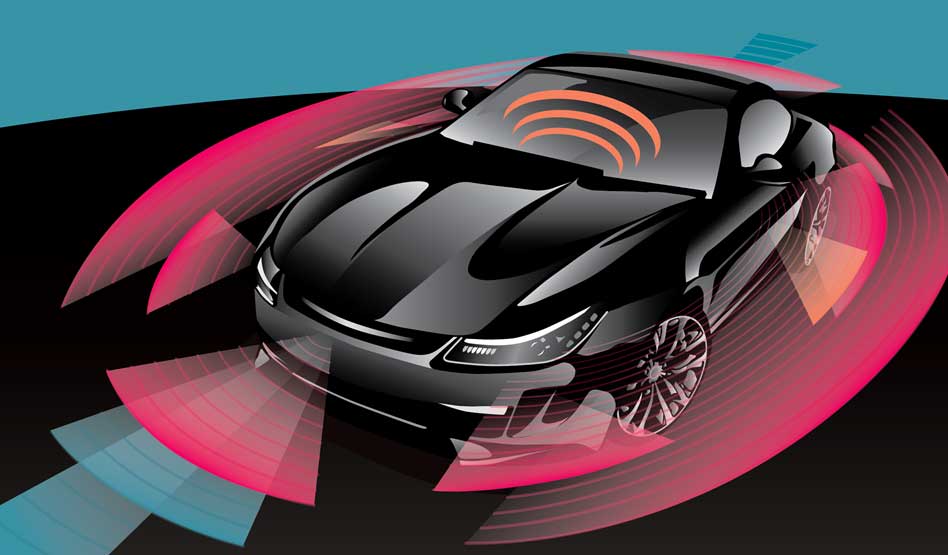
The system uses a redundant array of sensors to provide a 360-degree field of view that extends 150 metres in all directions. This overlapping coverage is designed to eliminate blind spots and ensure continuous perception in complex urban environments. The Zoox sensor strategy diverges from traditional automotive layouts by placing identical sensor pods at all four corners of the vehicle. This geometry provides each corner with a 270-degree field of view. Consequently, every area around the vehicle is monitored by at least two separate pods simultaneously or, often, three.
This design creates a fail-safe perception layer. If one pod is obscured or suffers a hardware malfunction, the remaining sensors cover the gap. This level of hardware redundancy is a critical requirement for L5 autonomy, where no human driver is present.
The perception stack relies on three distinct modalities to interpret the environment. lidar provides precise 3D mapping and distance measurements, while radar detects the velocity of moving objects through adverse weather conditions. High-resolution cameras add colour and texture, which are essential for reading traffic signals and road signs.
Lidar sensors create a dense pointcloud for spatial accuracy; millimetre-wave radar tracks moving objects in rain or fog, and optical cameras provide semantic information for localized decision-making. By fusing these data streams, the vehicle creates a comprehensive model of its surroundings. The company noted that this 360-degree perspective allows the robotaxi to ‘see’ around corners better than a human driver by leveraging its elevated sensor positions.
Zoox’s 360°, high-redundancy system highlights the industry trend toward safety-first designs. Demonstrating sensor reliability is crucial for regulatory approval in cities like San Francisco and Las Vegas. Better perception hardware lowers the need for software uncertainty buffers, enabling vehicles to transition smoothly and maneuver confidently in traffic.
Hyundai Mobis: Big Data Integration For Fast SDV, ADAS Validation
Global automakers are increasingly requiring suppliers to provide large-scale, data-driven validation, often involving tens of thousands of hours of testing, before approving core components for use in software-defined vehicles (SDVs).
Hyundai Mobis have established a data integration management solution they say significantly shortens this process, enabling the company to secure a competitive edge in the global market.
The evaluation and validation system can repeatedly test electronic control units (ECUs) for SDVs and autonomous driving by linking data from actual road tests with data management solutions and simulators to replicate various driving scenarios.
This system can reportedly reduce evaluation and validation time through a platform that connects multiple simulators in parallel, reflecting various validation scenarios. Hyundai Mobis plan to expand this platform to connect up to 60 such simulators. This, they say, will allow for 10,000 hours’ worth of evaluation and validation in one week’s time.
The system is based on data collected under various conditions in real-world driving and parking environments via sensors mounted on test vehicles. A key advantage is its ability to replicate scenarios that are difficult to reproduce in reality, such as nighttime driving, rainy conditions and unexpected incidents, by integrating them with simulations in a virtual environment. By combining real-world and virtual data in an optimal ratio, the company expects to evaluate the recognition performance and stability of autonomous driving and ADAS systems.
Hyundai Mobis plan to use this system to validate the performance and reliability of algorithms for autonomous driving sensors such as radar, cameras, lidar and ultrasonic sensors, as well as various ECUs. By establishing an evaluation and validation system capable of managing large-scale sensor data in a one-stop manner, the company expects to strengthen its technological competitiveness for SDV advances, thereby gaining momentum for more aggressive global order acquisition activities.
“In the era of SDVs and autonomous driving, evaluation and validation are just as critical as technology development. We expect that establishing this evaluation and validation system will simultaneously expand the speed and scope of validation, thereby significantly boosting our competitiveness in securing orders for core SDV components,” explained Ko Bongchul, chief of automotive electronics R&D at Hyundai Mobis.


