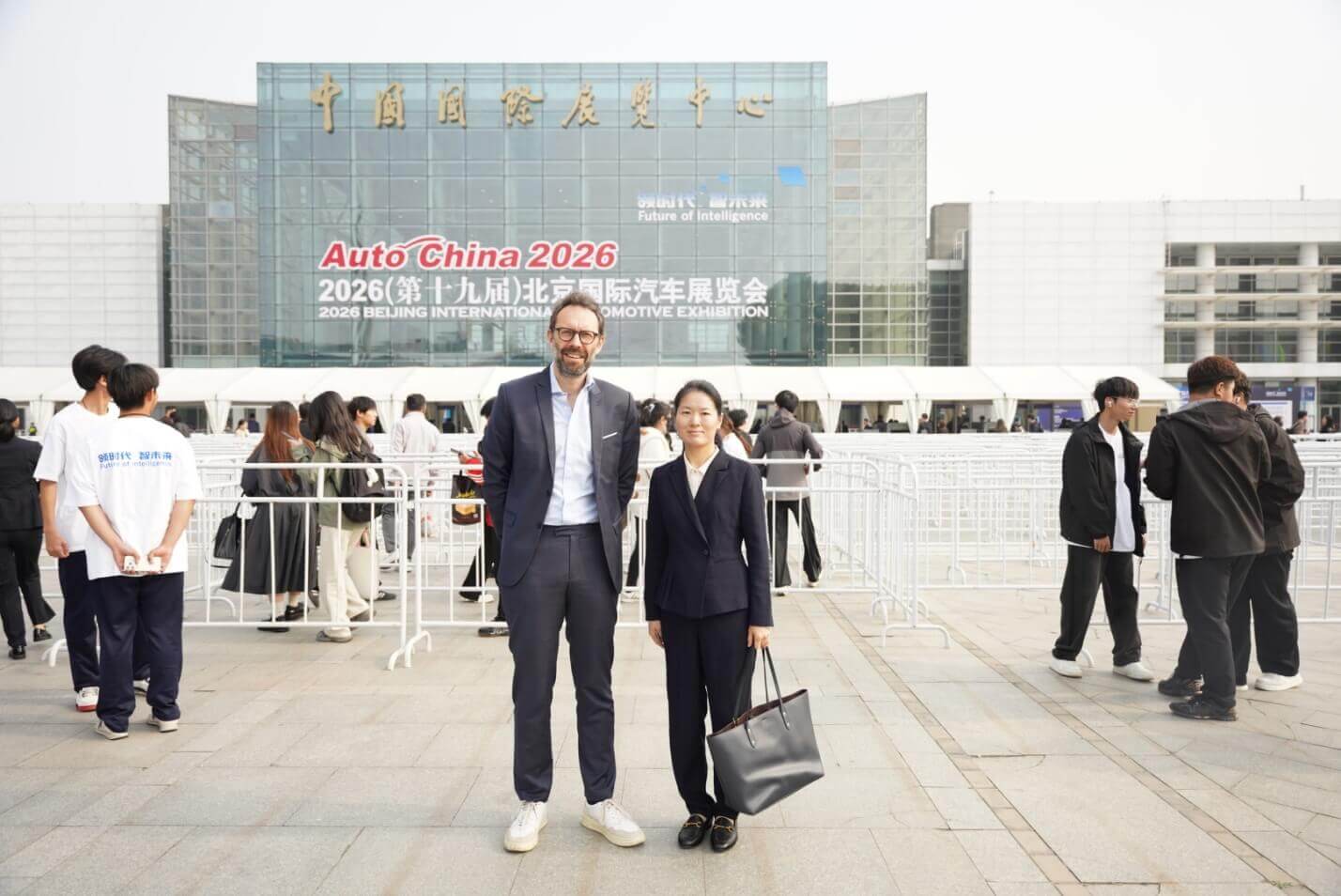
I spent the last several days in Beijing to visit Beijing auto show (Auto China 2026). While the Shanghai auto show last year was big (360,000 m2), Beijing was even bigger (380,000 m2), and much bigger compared to the last Beijing show in 2024 (220,000 m2).
Compared to Shanghai, the tier-1 and -2 exhibition was much smaller; a lot of global companies did not exhibit – like Forvia, Antolin, Saint-Gobain, Mobileye, or Hesai. That means the space allocated for OEMs was much bigger. There were more than 1,500 models, and around 180 new reveals according to media.
General opinion and automotive experts focused not on a battery-capacity competition like before, but on intelligent mobility with smart EVs: 800-volt (and even 900 or 1000) platforms and super-fast charging from the likes of BYD, L2+ ADAS, and AI cockpits. While European premium companies focused their communication on heritage, Chinese OEMs focused on tech, with yet more new brands arriving on the market, mostly in Huawei partnership. Aistaland, for example, a Huawei-GAC JV, and Epicland, a Huawei-Dongfeng JV. They showed impressive new cars, even more modern compared to the Hima ecosystem (Aito, Luxeed, Maextro, Stellato, and Shangjie).
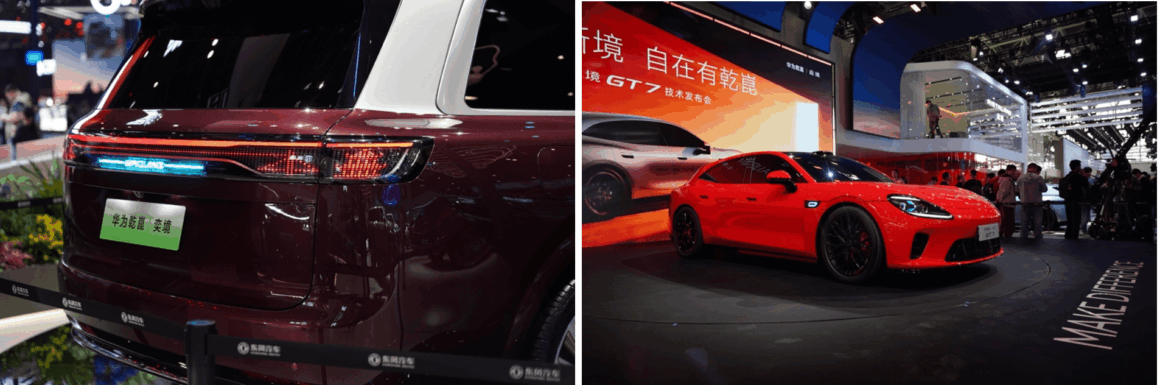
VW group, Nissan, Toyota, and Honda presented new vehicles designed in China with Chinese platforms (Xpeng-VW, Saic-AUDI, Dongfeng-Nissan) to be competitive in the market – particularly with regard to ADAS and cockpits.
What about the market? Even with new OEMs coming onstream, and a fulsome demonstration of technology and innovation, the market is going down. In Q1, the Chinese market is down by ~20 per cent, though exports (up around 50 per cent) compensate partially for the local-market downturn. EVs are still up (about 20 per cent), while ICE vehicles are down by around 30 per cent. Especially, the market for vehicles costing more than C¥250,000 (~€30,000) is clearly going down faster than the rest, while OEMs are showcasing these cars at the Auto Show.
What about lighting?
In this condition, competition is a disaster. OEMs are not making money. I see less enthusiasm for exterior design; most effort is put on interior design, comfort, entertainment systems, and well-being – including interior lighting. Cars are not design-driven for exterior; a lot of cars are similar. With many standard platforms and the super-fast time to develop (less than 12 months) it is difficult to reimagine totally new exteriors. This also affects the interior design.
For lighting, I see less and less exterior displays; there are no use cases panning out. Fewer lit logos, fewer projections systems (or only on premium vehicles). We go to reasonable design, only affordable innovation. But high level of execution, with importance of perceived quality with nice material, graining, crystal, glass (CMF). Less bling-bling, more quality if I may summarize.
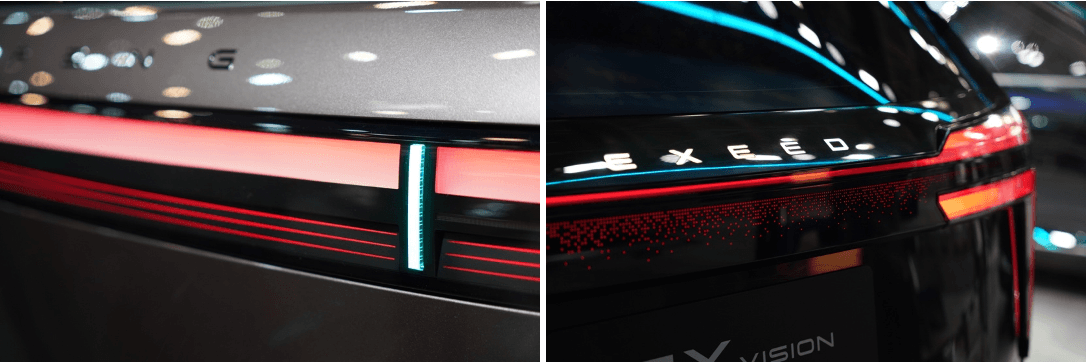
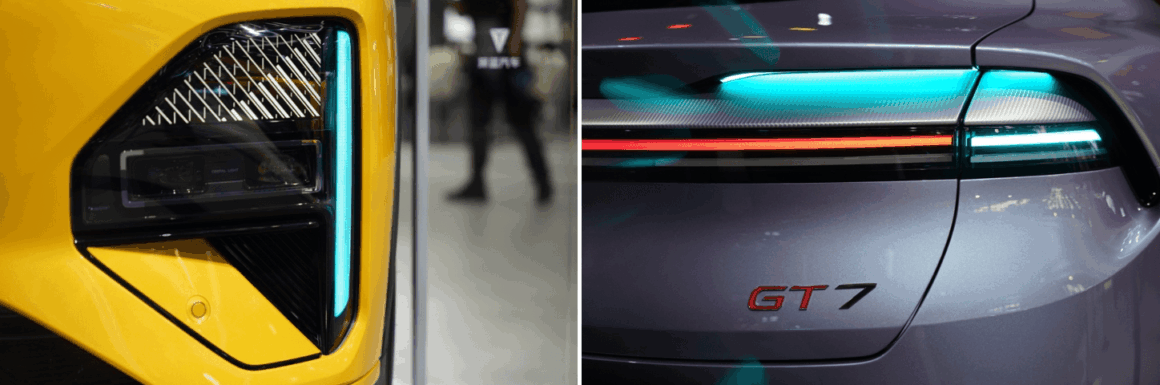
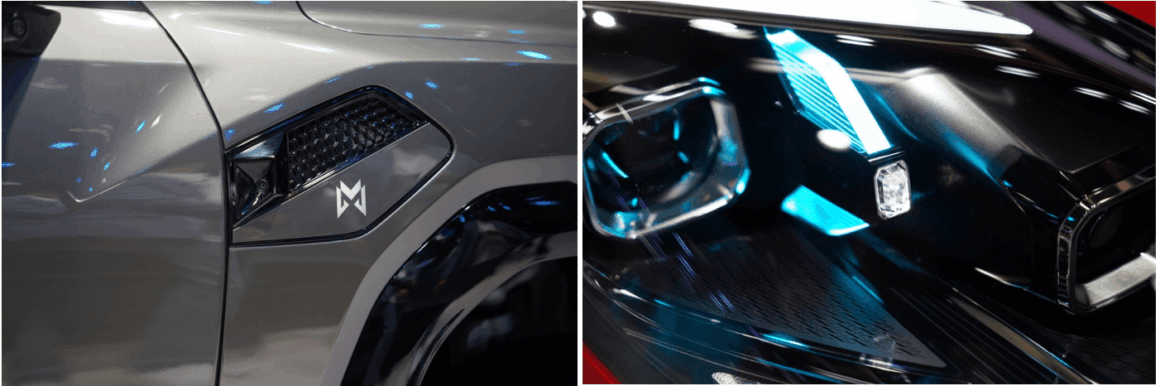
A good example is the Zeekr 8X signalling function. They replaced the massive, thick crystal piece by an edge light + light guide with laser shot on each side. Same appearance, much cheaper.

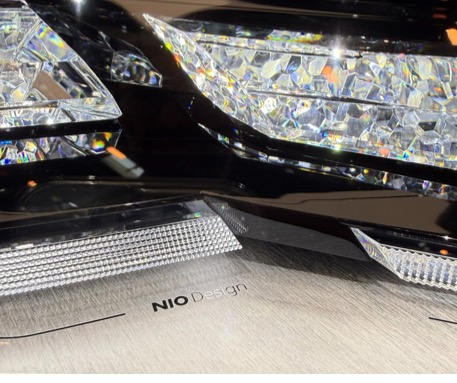
Another good example is the Shangjie S7 with a piece of ‘crystal’ in front of low and high beam. Premium appearance for reasonable cost (I surmise).
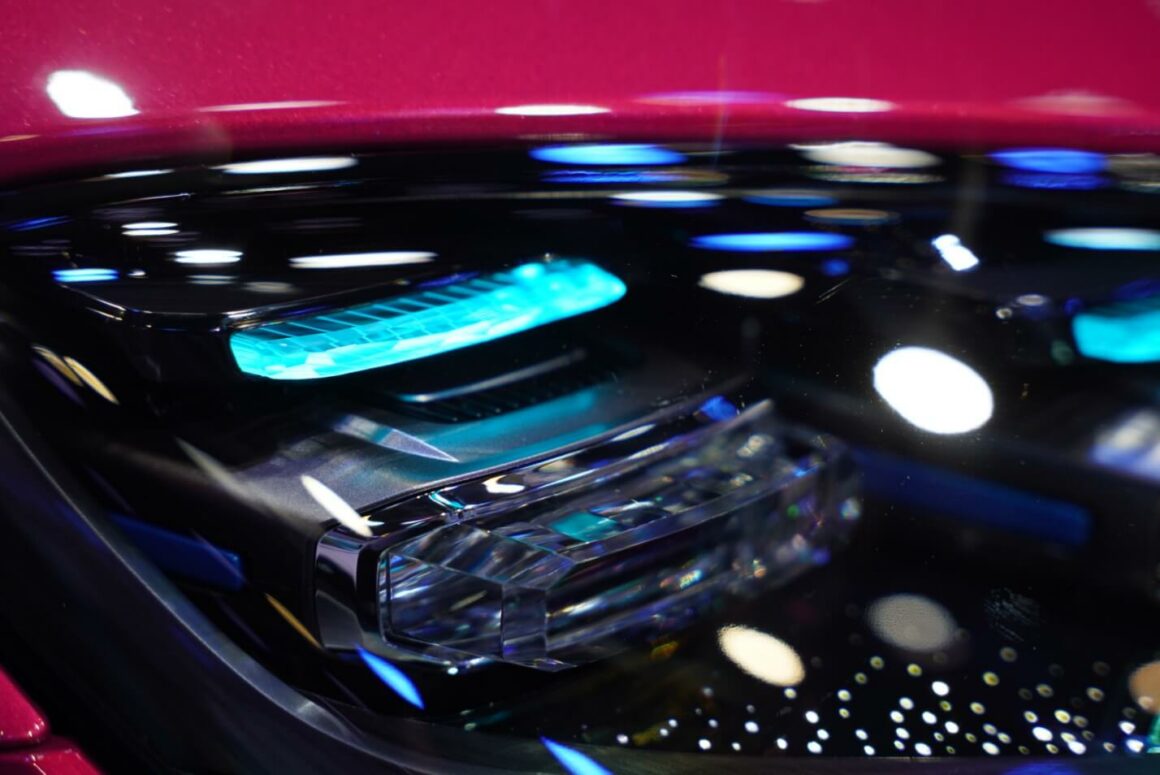
This is also what I saw while visiting tier-1 lighting booths: innovation with fast time to market, easy to implement. Pragmatic approach for the high-volume vehicles, and still high-end innovation for premium vehicles
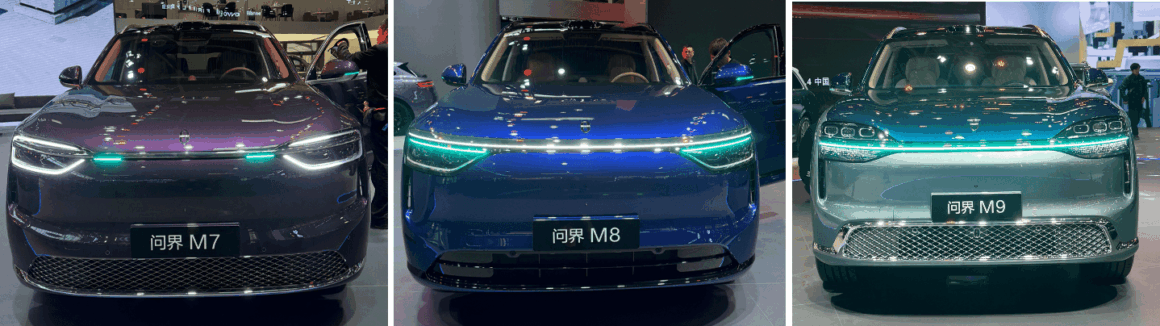
In a world of standard vehicle shapes, turquoise ADS lamps are sometimes the only easy way to discern one vehicle from another in the same brand. Aito is a good example.
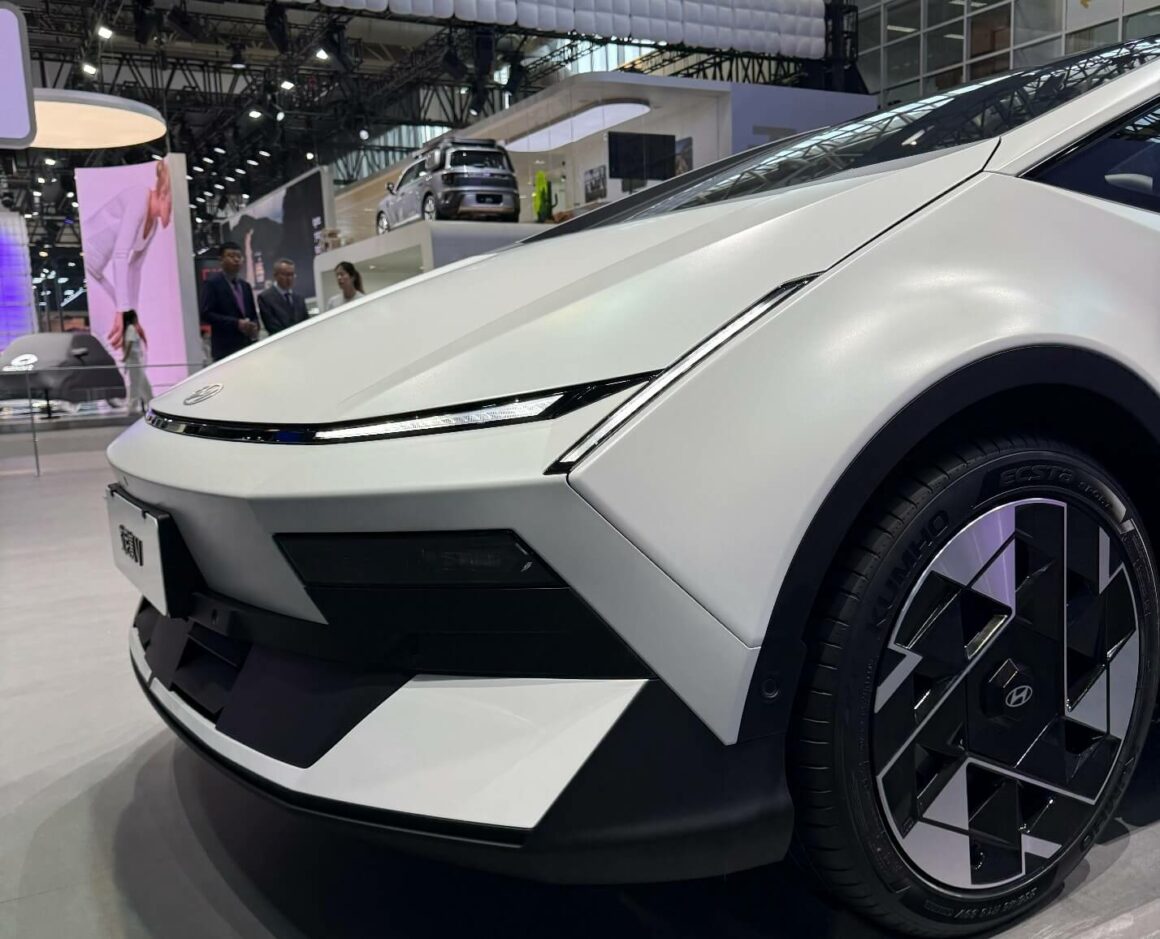
To avoid any misunderstanding, it is a general trend. You have exceptions like Hyundai Ioniq with totally new design, featuring interesting hood, lamp, bumper, and fender sections.
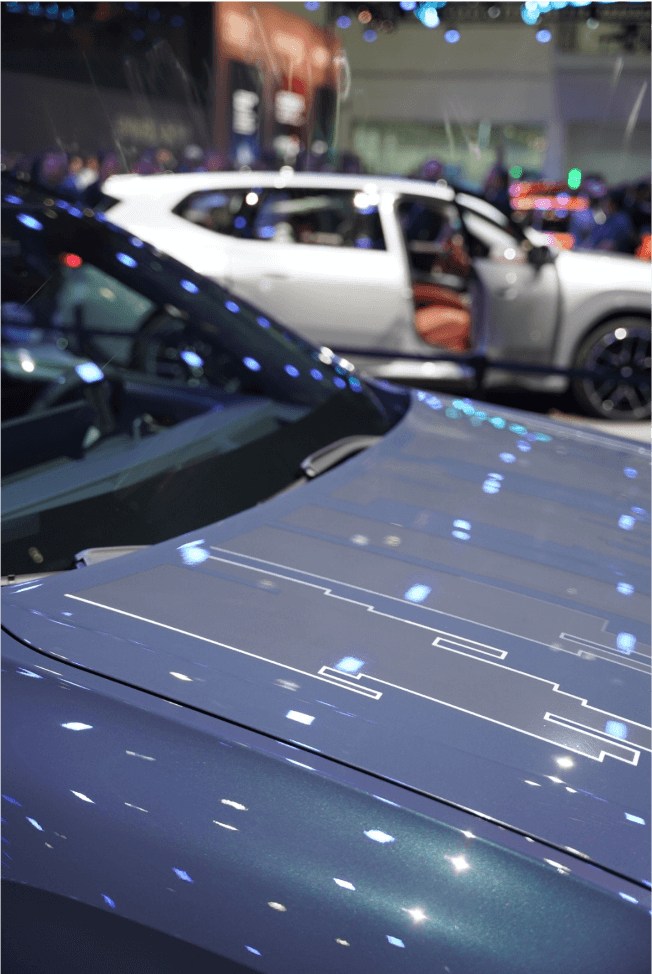
You have also the new BMW iX3 with e-ink on the hood that shows promising future for different integration – maybe even lamps!
I am publishing an interview with Xingyu and Valeo this week to go further into the Chinese market. We will publish a detailed report in the coming weeks with additional interviews.
I started my week in Europe, in Milano, for the design week. Compared to Beijing with focus on tech, it is interesting to see the difference with Milano which was a good inspiration for lighting ideas. I just published the discussions I had with Hyundai and Kia design this week about the Hyundai Ioniq3 and Kia Vision Meta Turismo. I will take more time next week to give my impressions from Milano.
Sincerely yours,