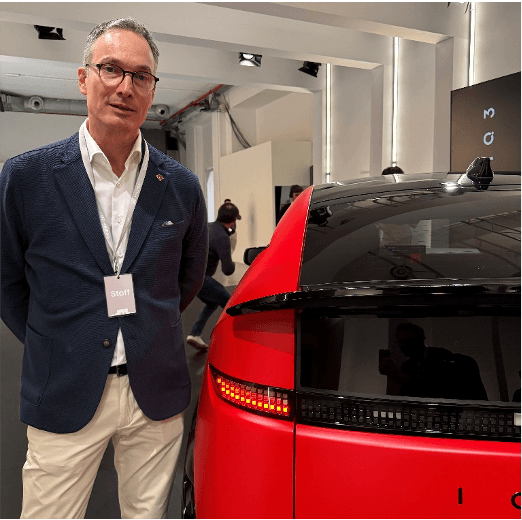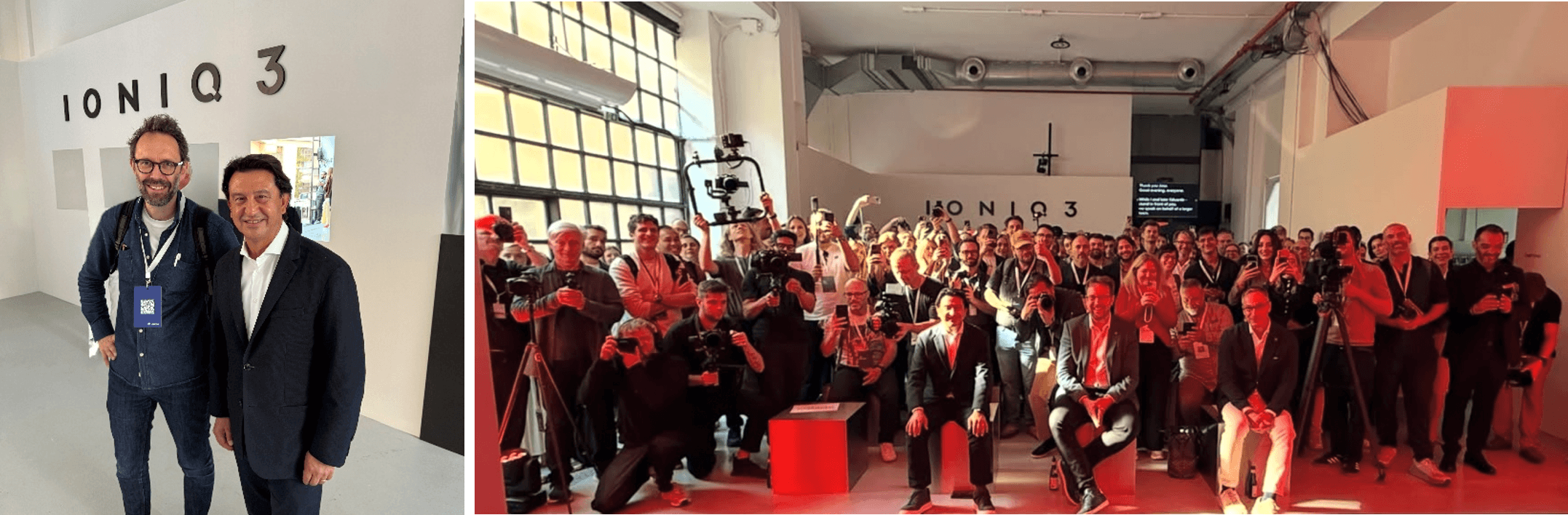
Thanks to Simon Loasby, Head of Hyundai Design, DVN got to be part of the Ioniq 3 reveal during Milano Design week. We were impressed by the Ioniq 3 concept at IAA last year, and it was good to see the final car in person. And I had also the chance to discuss with a former colleague from Renault-Nissan alliance: Hyundai’s CEO Jose Munoz.
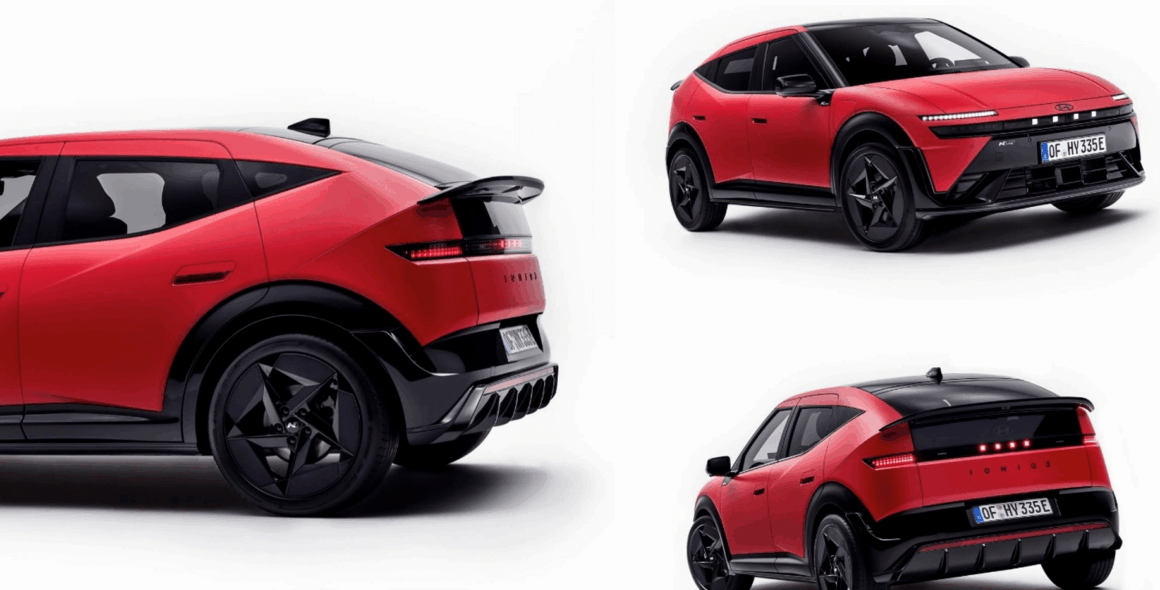
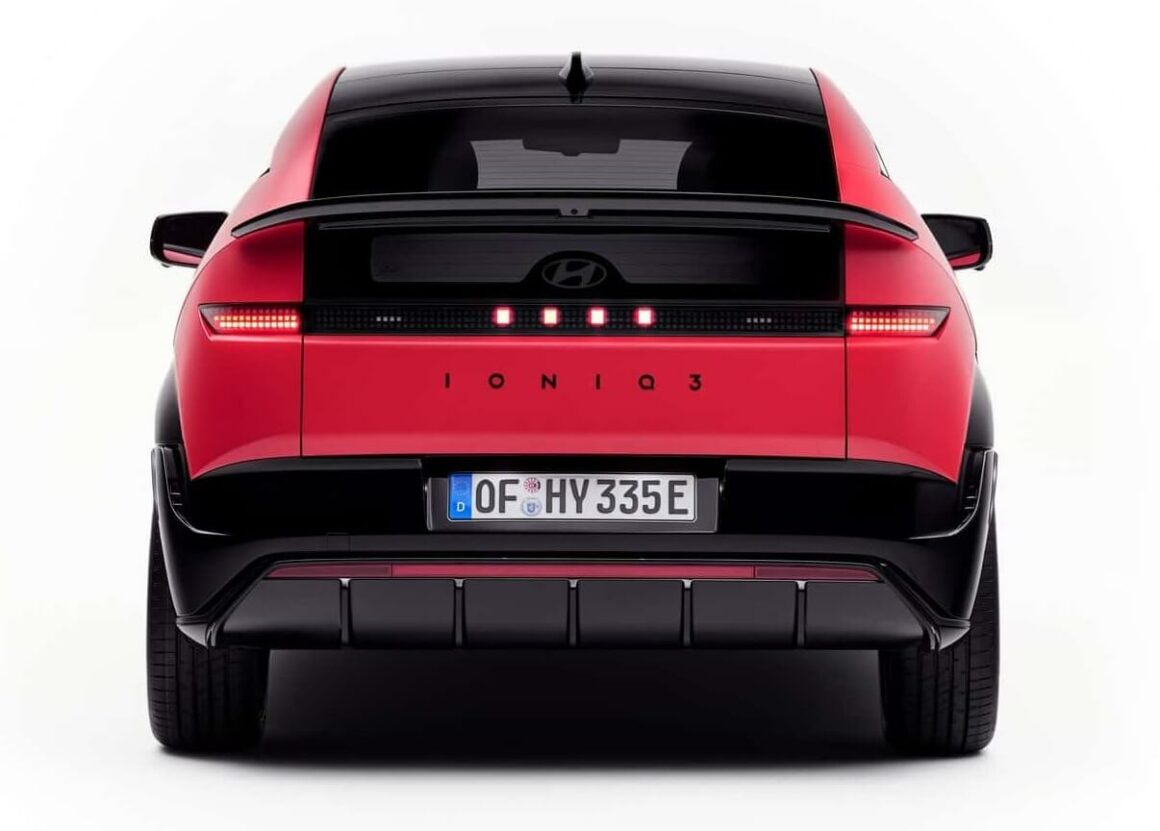
Let’s start with the rear and its super big spoiler with other-than-classical split between tailgate and body.
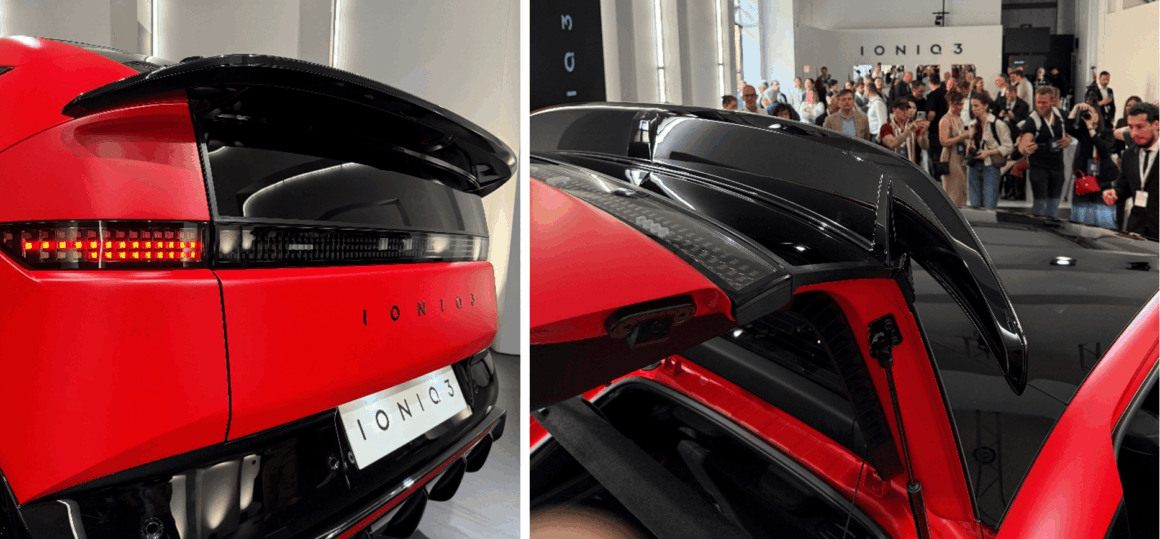
Rear lamp design is done with three rows of square pixels with laser micro-shots on the edge light, I surmise assembled from the back behind a black bezel/grid. Meanwhile it may be also the LG Innotek cubes we saw at DVN Munich this year, based on silicones.
To control the cost, the tail lamp is limited to the body lamp (on the concept car it was also on the tailgate). On the tailgate of the production car, we find the CHMSL with the 4 dots, and the reversing lamp.
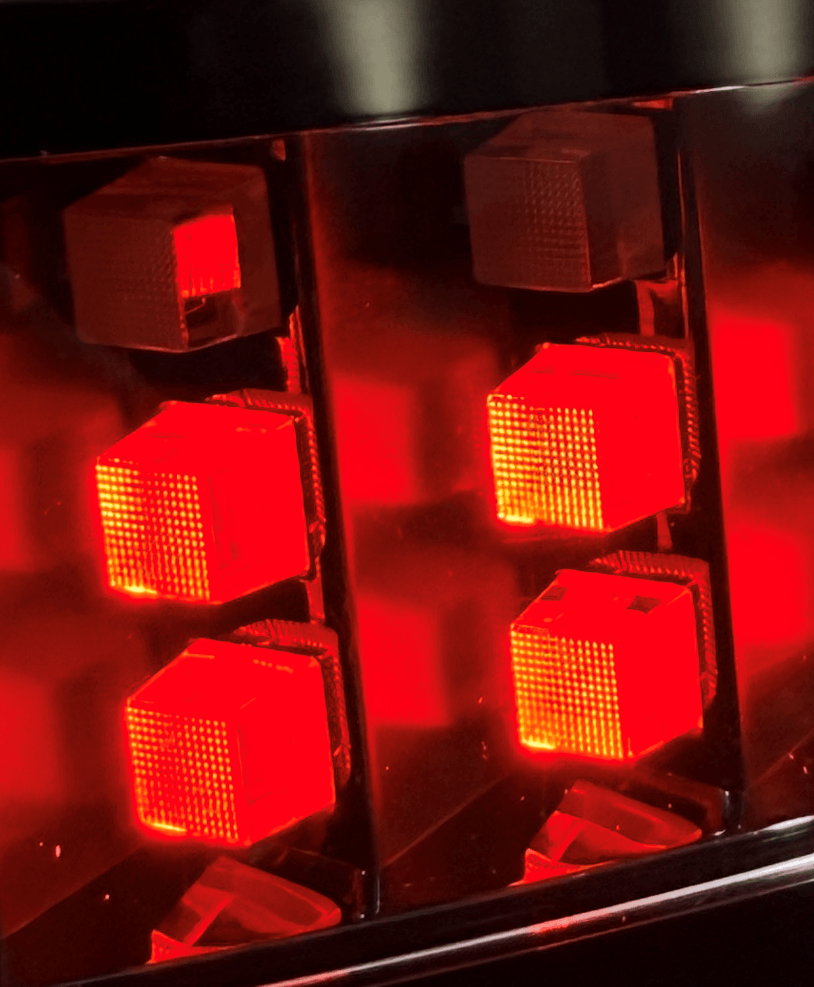
For people who have doubt about the CHMSL legal implementation, you can see the stop lamp on body lamp is only the last row of the pixels, and the 4 dots are just above this last row. The middle row on the body lamp is rear position.
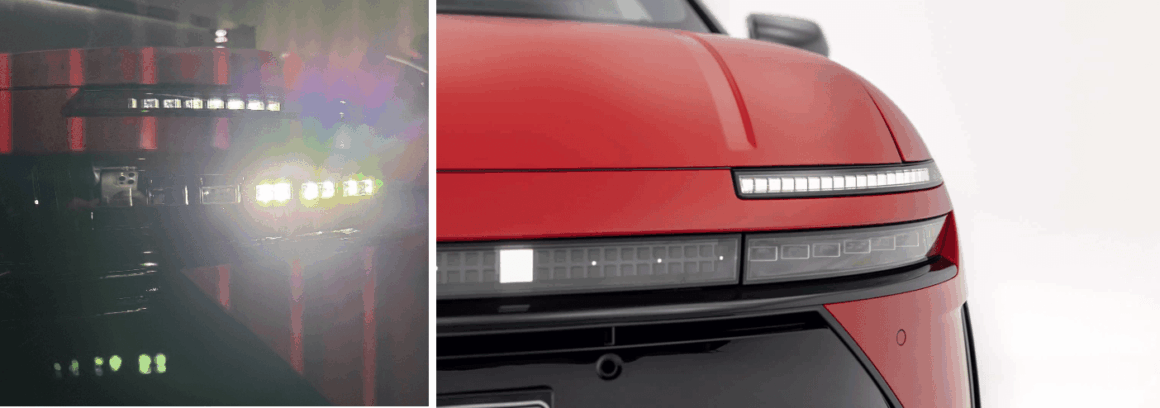
For the front, the upper lamp handles the DRL, position, and turn signal functions with similar design, and size below 10 ×10 mm.
Same for low and high beam below: three modules for low beam and three for high beam, with estimated size
20W × 10H mm.
For the grille, there are four illuminated dots in the centre, with small dots to link the position lamp in the headlamp with the grilles.
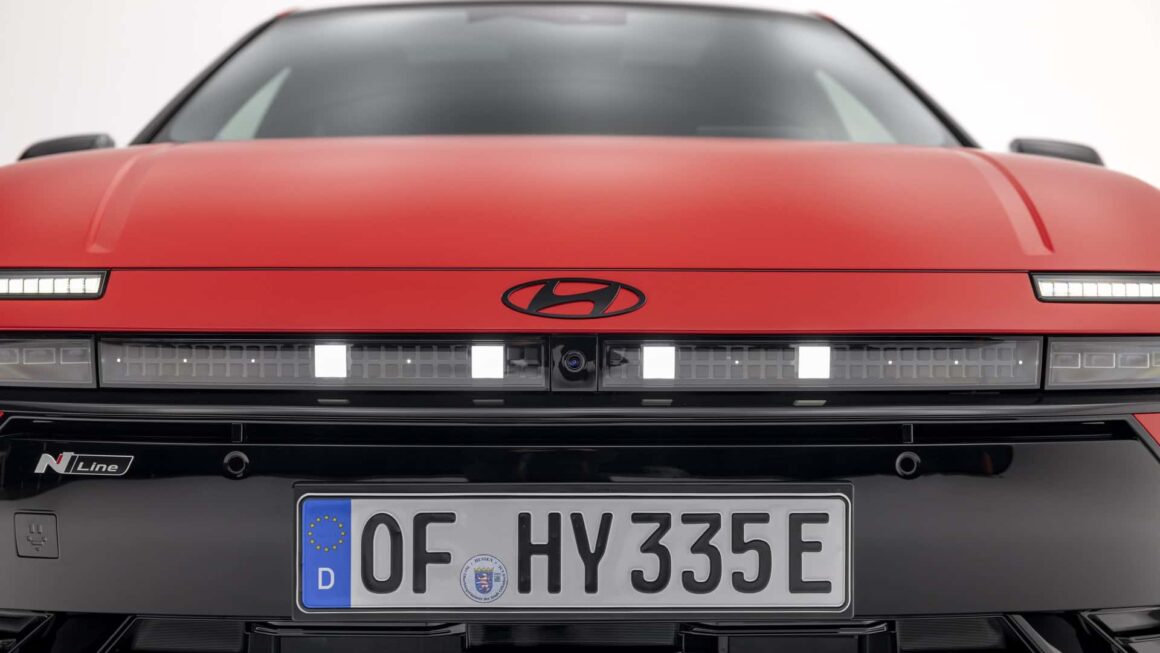
I talked with Eduardo Ramirez, head of design at Hyundai Europe, to know a bit more about the design. And especially those four dots. He told me they’re a brand-ID message in Morse Code: “The four dots are a reference to the morse language. That means ‘H’. This has more charm according to us compared to the classical brand lit logo. With Ioniq 3, we continue the pixel lighting language with identify Ioniq, but in a minimalistic way, with a purity of the design.”