By Daniel Stern, DVN Chief Editor
I live in Vancouver, British Columbia, on Canada’s West Coast. We’re a 4,600-km drive from the Ottawa, Ontario offices of Transport Canada, the federal agency in charge of Canada’s Motor Vehicle Safety Standards.
So it was a bit of a shock when Vancouver City Council unanimously approved a resolution against headlight glare! Specifically, the resolution urges Transport Canada to do something about it. Shortly after Vancouver’s resolution, the City Council of Victoria, BC (the provincial capital) issued a similar resolution of their own. Both articles are worth a read; take a look at exactly what they’re saying and what’s driving these council acts.
City councils ordinarily concern themselves with municipal-level matters: development policies, budget allocation, parks management, how to handle homelessness and other social ills, that sort of thing. Now they’re weighing in on the likes of headlight glare and vehicle regulations? What’s that all about?
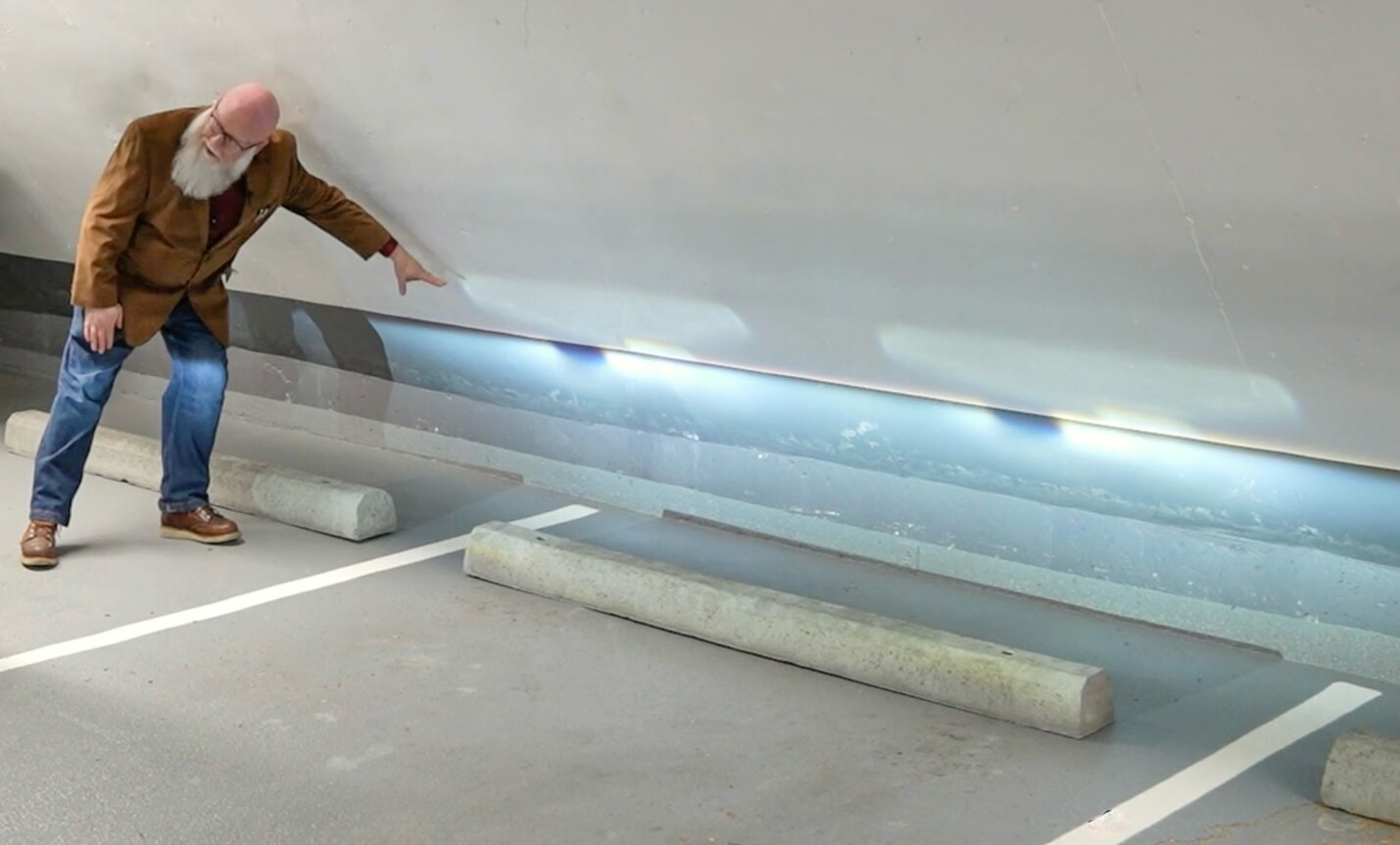
And so, local and national news media have been filling my inbox and ringing my phone with requests for comment as a subject matter expert and editor of DVN. I’ve lost count of the number of TV, radio, and print-news interviews I’ve done; the photo above was taken during one such interview. A more recent one is here (use the Listen link below the photo, not the “listen to this article” one above it).
The questions are more or less pretty similar from one interview to the next: why is there so much more glare now than in the past? Why isn’t it regulated? What can be done about it on new cars, and on vehicles already on the road? It’s something of a tightrope-walk to answer questions like this briefly in a manner that is technically and legally correct, grounded in the on-road reality drivers experience, and accessible and understandable to people who are not lighting specialists.
For example: any difference between disability glare and discomfort glare seems irrelevant to a driver who feels as though they cannot see because of the glare. It’s no use for an expert to say “Actually you can see just fine; there’s little or no disability glare – you’re only experiencing discomfort glare”. The driver feels blinded while they’re trying to negotiate road and traffic in a missile weighing a tonne or two (or three; this is North America). So at that point, does it really matter if they crash because they literally could not see due to disability glare, or because they were distracted (…annoyed, panicking, enraged…) by discomfort glare?
On the other hand, it’s easy to go too far in simplifying answers. Discomfort glare really isn’t the same as disability glare, and conflating them makes real problems – as I noted in our DVN analysis of the TRL glare paper in the UK.
And there are other tricky balances to strike, too: yes, there’s a great deal of sturdy research showing that at intensities typical of what American low beams direct to other drivers’ eyes, bluer light provokes 50 and 60 per cent more discomfort glare than less-blue light, without any attendant improvement in seeing. But no, it’s not a good idea to buy the amber ‘anti-glare glasses’ advertised everywhere; they block too much light and so they’re unsafe.
It’s a little baffling that city councils are demanding the federal government do something about lighting regulations, but they haven’t squawked at the provincial government to bring back periodic inspection of vehicle lights for proper aim (and condition; lens haze diffuses the beam and worsens glare. And tampering; most “LED bulbs” turn halogen headlamps into glare monsters). The DVN article I wrote in 2017 and its follow-up in 2023 still describe today’s situation, which is only getting worse as new headlamps continue to grow more and more sensitive to misaim.
Nevertheless, it is quite interesting that city councils are issuing resolutions like this. Traffic glare is increasingly felt to be a social ill, as it seems – maybe comparable to how political will developed to do something about air and water pollution as they grew worse and worse in the 1960s and early ’70s. There’s a prevailing public feeling that the glare is getting worse and worse, and nothing’s being done to control or quell it. People feel it’s unfair that drivers are punished for voluntary distraction (fiddling with a phone), but nothing is done to save them from involuntary distraction (glare from headlights). The popular sentiment runs increasingly toward “Obviously there’s no regulation; why the hell not? It’s long overdue!”.
It will be interesting to see what might come of resolutions like this. Transport Canada have been studying glare, and they’re due to release the first results of their research at a safety vehicle conference in Toronto this coming May. Stay tuned!


