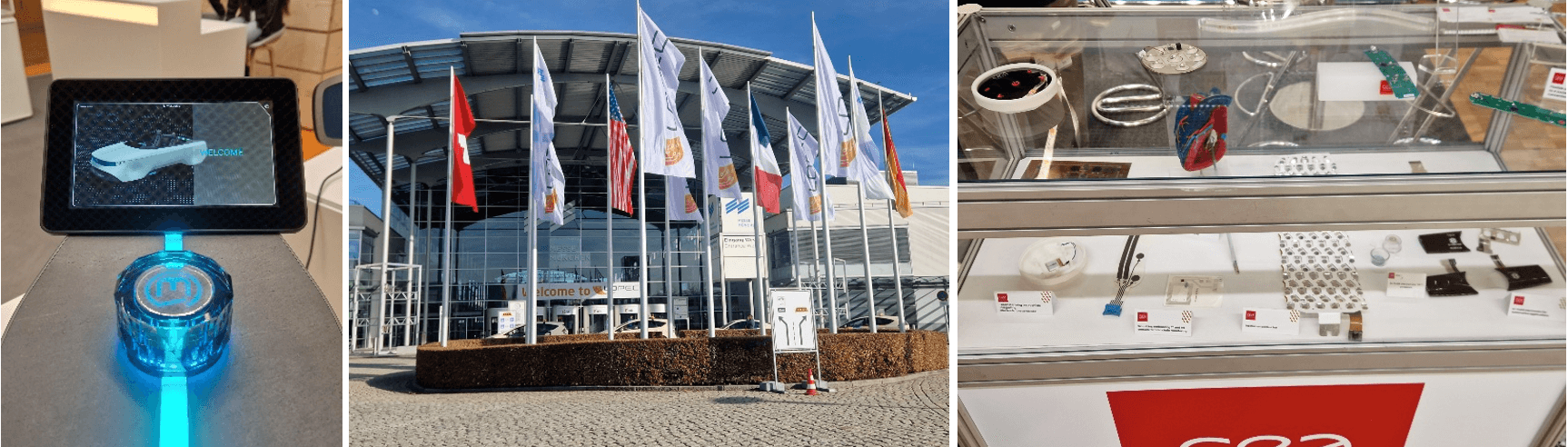
At LOPEC, I caught myself thinking something slightly unsettling: the next ‘button’ we sign off might not come out of a mold anymore, but off a printing line. And this isn’t marketing poetry. LOPEC has become a reliable barometer of what’s moving from lab to sellable application, especially in printed electronics.
In Munich, the debate has shifted: decoration is no longer just for show; it carries function. On a single trim part, we now stack aesthetics, heating, sensing, sometimes even connectivity, and so Color & Materials and HMI stop being separate. LOPEC’s own automotive focus makes the direction explicit: printed sensors, control elements, displays, lighting, flexible, organic, printed, moving closer to real deployment.
The hard part is industrial discipline: a film drifts and your decoration/function registration collapses. An ink micro-cracks after thermoforming and your resistance quietly drifts over time.
My take is simple: smart surfaces are no longer ‘innovation candy’, they’re cockpit architecture on the same level as displays and domain controllers. If we don’t want a generation of beautiful but fragile surfaces, we must design with PPAP gates in mind from the first sketch, not after the show car.
This issue has a few answers. Come talk them over with us at the DVN event in Köln this coming 22 and 23 April; contact Emilie Bonnet or Laurent Sérézat.
Take care,



