The SAE Lighting Systems Group held their Spring standards-development meetings on 31 March to 3 April in Savannah, Georgia, USA.
A featured event was the North American vehicle lighting expert group’s first-ever glare forum. Panellist speakers included Transport Canada Senior Regulatory Development Engineer Marie Williams-Davignon; renowned lighting researcher John Bullough of the Icahn School of Medicine at Mt. Sinai’s Lighting and Health Research Center; DVN Chief Editor Daniel Stern, and accomplished headlamp engineering consultant Glenn McCarter.
Williams-Davignon described ongoing and planned research into headlight glare being undertaken by Transport Canada to get an up-to-date understanding of what is driving the increase in volume and the sharpening tone of citizen complaints about traffic glare.
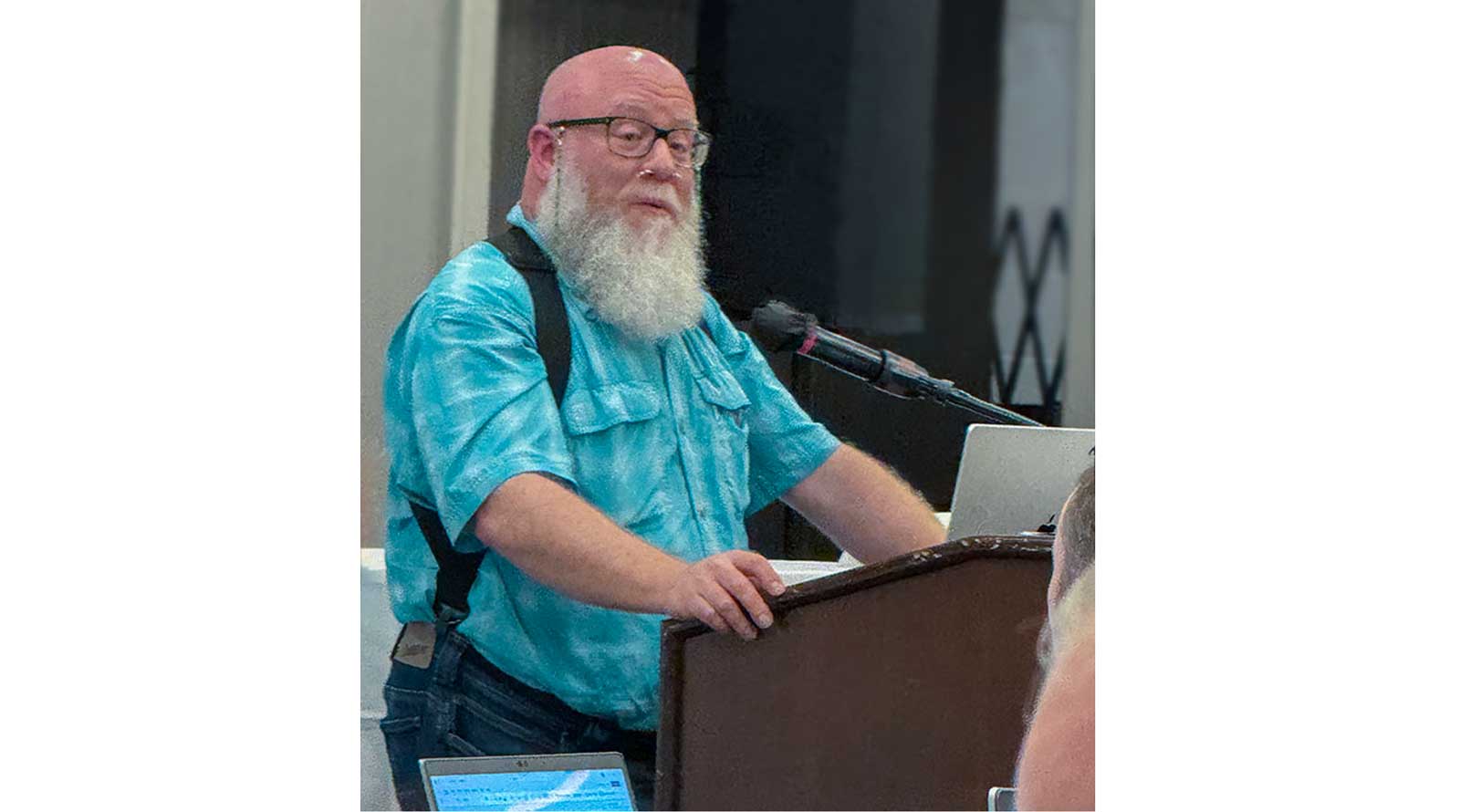
| DVN’s Daniel Stern speaks at SAE glare forum (photo courtesy of Bart Terburg) |
Bullough described Lighting and Health Research Center studies on the subject, with particular emphasis on the trend toward increasing blue-light content in headlamp output spectra, and the robust link between blue light and discomfort glare.
Stern spoke about research into headlight glare, particularly in North America, going back decades, touching on regulated and unregulated aspects of headlamp design, installation, and performance. He described how glare complaints are increasing all over the world, and some of the unregulated aspects (shrinking headlamps making higher luminance, trend toward blue light) are common to both the generally higher-glare North American regulatory island and the generally lower-glare ECE rest-of-world. Other glare-relevant factors like lens ice and lens dirt and the lack of standardized self-levelling in North America, he said, might warrant attention from SAE.
McCarter spoke from a different perspective, posing the thought-provoking question of whether there really is actually any glare problem at all. Could it just be a matter of people always finding something to complain about? And how can calls for less glare be reconciled with the IIHS protocol driving more and wider low-beam light at the horizon?
There was great participation and discussion; the roomful of subject matter experts grappled with thorny knots: how to know what, if anything, to do first? And in the absence of regulation, or at least industry-wide agreed coöperation, how can one automaker be expected to something that reduces glare but might make their vehicles seem less attractive to car buyers? This gets at a major difficulty from the automaker’s standpoint: people want less glare from other cars, but they don’t necessarily want any changes to their own car.
Aside from the glare forum, the meeting included productive discussions on signalling and driver assistance projections, with questions and ideas circulating vigorously: should the SAE standards be more permissive than the relatively cautious, conservative ECE standards for these kinds of projections? If so, how much more permissive, and where should the extra lattitude go? More variation in the symbols for specific functions? More different kinds of symbols?
There was discussion on the technical specifications of the proposed turquoise ADS light, in almost all of its aspects: placement, intensity, automatic operation, manual override, and more.
On other subjects, it was noted that Tesla have now released a US-specification ADB system, joining Rivian to become the second brand with the feature in the US market. There was also spirited discussion as to whether sequential operation of side turn signals should or should not be allowed.


