DVN interview series on: “Key players in ADAS/AV and dual use”
At DVN, we want to keep the ADAS/AV community informed about sensor technology, architecture, and applications. Our second DVN conference on this topic will take place in Stuttgart on November 17-18. For the first time, there will be special sessions on dual use and “Road to Type Approval: Mastering E2E AI Systems.” In preparation for this event, we are presenting important players and their results/opinions via exclusive interviews in this field in our newsletter.
The first contribution to this series is a report on a preview drive with the latest Wayve vehicle. Further interviews will follow every 14 days until the start of the conference.
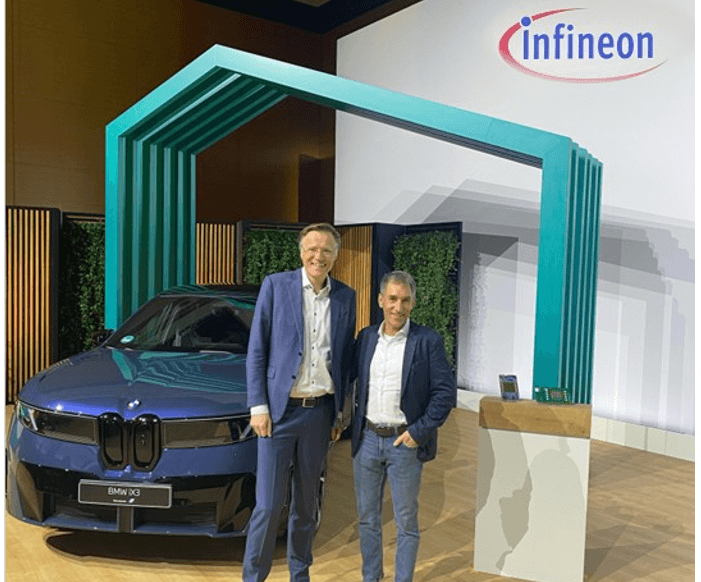
As a heads up for the up-coming Infineon Interview, Dr. Juergen Dickmann, Senior Advisor DVN, had been invited to the AGM meeting of Infineon.
Please, find attached the brief summary. Especially chapter 5 provides questions to be discussed in the interview.
1. Key messages and overarching themes
- AI is central and is driving investment and growth.
- Transformation sets the pace: shape it, spot opportunities, and use innovation as a lever.
- Infineon sees the current phase of high complexity – changing markets, pressure on supply chains and declining predictability – as an opportunity and consistently aligns its actions to create value-added solutions through innovation.
- Decarbonisation and digitalisation form the foundation.
- The business model is described as solid, despite a more challenging environment and reduced predictability.
2. Macro environment and current challenges
- The weak phase in the High Level (HL) segment has been ongoing for around two years.
- Trade barriers and a weak US dollar are cited as key causes.
- Global uncertainties make planning harder and increase the pressure to transform.
3. AI, energy demand and data centres
- AI is described as a new industrial revolution, comparable to electricity from the socket as a basic utility.
- Development stages: generative AI (idea), agentic AI (plans and acts), physical AI (e.g. autonomous driving, humanoid robots).
- All forms of AI require a great deal of energy; data centres are becoming a key demand driver for power electronics.
- Indicative figures from the notes: by 2030 more than 4 kW per AI chip; up to 1,000 kW per server rack – almost 10 times as much as current technology allows.
- Infineon and Nvidia are working on an energy standard; an 800 V network is mentioned.
4. Technology and product portfolio (power and components)
- Materials and technology base: silicon (Si), silicon carbide (SiC), gallium nitride (GaN), including packaging and interconnect technology.
- Balancing trade-offs: power, efficiency and cost.
- Data centres and energy supply are cited as growth drivers for HL components (e.g. switches, eFuses).
5. Speed and collaboration with key customers
- High pace: from design to deployment in data centres in about six to twelve months (rough guideline from the notes).
- Required: close collaboration, faster decision-making, and shorter development times.
- Automotive: target to shorten development cycles – 12 months instead of 24/36 months is mentioned.
- The automotive industry is undergoing the biggest upheaval in its history: in addition to e-mobility, software-defined vehicles are gaining importance; with AI they become learning machines on wheels and require a large number of semiconductors.
6. Automotive: software-defined vehicle, zonal architecture and Ethernet
- The car is described as physical AI, with new architectures analogous to a nervous system.
- Zonal architecture: at least four zones (mentioned in the notes).
- Need for many microcontrollers and other chips; focus on specialised microcontrollers.
- With the acquisition of Marvell Technology’s automotive Ethernet business, completed in summer 2025, Infineon is further expanding its leading position in automotive semiconductors and in Ethernet solutions for software-defined vehicles.
- Terms from the notes: AURIX microcontroller, BRIGHTLANE Ethernet PHY, central computers (‘superbrains’), ‘Heart of Joy’ as a vehicle dynamics controller.
- Infineon supplies components for central computers, high-speed data transmission (Ethernet) and efficient power management.
- Central computers reduce latency and enable updates; a zonal structure reduces the wiring harness by around 600 m and increases efficiency through intelligent power distribution by around 20%.
- Portfolio examples: AURIX and TRAVEO microcontrollers, BRIGHTLANE Ethernet, OPTIREG power management, PROFET smart power switches and eFuses.
- Statement: Infineon acquired Marvell’s automotive Ethernet business in August 2025 to strengthen software-defined vehicle (SDV) development.
7. Humanoid robots
- Humanoid robots are assessed as a strongly growing market.
- Requirements: power supply as well as sensing and security; sensors mentioned: vision and radar (open).
- Ethernet is also mentioned in this context.
- Guideline from the notes: around USD 500 of semiconductor content per robot.
- Example: Neura Robotics (Stuttgart); statement in the notes: scepticism that simulation or learning purely from videos alone is sufficient.
8. Segment mix, sites and manufacturing
- Segment shares from the notes: 35% power semiconductors, 30% analogue semiconductors (including for sensors), 35% control and connectivity components (including automotive microcontrollers and microcontrollers for edge AI, for example in IoT applications).
- Mentioned: acquisition of the sensor business from ams OSRAM (application fields: automotive, industry, medical).
- Manufacturing pillars from the notes: Malaysia, Dresden, Austria.
- Dresden is highlighted as a central new fab; opening on July 2, 2026
9. Resilience and sustainability
- Security of supply is described as important; expansion of the fab network and supply chain.
- Sustainability as a core element: green electricity as the target vision, partnerships as accelerators.
Further information can be found:


