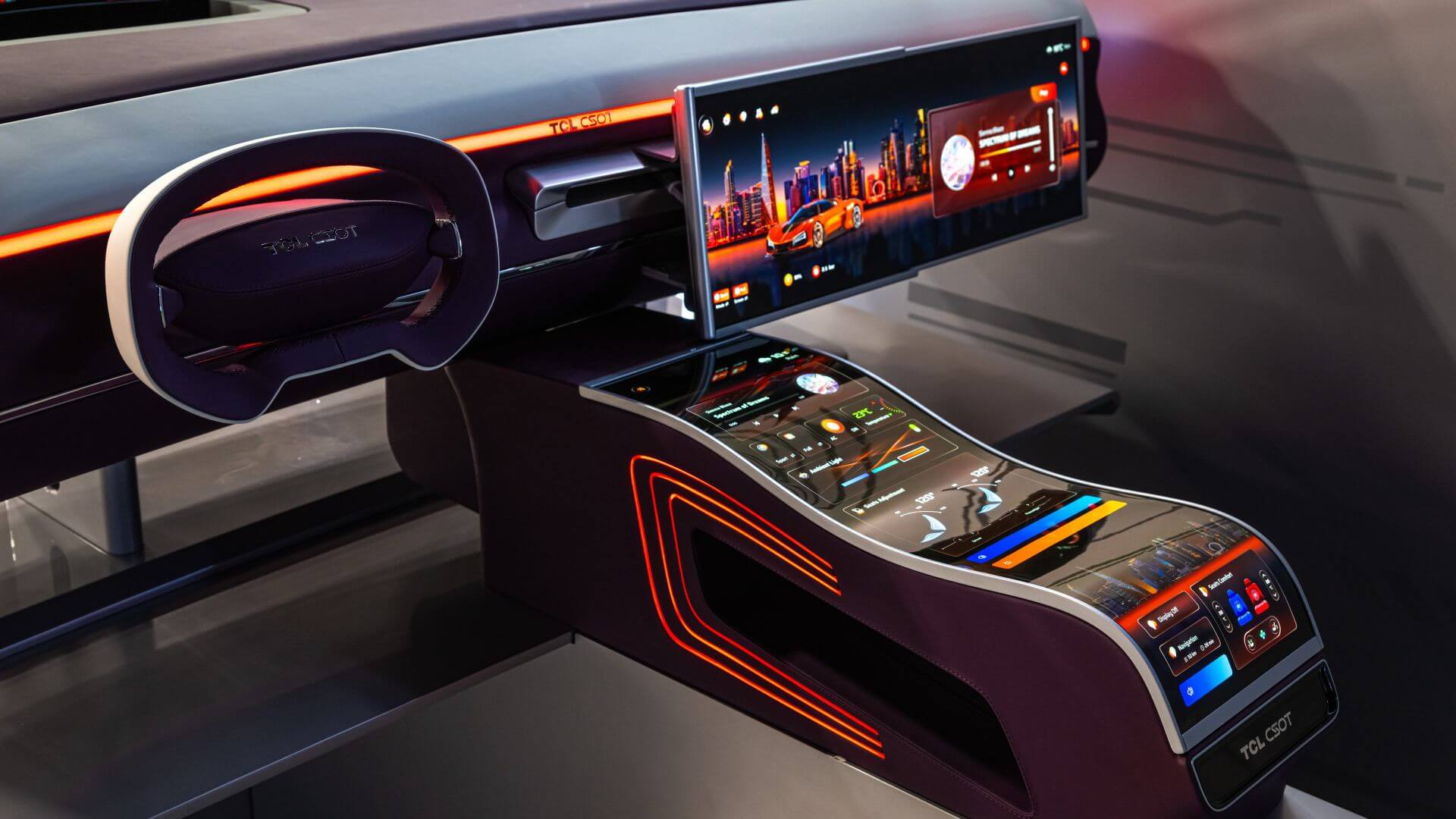
At CES, TCL CSOT showed a demo of an inkjet-printed RGB OLED setup which physically slides from about 16″ to 28″. It’s multi-curved, and presents less like a screen than a surface that retracts or stretches to suit the intended use. That’s the promise, an adaptive architecture which expands into a shared screen when the context warrants it.
Now comes the part where the fantasy meets production reality, to test the idea against the hard bars and fences: durability, cost, perceived and real safety, eye comfort, and long-term robustness. These don’t show up in a glossy demo video. It’s an ideal thing to talk over at our DVN Interior Workshop in Köln on 22 to 23 April 2026, with interior lighting, smart surfaces, and UX/UI at the center of the discussion.
And while we talk about screens turning into material, we should also talk about actual materials. This week we bring you a Materi’act interview on industrial-grade recycled and low-carbon materials that aim to meet cockpit constraints—crash safety, UV, process stability—without asking OEMs to reinvent their manufacturing toolset.
Take care,



