
The IAA Mobility event was notably influenced by advancements in artificial intelligence, fusion platforms, and the dominant presence of both German and Chinese automakers and suppliers.
BMW
BMW introduced their iX3i, featuring Qualcomm’s Snapdragon Ride Pilot, marking a bold step toward scalable automated driving. This system blends AI, sensor fusion, and cloud connectivity to mimic humanlike driving intuition.
Ride Pilot is designed to be non-exclusive. Qualcomm aims to deploy it across multiple automakers and vehicle classes, from entry-level models to high-end multi-camera setups like that on the BMW iX3. The system uses BMW vehicle data to train its algorithms, helping it adapt to regional driving habits and road designs. Qualcomm plans to scale this learning globally, enhancing features like emergency braking and sensor visibility.
Bosch & Etas
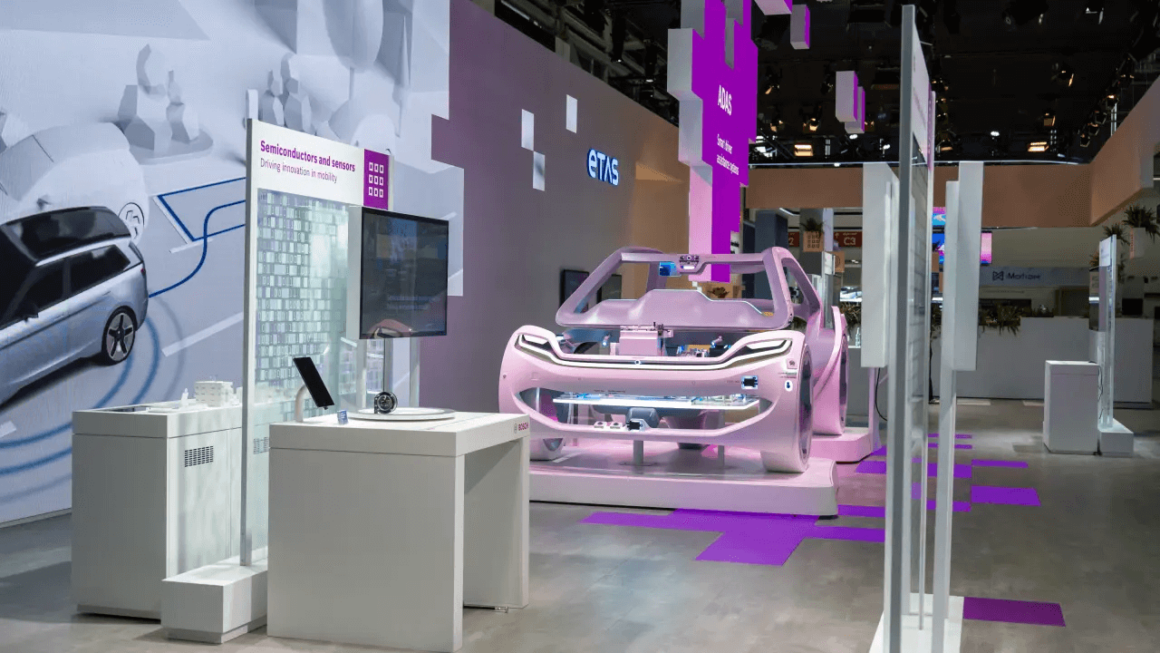
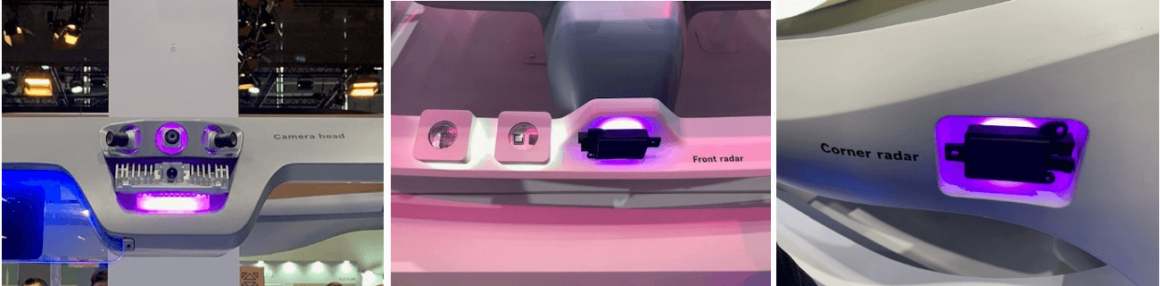
Bosch, in collaboration with Etas, emphasized that sensors are vital for SDVs and automated driving, while AI boosts efficiency, speed, and competitiveness. AI also streamlines the SDV lifecycle, supports agile development, and generative AI brings ‘intelligent’ copilots intended to enhance safety and user experience. A sample L2+ perception sensor system was displayed, featuring corner and long-range radars plus a tri-focal HDR front camera.
DeepRoute
DeepRoute’s production-ready platform is modular, scalable, and compatible with a range of automotive chips, so it can be tailored to different car models, with or without lidar. This flexibility has allowed the platform to be integrated into more than 100,000 passenger vehicles worldwide, including models from leading Chinese brands like Dongfeng and Geely, demonstrating its suitability for real-world use and diverse driving environments.
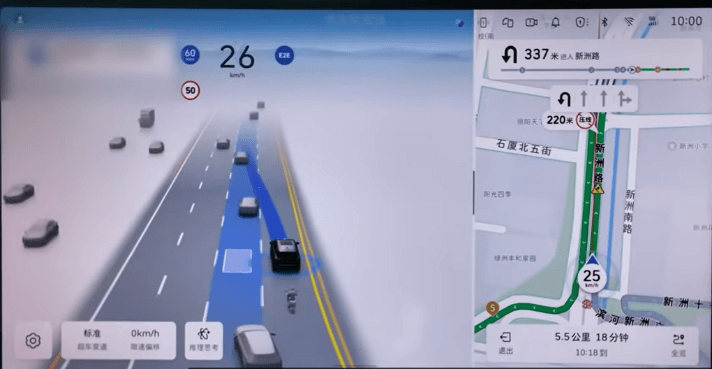
The system is centered on a VLA (Vision-Language-Action) model—an artificial intelligence which combines information from what it ‘sees’ (visual data), what it ‘understands’ (language and communication), and how it ‘acts’ (driving maneuvers), with the intent being safer and more intuitive driving experiences.
High interpretability makes decisions transparent and trustworthy. Unlike many ‘black box’ AI systems, the VLA model allows engineers and safety teams to trace each decision back to its source. For instance, if the system decides to stop at a crossing, it can show which visual cues (like a red light or a crossing pedestrian) influenced the decision. This clarity not only aids troubleshooting but also reassures regulators and car owners about the safety and reliability of the technology.
Built for global adaptability, the platform can adjust to different driving cultures, languages, and road systems, with a focus on supporting markets in Europe, Japan, and South Korea. This means it is well-prepared to meet the needs of drivers and regulatory requirements in regions with unique road rules and customs.
Horizon Robotics
Horizon is a Chinese smart driving solutions provider. They unveiled their HSD (Horizon SuperDrive) urban navigate-on-autopilot system and Journey 6 processing hardware, both designed to enhance driver assistance across diverse scenarios.
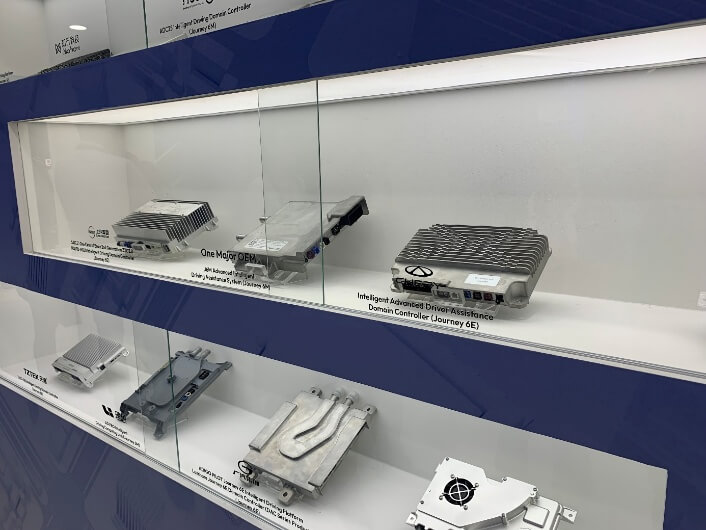
Horizon holds the top market share among Chinese automakers for ADAS (45.8 per cent) and overall intelligent assisted driving solutions (32.4 per cent). They supply over 40 global OEMs and equip over 400 vehicle models. Shipments of the Journey hardware have exceeded 10 million units.
The company supports seven major Chinese automakers entering international markets. At this event, Nio’s European Firefly model featuring Horizon’s hardware was also displayed.
Horizon also announced the establishment of a European headquarters to support global expansion.
MobilEye
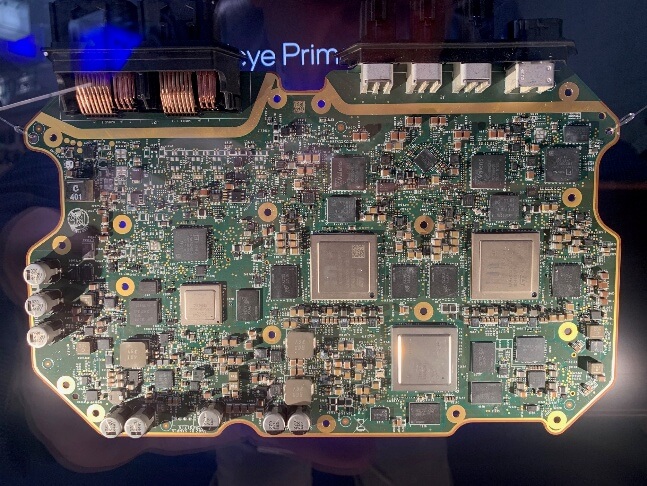
Mobileye showed their cutting-edge EyeQ6-series chips, highlighting the company’s vision for scalable autonomous driving solutions. The EyeQ6High and EyeQ6L Chips are designed to power ADAS and AD platforms. EyeQ6High is a high-performance processor tailored for Mobileye’s Supervision and Chauffeur platforms, enabling robust perception and decision-making capabilities.
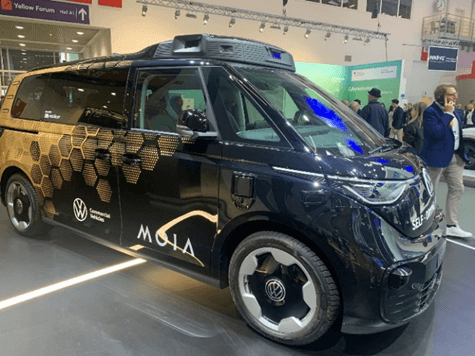
The EyeQ6 series supports a modular approach, allowing automakers to scale from basic ADAS to full self-driving systems using the same hardware foundation. Mobileye announced partnerships with major automakers, including Volkswagen, to integrate EyeQ6 into vehicles like the ID.Buzz AD, aiming to deliver L4 autonomy in urban environments by 2026.
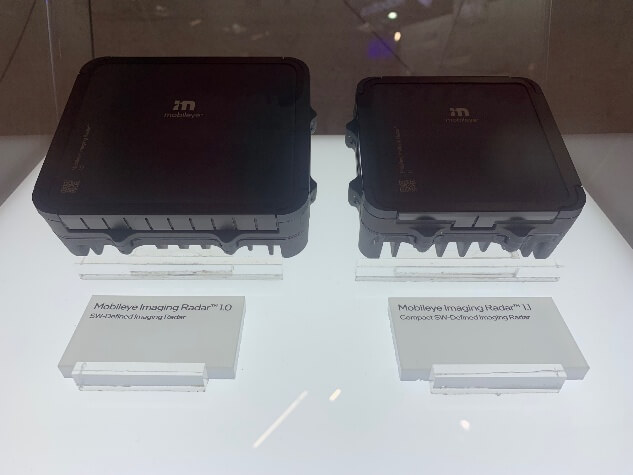
In co-development with Valeo since 2023, the Mobileye 4D imaging radar is designed to provide sensor redundancy for superior perception in challenging lighting, environmental, and traffic scenarios, complementing camera-based perception at affordable costs.
Hesai
Hesai displayed their ETX and FTX sensors. The ETX stands out with its unmatched 800-channel count, 400 m ranging capability at 10% reflectivity, and finest resolution at 0.05° × 0.025°. Designed for L3 and L4 autonomous driving, it is built on the world’s first fully in-house-developed digital single-photon platform, which integrates three core modules: laser emission, single-photon detection, and signal processing. While strictly adhering to Class 1 eye safety standards, the ETX significantly enhances the perception of autonomous vehicles. It has a compact 32 mm height, 35 per cent smaller than comparable products, making it ideal for seamless behind-the-windshield integration.
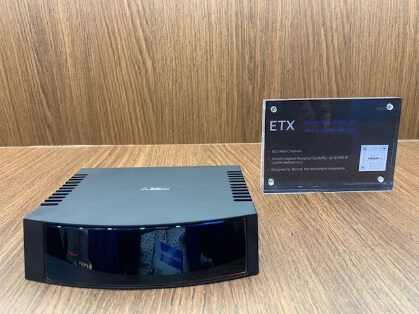
The ETX’s performance is powered by Hesai’s fourth-generation technology platform, featuring three core modules:
• Photon Vector Technology: Hesai customizes high-power VCSEL laser arrays to dramatically improve photon transmission and reception efficiency, boosting ranging capability by 30 per cent while reducing size and power consumption.
• Addressable Photon Isolation (API): Hesai’s addressable photon isolation, built on independently-addressable transceiver components, enables independent driving of laser transmit and receive channels. At the hardware level, this mitigates channel blooming found in traditional SPAD lidars, ensuring high-precision point clouds. In challenging scenarios such as highly reflective objects or rain and fog, the ETX gives 95 per cent fewer false positives, according to Hesai.
• Intelligent Point Cloud Engine (IPE): Built on principles of quantum optics, this leverages ultrafast (24.6 billion samples per second) sampling to remove over 99.9 per cent of environmental noise in challenging conditions such as rain, fog, dust, or vehicle exhaust.
ETX has already been chosen by a global automaker for multiple vehicle models. Mass production is expected in 2026, accelerating large-scale deployment of L3 autonomous driving worldwide.
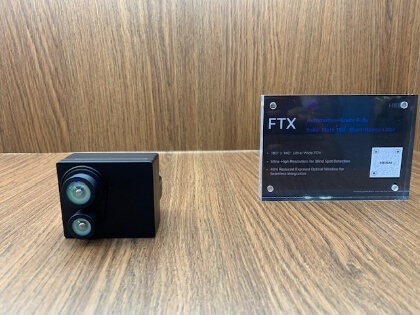
Hesai also showcased their FTX, a fully solid-state blind-spot lidar that represents the critical missing piece for L3 autonomous driving. With solid-state electronic scanning, the FTX delivers a field of view up to 180° × 140° with more than double the resolution of the previous-generation model, while weighing 66 per cent less. Its exposed optical window is just 50 × 30 mm, enabling flexible integration for precise detection of low obstacles such as road posts, while supporting autonomous parking and safe lane changes. The FTX is slated for mass production in 2026.
As a powerful blind-spot lidar, the FTX works in tandem with the ETX to form Hesai’s Infinity Eye B system, delivering panoramic perception for L3 and L4 autonomous driving.
Advanced Windshield Integration Partnerships
Wideye is a division of AGC that develops glass products for ADAS and autonomous vehicles, aiming to support reliable sensor integration. Saint-Gobain Sekurit manufactures automotive glazing systems for the world’s automakers, providing products designed for performance, safety, and passenger comfort. Innovation Manager A. Jaafar says, “Saint-Gobain partnered with Hesai to push the boundaries of lidar integration behind the windshield, combining optical performance with seamless in-cabin design. This solution empowers automakers to deliver safer, smarter, and more elegant ADAS systems at industrial scale”.
Huawei’s Lidar integration by Aito & Avatr (Changan)
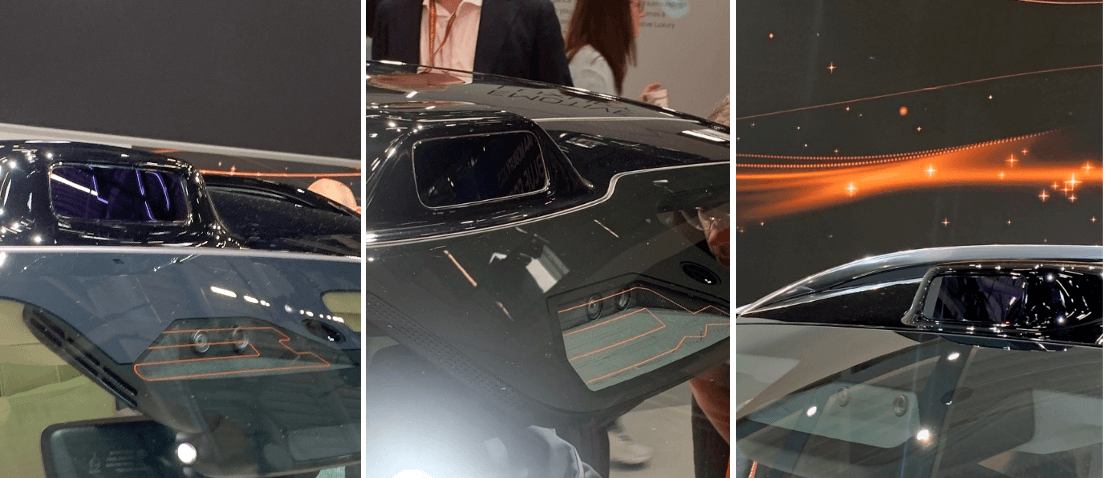
Huawei and Seres showed three Aito crossovers, signalling a possible European launch. These vehicles (the M5, M7, and M9 left-to-right in the images here) are equipped with L306 technology, first used as the roof-mounted front lidar scanner on the Aito M9. This lidar features a hybrid solid-state, four-sided rotating prism design. It offers a 120° horizontal and 20° vertical field of view, scans up to 20 Hz, and detects objects up to 250 m (or 180 m for those with 10-per-cent reflectivity).
Qualcomm
Qualcomm launched their Snapdragon Ride Pilot system, a 3-year collaboration between Qualcomm Technologies and BMW Group. It is an ADAS/AD system based on Snapdragon Ride SoCs and AD software. Rollout is planned in more than 60 countries starting this year, with expansion to over 100 countries next year. The first integration is in the BMW iX3.
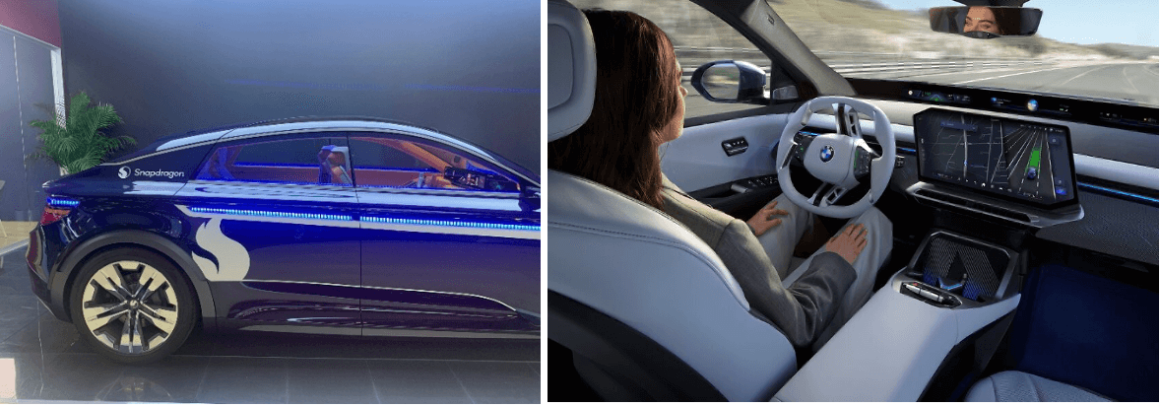
Qualcomm developed the perception stack, while BMW co-developed the driving policy engine.
Key features include 360° vision with object detection, lane and sign recognition, and parking assistance; improved perception thanks to a bird-eye-view architecture and fisheye cameras; performance optimization through hardware/software co-design; compliance with ASIL, FuSa, DCAS, and SOTIF, with built-in cybersecurity; and an AI/rules hybrid models for behaviour prediction and planning. It is equipped for OTA updates and customization via Snapdragon Ride SDK, and it uses fleet data to improve safety and comfort over time. It has been built with advanced simulation with real and synthetic data to test complex scenarios.
The BMW iX3 installation, shown at the BMW booth, included automated functions including contextual lane-change, hands-free highway assist, smart parking, and cabin monitoring. Its computing power is 20 times greater than previous-generation Qualcomm systems. It uses high-definition sensors including 8- and 3-megapixel cameras, radars, HD mapping, and precise GNSS location. And it has the Qualcomm V2X 200 chipset for V2x interactions with the environment (infrastructure, pedestrians, other vehicles).


