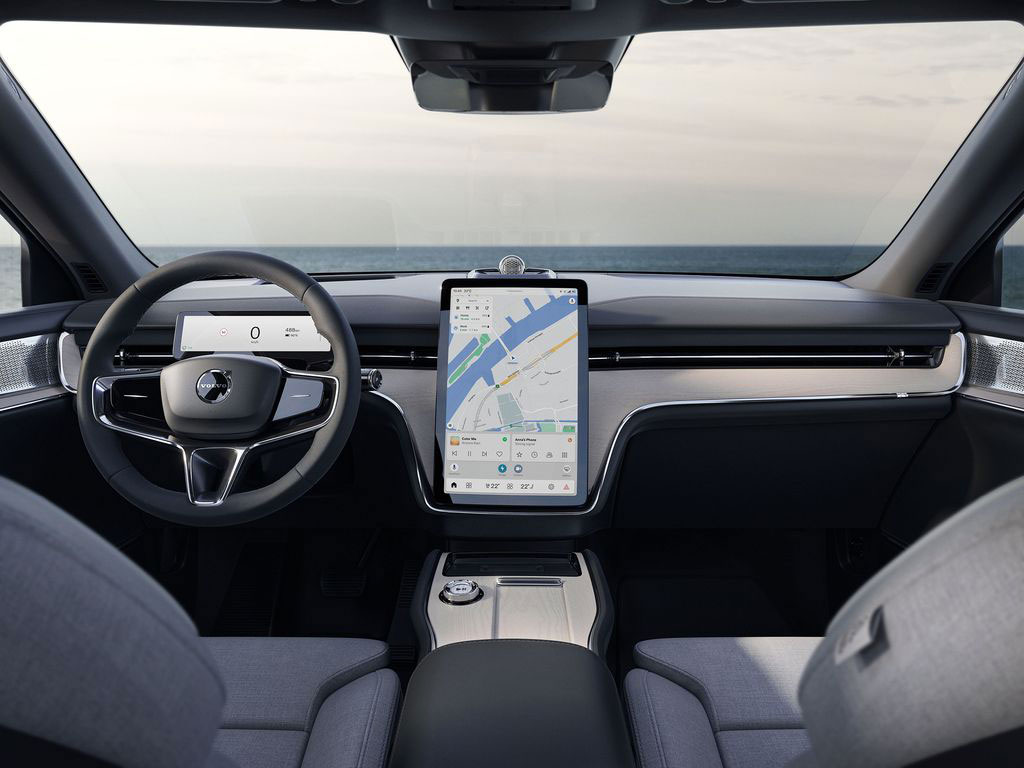
Volvo is expanding their partnership with Google: The AI assistant Gemini enters the model range and Volvo becomes the reference platform for Android Automotive. The aim is a more intuitive, safer driving experience through smart voice control.
For many search queries, Gemini spits out answers directly. This is said to work impressively quickly and accurately in many cases. The situation is often different with the voice assistants in modern cars. Their answers are very rarely as precise and satisfactory. To finally change this, Volvo is deepening their partnership with Google and bringing the AI-based voice assistant Gemini in.
Google Gemini will be included in all vehicles with an integrated Google infotainment system. In addition, Volvo will serve as a reference platform for the further development of Android Automotive OS.
The service, which is based on multimodal AI, parses natural language significantly better than previous systems. In future, drivers will be able to dictate messages while driving, call up translations in real time, query vehicle functions via the manual or receive location-based information – all using natural language. Gemini will replace the previous Google Assistant in Volvo vehicles over the course of the year.
Another aspect of the expanded cooperation concerns Volvo’s role as a reference partner for Android Automotive OS. In future, Google will first test new functions and updates on Volvo vehicles before they are incorporated into the Android code base. This will make Volvo the central hardware and software platform for Google’s automotive development. According to Patrick Brady, Vice President “Android for Cars” at Google, the intensified partnership should not only improve the customer experience at Volvo, but also set “new standards for the entire automotive industry”.
With this step, Volvo is underlining its claim not only to build vehicles, but also to help shape a digital ecosystem. “We strive to offer technology that puts people at the center,” emphasizes Alwin Bakkenes, Head of Global Software Engineering at Volvo . The Google partnership makes it possible to bring innovations to series models at an early stage.
This development fits in with Volvo’s radical reorientation towards software-centered vehicle architectures, as already initiated with the “Core Compute Platform”. The technical streamlining of electric vehicles, for example in the centralized control unit design or the separation of infotainment and safety-critical systems, is intended to create the basis for agile software development and more frequent over-the-air updates.
This approach is also reflected in the design. The uncluttered operating concepts of current Volvo models – such as the new EX90 – rely on reduced input options in favor of intuitive voice control. The integration of Gemini follows this line and strengthens the claim of combining technological minimalism with functional depth.


