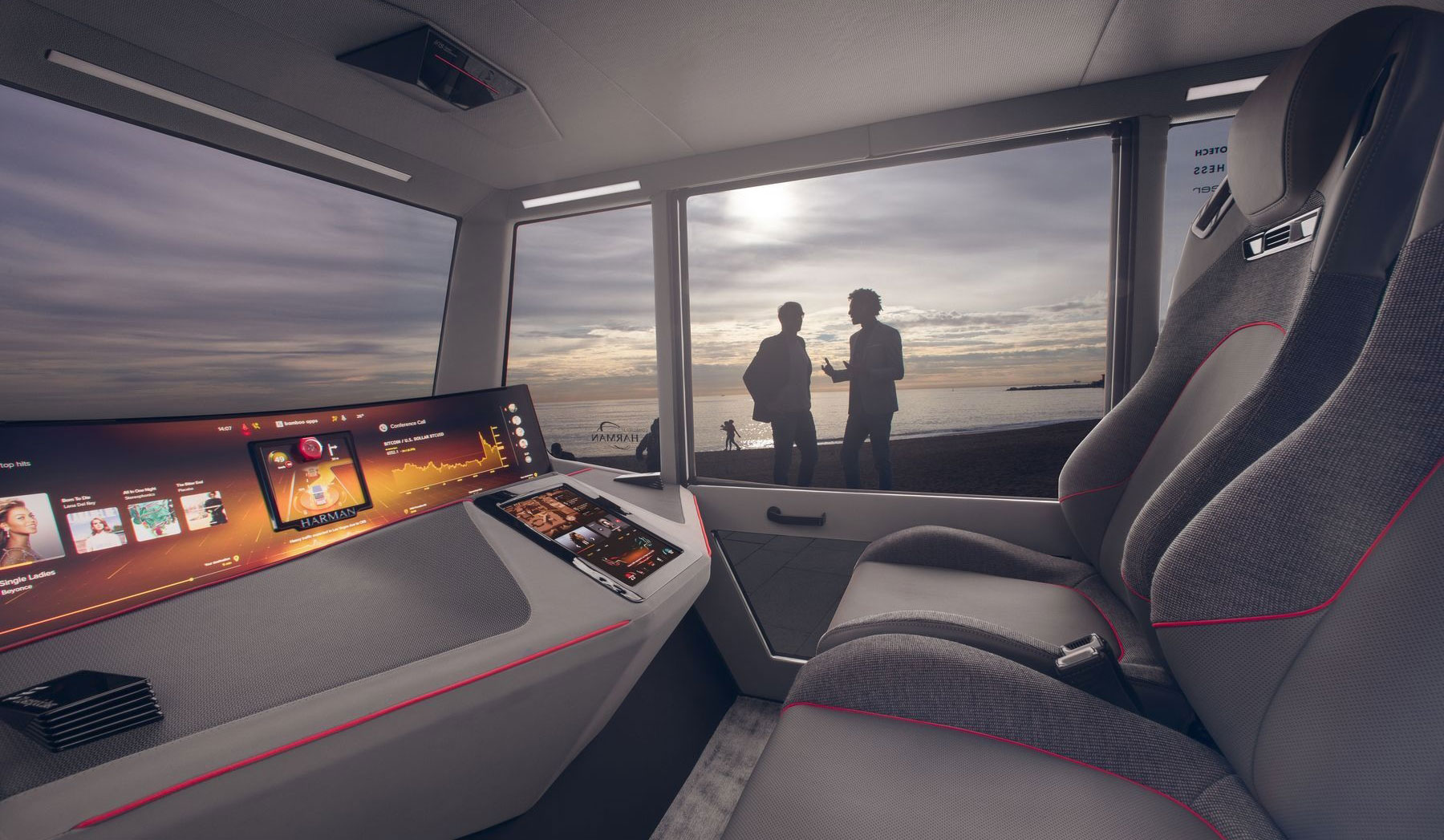
Biometric technology could enhance safety and infotainment, and at the same time it represents a further challenge for vehicle design.
A seat is more than just a place to sit; It can house advanced technologies and functions. “We can now remove the boundaries between digital technology products and traditional instrument panels, doors, seats, etc. and enable user interaction across the entire user interface, whether it’s a screen or a seat part,” says Andreas Wlasak, Vice President of Industrial Design at Faurecia. “Product boundaries are disappearing.”
Forvia/Faurecia’s Cockpit of the Future portfolio not only includes the integration of control elements into the seat surfaces, but also the coordination of safety-relevant sensor technologies. Infrared cameras that capture biometric indicators such as heart rate and facial temperature to detect drowsiness are connected to actuators in the seat that trigger haptic vibrations to alert the driver. Facial recognition can be used to automatically adjust the seat position. Radar sensors can detect body mass to calculate the weight and type of occupant – not only to optimize seatbelt tension, for example, but also to collect information and pass it on to the emergency services in the event of an accident or to raise the alarm if a child (or animal) is left unattended in a car that is too hot.


