In the face of fierce, relentless, cutthroat competition, Chinese vehicles are now more packed with technical and intelligent functions than ever before, despite falling prices. This is according to the consulting firm Berylls in their market study, “Quo Vadis China 2025”, which was published shortly before the Auto Shanghai trade fair.
The increasingly intense competition is evident in all areas of technology, but particularly in the smart cockpit. Screens are a key topic: central control screens paired with passenger displays, which can of course be rotated and moved. There are also entertainment screens for passengers in the rear and screens in the sun visors for the front passengers.
German car manufacturers are determined to keep up with this techsplosion in the cockpit. Audi, for example, has launched their audi sub-brand with the help of Chinese partner SAIC. The first production model, the E5 Sportback, was presented in Shanghai with a spectacular interior, including a 60-inch display and high tech content right up to the roof.
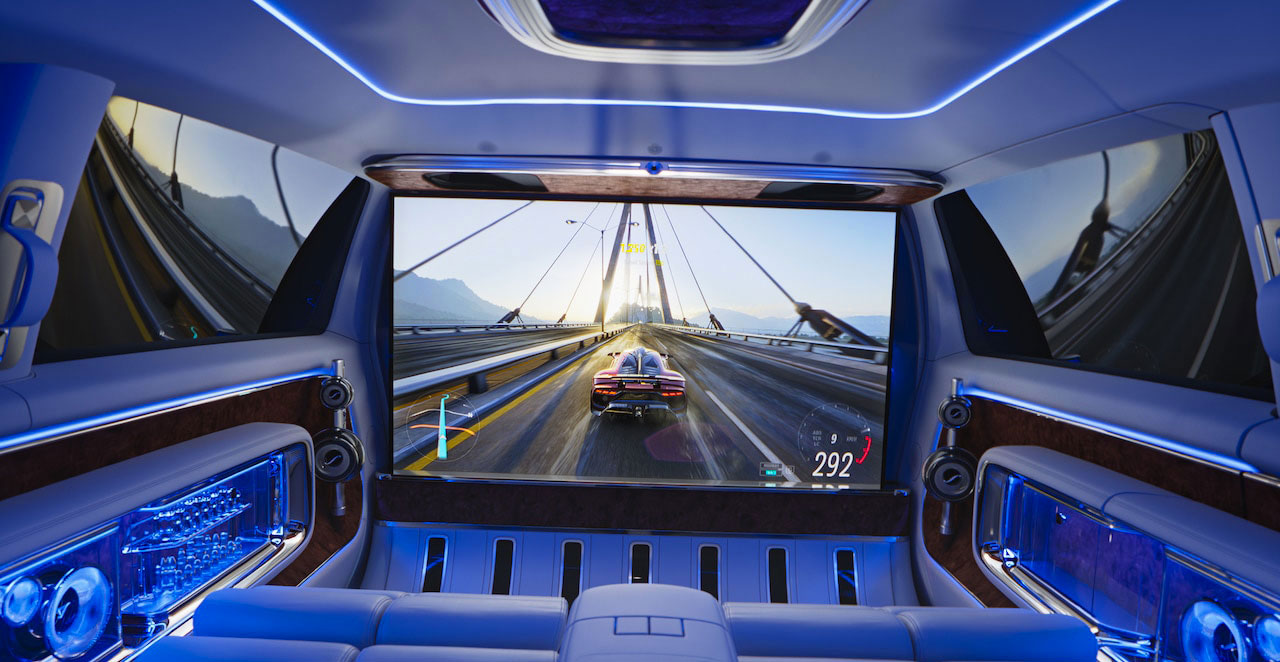
Mercedes presented their Vision V prototype in Shanghai and made a big impression, the highlight of wshich was the ‘Private Lounge’ interior with a 65-inch retractable cinema screen featuring split-screen function, which is located under the floor.
BMW takes a more discreet approach: The cockpit is rather reduced, and you will look in vain for a screen of record-breaking dimensions. Instead, with the involvement of Huawei and Alibaba, BMW has tailored the Panoramic iDrive system developed for the Neur Klassr vstd entirely to the preferences of the Chinese market. In Shanghai, BMW announced they will incorporate AI functions from DeepSeek into the Intelligent Personal Assistant in China before the end of the year.
While German manufacturers are determined to catch up with the technology leaders in China, the wheel continues to turn there. Manufacturers such as Nio, the Huawei (through their Aito brand) and Xpeng are in the process of tapping into new revenue opportunities through personalized and AI-supported avatars.
The importance of infotainment, intelligent interface concepts and cockpit design in China is reflected in the study “Software Revolution: Rethinking Cars” by Capgemini and the Center of Automotive Management (CAM).
It shows a trend towards intensifying the digitalization of the cockpit. CAM Director Stefan Bratzel identifies the pronounced expectation of car buyers in China to design the car cockpit as a place of experience and leisure as a driver. In line with this expectation, there is an “increasing dominance of Chinese OEMs in the area of infotainment and cockpits” in terms of innovative strength.


