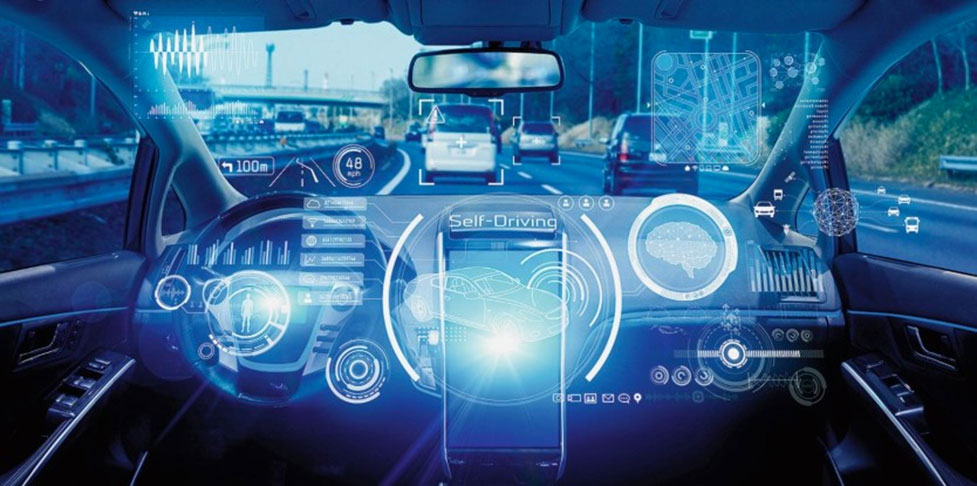
Autonomous driving is set to revolutionize mobility over the last mile in the city. People have been talking about it for more than ten years and companies have invested billions. Despite all the positive reports, the question arises as to whether too much is still being promised for PR reasons. Waymo, a subsidiary of Alphabet, is considered a pioneer and, according to recent reports, plans to deploy 2,000 new robotaxis by 2026. Mercedes and BMW are also working intensively on further developing autonomous driving functions for premium vehicles. In the USA, Tesla is pursuing an aggressive strategy and always promises a lot with its “Full Self Driving” system – but so far the results have fallen short of expectations.
The reality is more complex than many investors would like it to be. The spectacular difficulties at Cruise, General Motors’ former hope in the field of autonomous cabs, illustrate just how wide the gap is between ambition and reality. After several serious incidents and regulatory problems, Cruise had to abandon its ambitions. Such incidents put pressure on the entire industry and make investors increasingly impatient.
In China, the situation is particularly exciting and challenging at the same time. Companies such as BYD and Xiaomi are investing heavily in autonomous technologies and have so far benefited from less restrictive framework conditions. However, China has recently tightened the regulations significantly following a number of accidents. The regulatory hurdle for autonomous vehicles has been raised, which poses new difficulties for start-ups and technology-driven companies such as Xiaomi in particular. China is trying to steer the growth of autonomous vehicles in a safer direction, which could create trust on the one hand, but could slow down innovation on the other.
Another area of tension is the high financial requirements. The cost of developing autonomous systems has risen enormously and there is still a lack of profitable business models. Waymo’s cab rides have so far been a purely subsidized business, and investors are becoming impatient. The billions invested in research, technology development and infrastructure should soon deliver results. However, reality shows that there is still a long way to go before autonomous vehicles can be used safely on a mass scale.
The technology continues to struggle with fundamental challenges. AI systems must be able to handle complex and unpredictable traffic situations safely at all times – and with an almost zero error rate. Accidents such as those involving Cruise or the sometimes unpredictable actions of Tesla’s systems show that autonomous systems do not yet offer the necessary reliability. Such problems increase the pressure on companies to formulate their promises more realistically.
Although the data can be analyzed more easily and quickly with the help of AI, an AI is not yet able to move a vehicle safely. The use of autonomous vehicles in poor weather conditions is also unclear. The sensors can be heated during snowfall, but even that is sometimes not enough when driving on the highway.
It is currently clear that autonomous driving not only has to overcome technological challenges, but also regulatory, economic and social ones. The immense financial pressure caused by high investments is set against a technology that is making impressive progress but still harbors considerable risks. Whether it will be Waymo, Tesla, Mercedes, BMW or a Chinese company such as BYD or Xiaomi that ultimately achieves the breakthrough remains to be seen. What is clear, however, is that the road to truly autonomous driving remains rocky – and more expensive than many investors had expected.


