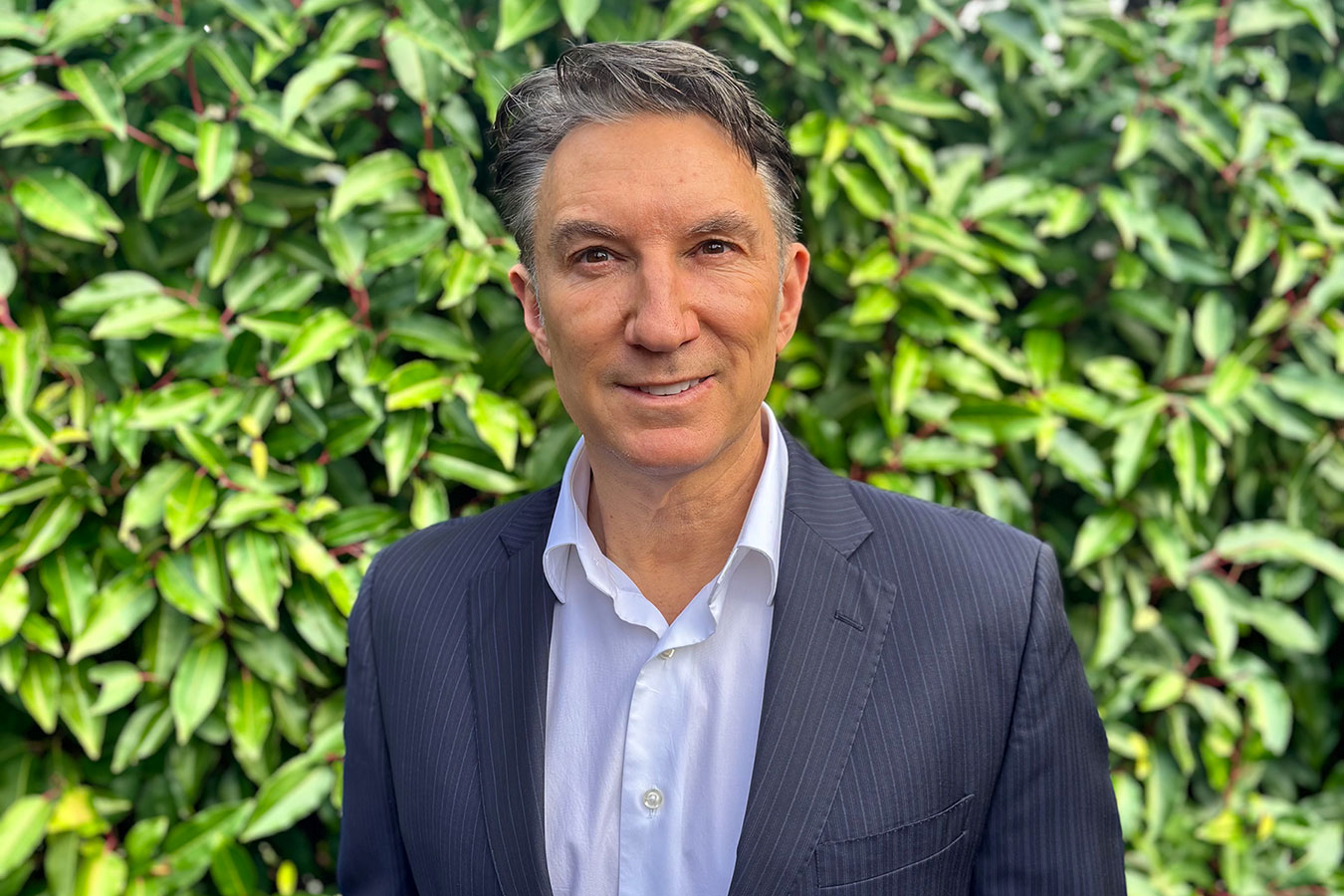
VueReal came to DVN Munich this year to showcase the microLED product they are developing for vehicle lighting applications. VueReal are back at DVN next week in Tokyo, with a lecture and an expo booth. So, I talked the company’s Robert Selley:
Paul-Henri Matha for DVN: Can you introduce yourself, please, and VueReal?
Robert Selley: I have over 25 years of experience in the semiconductor and advanced display industries, leading global business efforts in safety-critical, high-performance applications. I am the Chief Commercial Officer at VueReal, a Canadian technology company headquartered in Waterloo, Ontario. We specialize in MicroSolid Printing™, which enables next-generation microLED display and lighting solutions, with a strong focus on the automotive sector.
At VueReal, I lead our commercial strategy, partnerships, and customer engagement to bring our MicroSolid Printing platform to market. This scalable, high-precision technology enables applications like in-glass displays, transparent lighting, and advanced heads-up displays that redefine automotive design and functionality. Beyond microLED display, our platform also enables broader micro semiconductor manufacturing across a range of industries.
DVN: In Munich, VueReal presented a compelling transparent microLED exterior display. Can you walk us through the technology?
R.S.: The transparent microLED platform we showcased is engineered specifically for automotive integration—across windshields, side windows, panoramic sunroofs, and more. Leveraging our proprietary MicroSolid Printing platform, we can place millions of microLEDs onto transparent substrates with exceptional precision and minimal impact on visibility. The result is a display that remains invisible when off, yet delivers vibrant, high-brightness content when activated. This capability unlocks new opportunities for integrated lighting communication, branding, and safety cues—seamlessly embedded into the glass surfaces of a vehicle.

DVN: Do you manufacture your own microLED wafers?
R.S.: We do not manufacture wafers in-house. Instead, we partner with top-tier wafer suppliers and focus on what we do best—processing, transferring, and integrating microLEDs using our MicroSolid Printing platform. This model allows us to stay nimble and scalable, which aligns well with the needs of our automotive partners.
DVN: How does MicroSolid Printing differ from traditional LED integration methods?
R.S.: It is fundamentally different. Traditional Chip-on-Board (COB) methods or laser-based pick-and-place are limited in throughput and precision. Our process transfers millions of devices in parallel, with deterministic placement and high yield. This makes large-area, transparent integration commercially viable, something the industry has been pursuing for years.
Our industry-first Reference Design kits are also transformative. These kits offer partners and customers ready-to-use blueprints and integration guidelines, dramatically speeding up microLED adoption. By pairing MicroSolid Printing’s scalability with these resources, we’re removing barriers and enabling faster, broader commercialization of advanced microLED applications.
DVN: What substrates are compatible with your technology?
R.S.: We are highly flexible. For automotive, we work closely with OEMs and tier-1s to co-develop substrate solutions—usually laminated safety glass or high-performance optical films. These materials meet the rigorous environmental and optical standards required for automotive integration.
DVN: How are the microLEDs driven? Are you using CMOS integration…?
R.S.: Currently, we are using passive matrix backplanes and LTPS for the majority of our solutions. That said, we are developing a CMOS micro driver solution for release in 2026. This will significantly enhance integration, reduce power, and enable even smarter displays for future automotive applications.
DVN: Are the displays truly transparent?
R.S.: Yes—transparency is a defining feature. When off, the display looks like regular glass. When on, it produces extremely bright visuals without blocking the driver’s view. We optimize LED layout and optical properties to maintain transparency.
DVN: What brightness levels are you achieving?
R.S.: We are seeing impressive performance: transparent displays over 5,000 nits, [vehicle] lighting up to 100,000 nits, and micro-displays for AR/optics approaching 1 million nits. This range allows us to serve multiple automotive applications—from ambient interior lighting to high-luminance external signalling.
DVN: What pixel pitches can VueReal support?
R.S.: Our platform is adaptable. We support pixel pitches from as small as 3µm for AR micro displays to several hundred micrometres for lighting and signage. For automotive, 0.2mm is typical, but we can tailor this based on visual requirements and power consumption targets.
DVN: When do you expect to start production for automotive applications?
R.S.: We are actively engaged in development and validation with OEMs and tier-1s. Based on current timelines, we expect start of production around late 2027 or early 2028 — well aligned with broader industry trends in electrification, autonomy, and personalization.
DVN: How are you addressing automotive-grade reliability?
R.S.: Reliability is a top priority. We have completed thermal, humidity, and vibration testing according to automotive standards. Our facility is also on track for IATF and ISO certification by early 2027 to support full production-readiness.
DVN: Are automakers knocking on your door?
R.S.: Yes, interest in our MicroSolid Printingplatform is extraordinarily strong. OEMs are striving to differentiate with lighting and in-glass display features. There is a significant appetite for display-enabled personalization, branding, and external communication in EVs and autonomous platforms. Our technology offers an innovative design language and user experience.
DVN: Outside of automotive, what other sectors are adopting this platform?
R.S.: While automotive is our priority, we are also active in AR/VR micro displays, wearables, retail signage, and medical displays
DVN: What is your biggest challenge, and what sets VueReal apart?
R.S.: Scaling without sacrificing yield or affordability has always been the challenge. That is why we built MicroSolid Printing from the ground up, to excel in scalability and manufacturability. Now, we are focused on building a robust ecosystem to meet demand while supporting regional manufacturing. Our platform enables microLED and broader micro semiconductor production at a fraction of the cost of a traditional OLED fab—making local, decentralized production a reality. This approach aligns perfectly with industry trends in deglobalization and supply chain resilience. VueReal is well-positioned to support this new era of automotive innovation.


