The top criterion for EVs is still range. It not only influences customers’ purchasing decisions, but also the investments made by car manufacturers. Every innovation is tested during vehicle development, to get the most out of a battery charge. This consideration also affects the choice of roof system.
New approaches are needed to meet the desire for an openable roof in electric vehicles. Driving with the top down (or open) gives a feeling of freedom that EV buyers don’t want to go without. Manufacturers are seeking solutions that make openable roof systems compatible with EV architecture, and meet the high requirements for opening and closing times, tightness and insulation, acoustics and design.
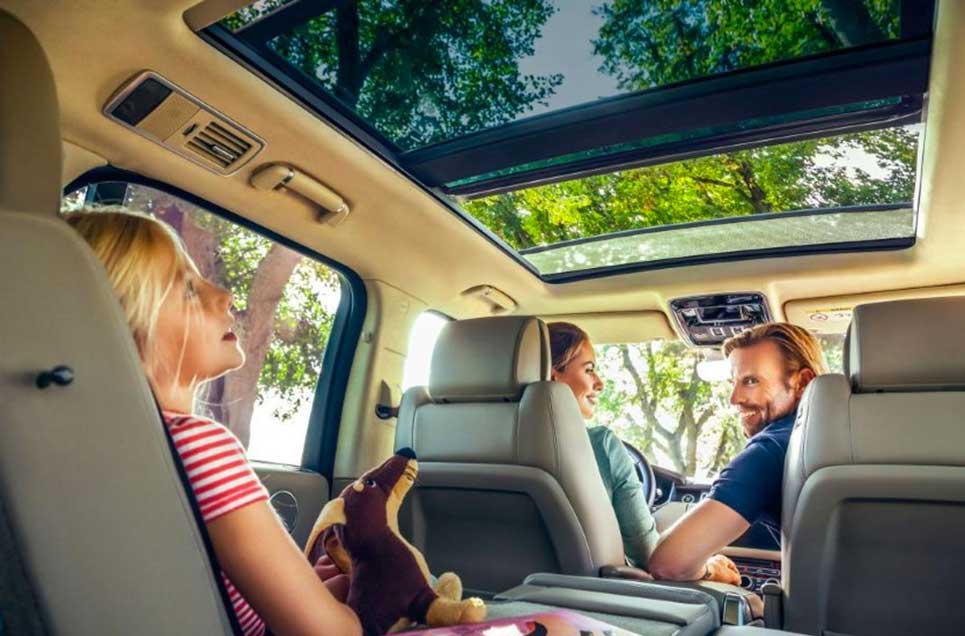
Openable panoramic roofs provide plenty of light and a natural atmosphere in the interior. Webasto uses this large area to create additional features. For example, dynamic lighting scenes or patterns can be played on it. During the day, the roof can provide shade and a pleasant environment thanks to switchable glazing.
Innovative concepts, especially for electric vehicles, combine the advantages of fixed, transparent roofs and large openings. This results in roofs that offer the full convertible feeling, and are space-saving and lightweight at the same time. These systems even manage without the conventional cross struts, which provides a panoramic view while freeing up space for the battery system.
Integration of solar cells in the car roof not only extends the range but also reduces the vehicle’s CO2 emissions. One US manufacturer claims to have achieved an increase in range of up to 3,000 km per year with an openable Webasto solar roof. The solar power generated can also be used to sustainably power other vehicle systems, such as the air conditioning. Electric drive and openable roof systems are not mutually exclusive, and can be implemented without any range or battery restrictions. This means EV buyers can fully enjoy the convertible feeling, without range anxiety, while emitting less CO2.


