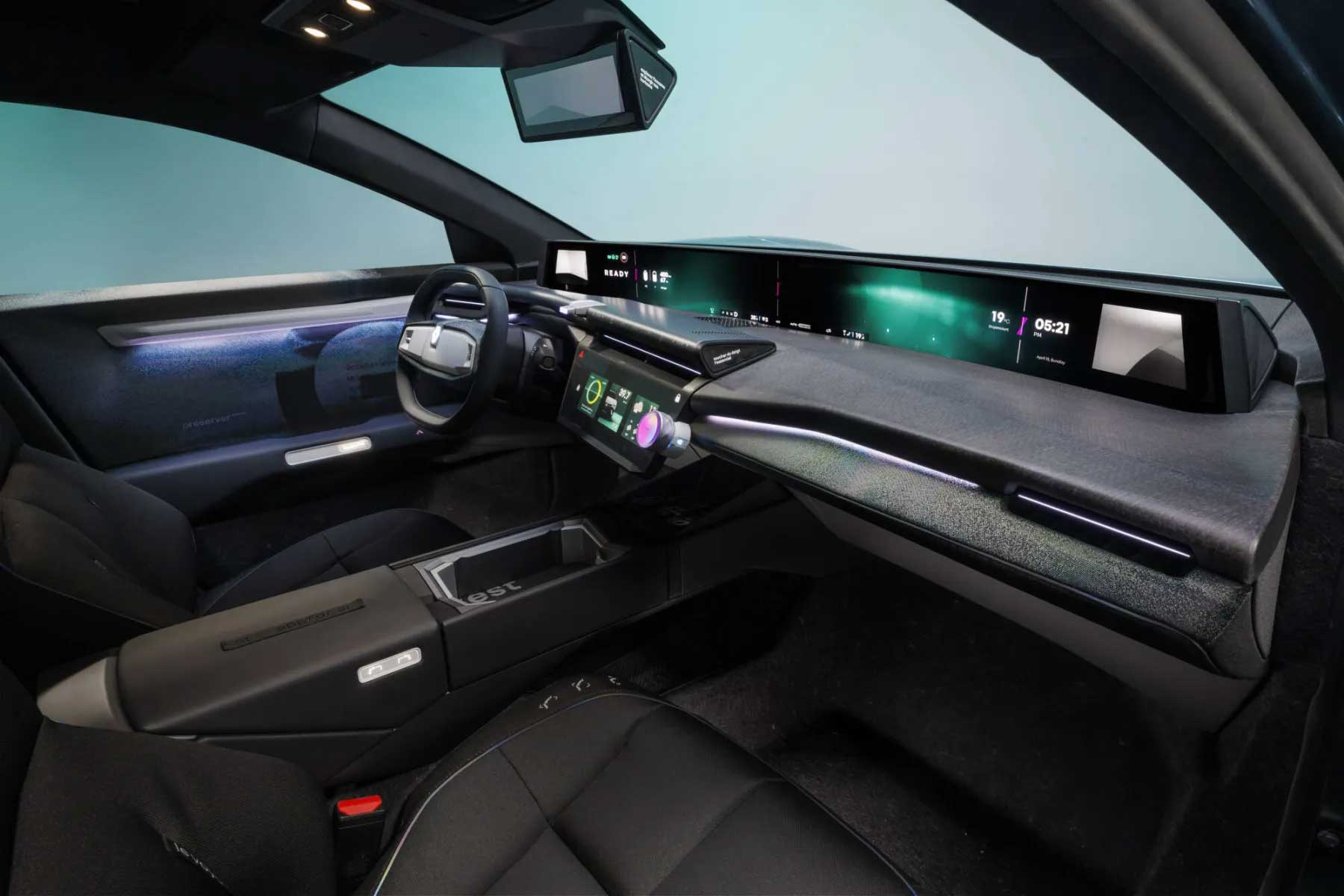
“The ambition of the Renault Emblème project was to achieve maximum decarbonization by designing a car that is attractive, efficient, family-friendly, comfortable, high tech and versatile in use,” said Fabrice Cambolive, CEO of the Renault brand. “More than a concept car, it’s a demo car on the road that’s a pleasure to look at, to be in and to drive – a real invitation to travel!”
A lifecycle analysis found that the car emits 5 metric tons of CO2e during its lifecycle – almost 90 per cent less than the Megane E-Tech electric.
The car achieved a 70-per-cent reduction in the carbon footprint to produce all parts, half the materials used to build the car were recycled, and virtually all the materials used are recyclable at the end of their service life.
Forvia was directly involved with multiple components, dashboard, door panels and central console, and the supplier has pulled all the decarbonization levers: the use of green energy in its factories, optimized and lightweight designs and architectures, virtuous production and assembly processes facilitating modularity and recycling, as well as the integration of new sustainable materials developed by Materi’Act, combining recycled and bio-sourced content with low carbon impact.
Most of the assemblies are based on screws and clips, for example, rather than welding or glue: the door panels, for example, to facilitate disassembly, modernization and recycling at the end of life. In addition, no paint has been applied to the parts, as aesthetic and bio-sourced materials have been favored, eliminating the chemical emissions associated with traditional methods.
An innovative injection process also makes it possible to reduce the amount of material used, producing lighter parts and thus reducing the ecological footprint.
The contact zones on the door panels and central console have been upholstered in skins made from pineapple fibers – a lighter and more sustainable alternative to animal leather. The dashboard has been upholstered in linen.

Finally, the adoption of the ‘shy tech’ trend in the interior of the vehicle represents a step forward in sustainable design. The discreet under-skin buttons, replacing traditional controls, not only offer a cleaner and more minimalist design, but also contribute to the overall lightness of the vehicle.


