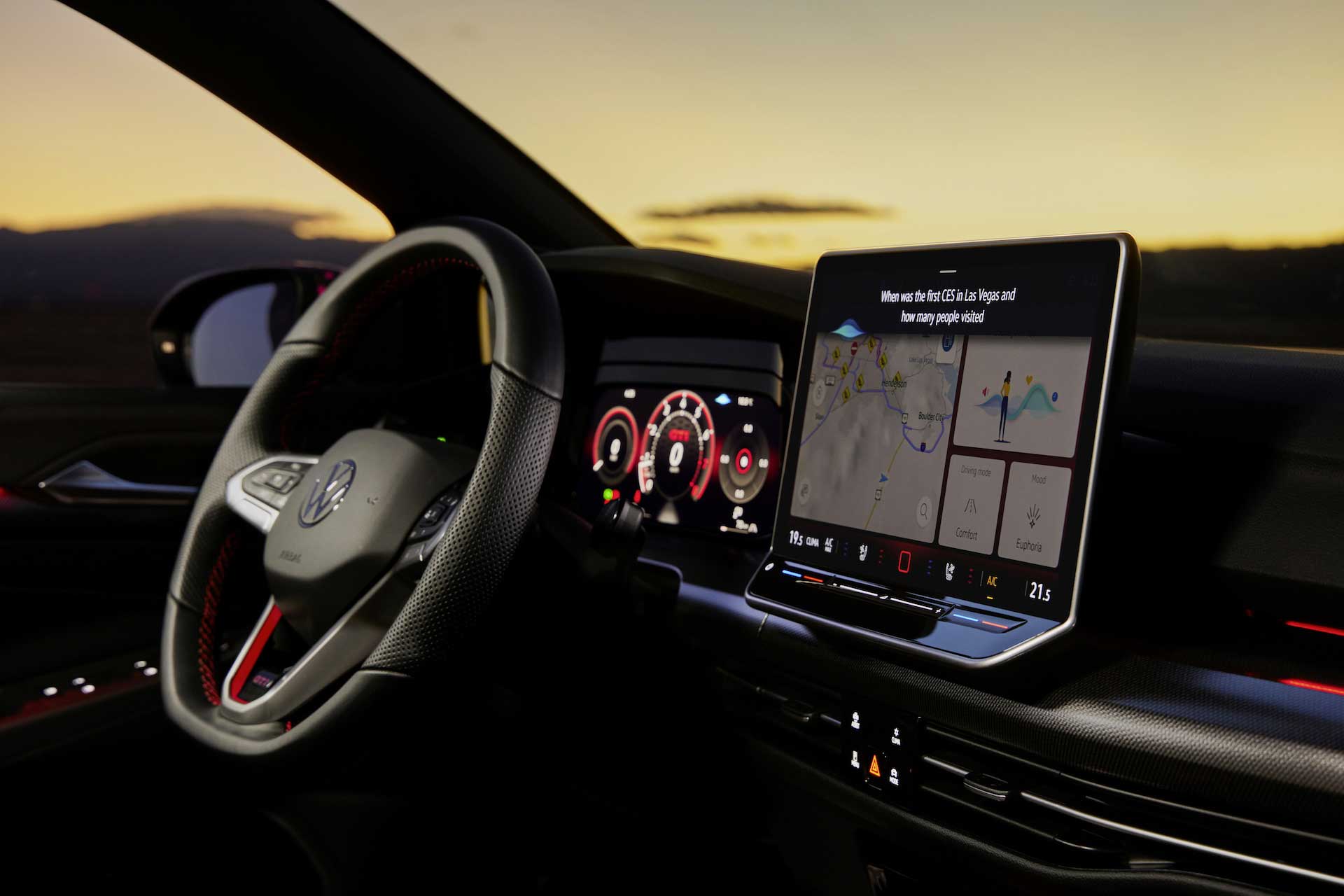
Last week we reported that BMW has entered a pact with DeepSeek for China-market New Class vehicles, part of their effort to meet the wants and needs of Chinese customers with a high degree of product localization.
For the Chinese version of the Panoramic iDrive, BMW has specifically tailored their Operating System X to local preferences Chinese in cooperation with local technology partners, including Alibaba and Huawei. The system offers a wide range of digital functions, including the AI-supported BMW Intelligent Personal Assistant.
Why an AI Chatbot?
AI, for the purposes we consider in the automotive interior realm, is the ability of a machine to imitate human abilities such as logical thinking, learning, planning, and creativity. So, AI enables technical systems to simulate humanlike perception, reaction, and interaction of and with their environment. Moreover, by analyzing the consequences of previous actions, AI systems can adapt their actions and refine their simulations, eventually operating more or less autonomously.
An AI chatbot helps to add AI functions to an in-car personal assistant. This digital assistant can execute voice commands, actively engage in dialog with vehicle occupants, and analyze situations based on context.
Car manufacturers have now integrated AI chat features into their vehicles, the idea being to improve the driving experience through advanced voice assistants and interactive capabilities.
Automakers and Voice Assistants
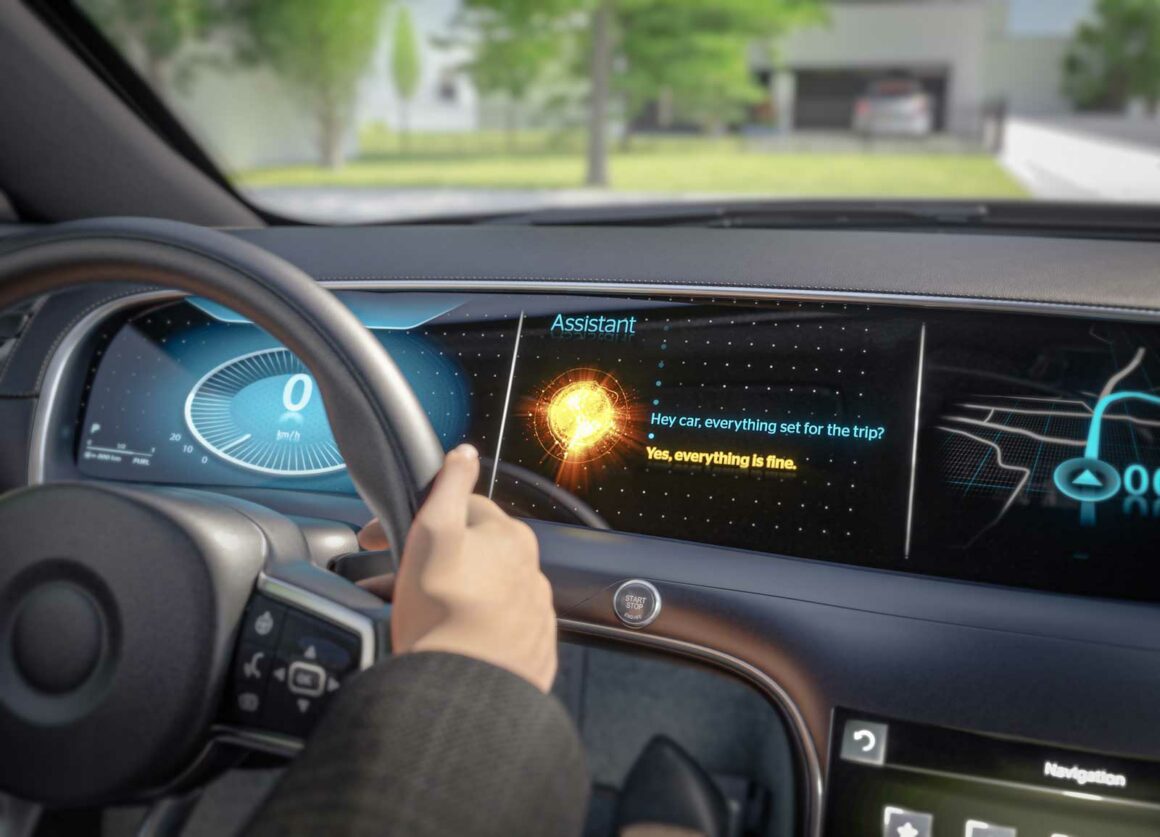
Automakers face an uphill battle to regain control over their in-car infotainment systems as Apple and Google expand their dominance with AI voice assistants. These assistants, powered by the vast amounts of personal data these companies already collect, are poised to become even more essential for drivers, leaving automakers at a disadvantage in competing for consumer attention.
Apple’s Siri and Google Assistant, integrated via mirroring services like CarPlay and Android Auto, are becoming more sophisticated, using AI to understand driver commands, deliver natural speech responses, and seamlessly connect with broader ecosystems such as smart homes. With access to consumer data like location, calendars, and browsing history, Apple and Google can offer deeply personalized and powerful user experiences that automakers struggle to match.
According to Alex Oyler, director at SBD Automotive, automakers lack the necessary data to build comparable systems, limiting their ability to provide a competitive user experience. While manufacturers have been working to develop their own visual interfaces for infotainment centers, voice assistants represent a new space where big tech’s advantage is even more apparent.
To bridge the gap, many automakers have outsourced the development of voice assistant technology to third-party providers like SoundHound AI, Cerence, and Amazon.
Here are some notable examples, including China where software-defined functions are more of a major purchasing criterion more than in any other market:
Deep Seek
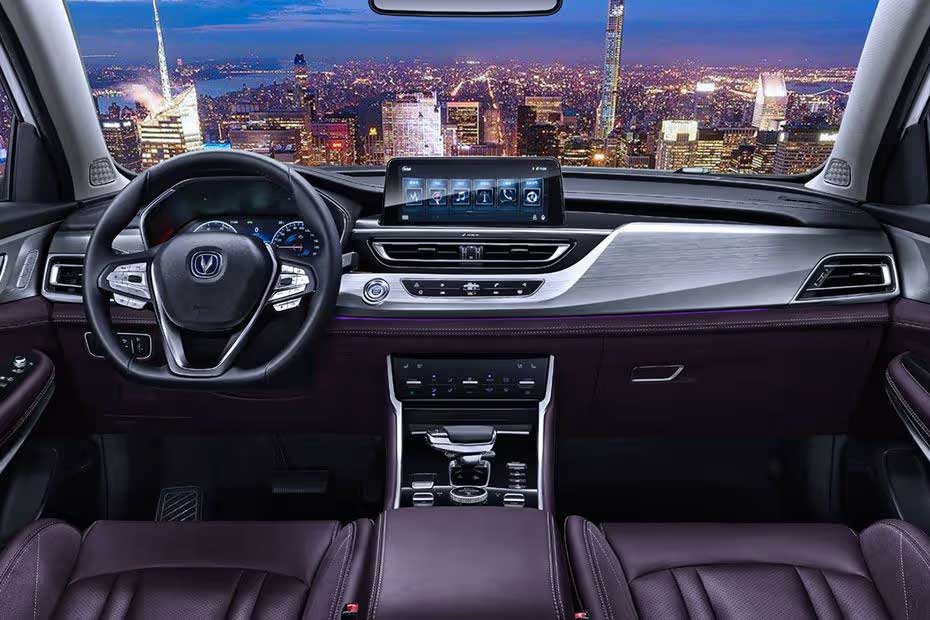
DeepSeek was founded in China in July 2023, and their R1 large language model provides responses comparable to other LLMs such as OpenAI’s GPT-4o and o1. DeepSeek is making significant strides in the automotive industry, particularly in car cockpits.
They’ve raised hackles in Silicon Valley and the U.S. government. Some say a ban is coming soon, which would bar any EV using DeepSeek from the U.S. market (where Chinese cars are largely kept out by tariffs and non-tariff trade barriers such as the American vehicle safety standards, which diverge significantly from the rest-of-world UN Regulations). For brands like Dongfeng, which doesn’t have much of a presence outside of China anyway, this isn’t such a big deal. But for brand like Geely, which owns Volvo and Polestar, there likely will need to be some serious separation to avoid problem from the Trump Administration. So far, Geely has kept most Volvo and Polestar software development away from the rest of the Geely group.
Zeekr
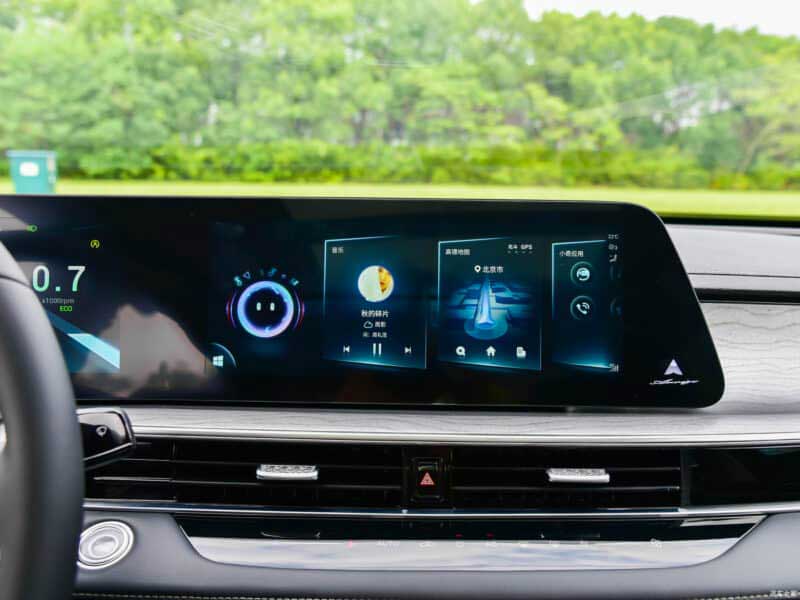
Zeekr integrates DeepSeek R1 Into their virtual voice assistant, AI Eva, to sharpen its ability to interpret vague or unclear user inputs, making it more intuitive and responsive.
Dongfeng
Dongfeng sub-brand M-Hero will put DeepSeek R1 in their cockpit infotainment systems. The M-917 off-road SUV was expected to receive this update over the air last month. The M-Hero Zhiyin “Courage” SUV has been undergoing ‘knowledge distillation training’ since 14 February, to increase the smart cockpit’s capabilities.
Dongfeng Nissan
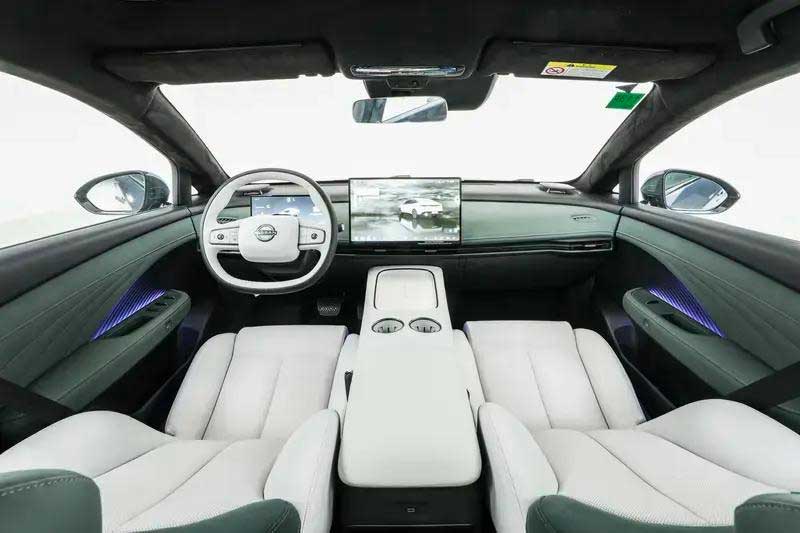
Dongfeng Nissan’s upcoming N7 has become China’s first joint-venture-owned vehicle model to integrate the DeepSeek-R1 AI system.
The N7 is expected to hit the market any moment now. As the first electric sedan built on Dongfeng Nissan’s NEV-dedicated platform, the model has drawn significant attention since its global debut at Auto Guangzhou last year.
DeepSeek-R1 AI enables the N7 to provide more precise intent recognition and smoother, more natural human-machine interaction. There’s also the Qualcomm Snapdragon 8295P processor and an end-to-end advanced intelligent driving system developed by Momenta. This system supports highway NOA (navigate on autopilot), urban memory NOA, and full-scenario intelligent parking.
Voyah
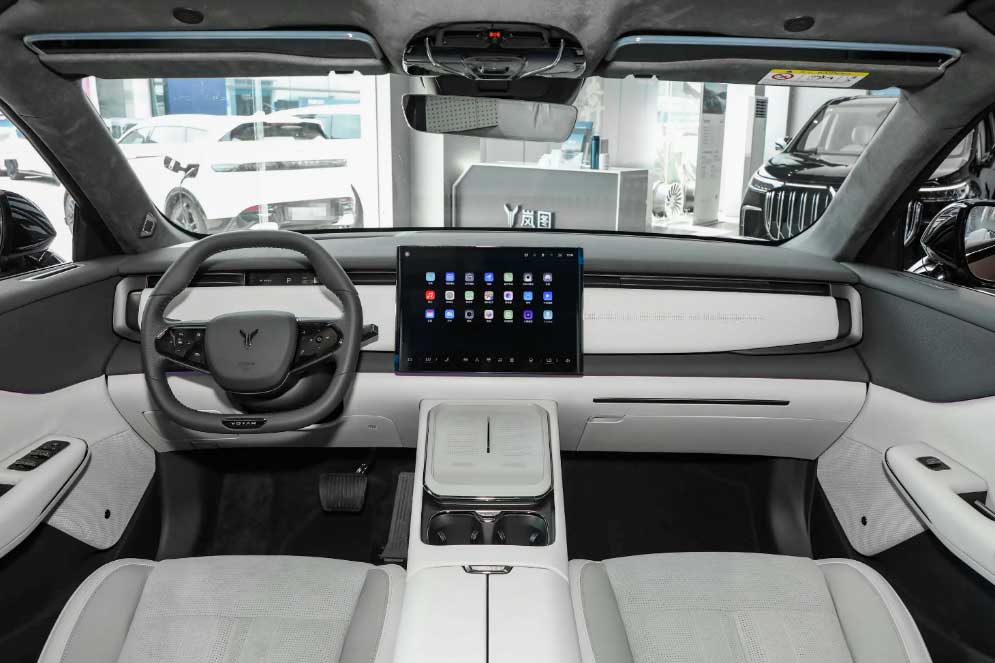
Dongfeng’s Voyah brand says their Courage EV crossover and Dream MPV will be the first mass-produced vehicles to have the AI tool integrated into their software. DeepSeek will first be ported to the Courage via an OTA update, will integrate into Voyah’s existing smart cockpit software and will improve the ‘AI responsiveness, accuracy and expandability’ of the stuff that’s already there. It also will enable Voyah to rapidly improve their software and cater better to its vehicles’ users.
SAIC-GM
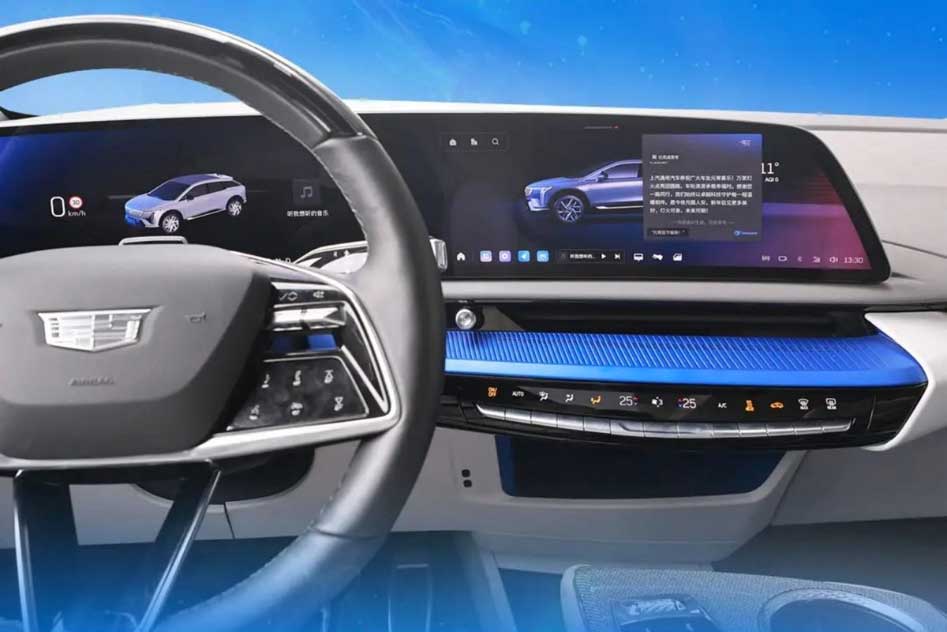
SAIC General Motors has announced integration of the DeepSeek-R1 AI model into the automaker’s smart cockpits. New vehicle models under the Cadillac and Buick brands will soon feature this technology.
SAIC-GM say they have established an ‘integrated edge-cloud AI model hub’ that supports the integration of multiple advanced AI models. This AI hub enables the collaborative evolution of dual AI models, combining DeepSeek’s complex reasoning capabilities with the creative generation abilities of ERNIE Bot. This deep integration enhances the hub’s ability to understand complex user commands and offers interactive features such as content retrieval and generative content creation, improving the user interaction experience.
SAIC-GM says their smart cockpits will ‘transcend traditional boundaries of perception, reasoning, thinking, and interaction’.
BYD God’s Eye
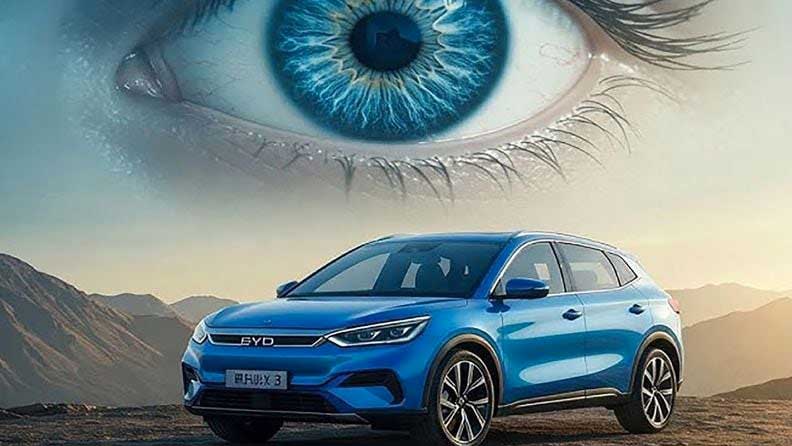
BYD has presented a system for autonomous driving based on DeepSeek. Their ‘God’s Eye’ assistance system will control all BYD models in future. The largest Chinese EV maker, BYD wants to offer semi-autonomous driving as standard in all models. Even the cheapest models are to be equipped with an advanced basic version.
The brain of BYD’s DiPilot system is DeepSeek version R1, which was originally developed for speech processing and has been adapted to the requirements of real-time driving. In contrast to conventional rule-based control software, R1 uses neural networks to interpret the environment and recognize and classify objects in different weather and lighting conditions. It can support decision-making and help predict possible maneuvers such as lane changes or braking. DeepSeek can thus recognize dangers in road traffic and make a risk assessment in a fraction of a second.
Baidu Apollo
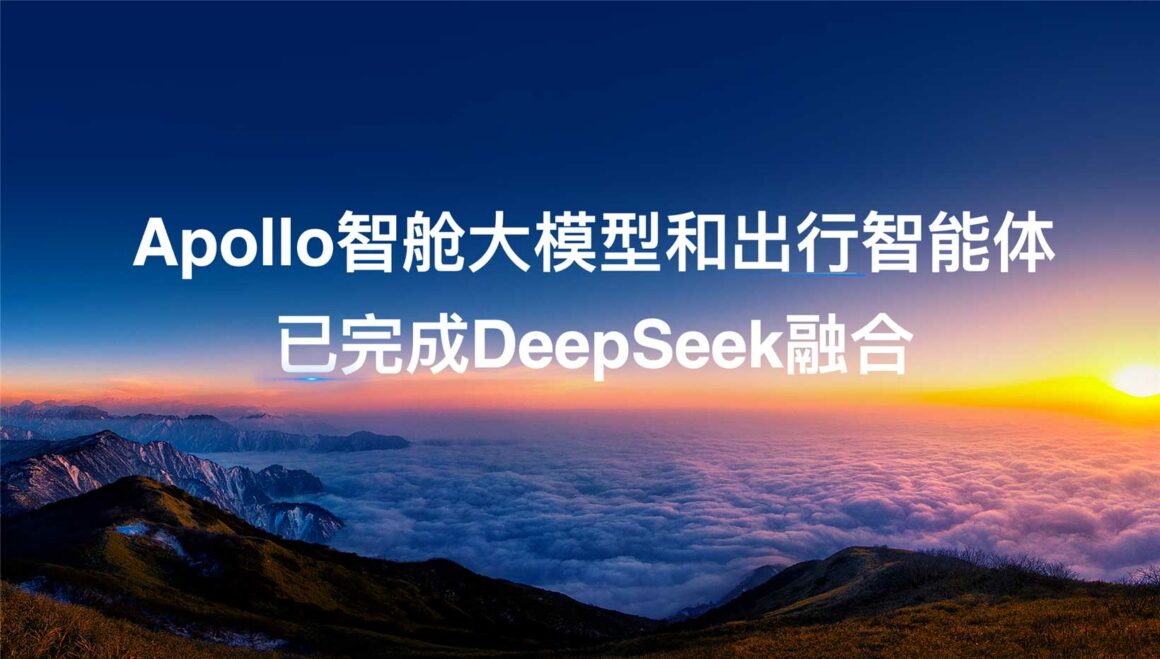
Baidu’s Apollo smart cockpit large model and mobility agent have now integrated with DeepSeek. This combination creates a next-generation intelligent mobility hub, offering professional, convenient, and efficient mobility experiences by improving complex information processing, deep user understanding, and decision-making execution.
The Apollo smart cockpit model leverages visual, vehicle, environmental, weather, and user preference data to provide personalized interactions as soon as the user enters the vehicle. It can generate customized greetings, recommend preferred music, and automatically adjust settings such as air conditioning, seating, ambient lighting, and driving modes. Additionally, with internet access, it can accurately respond to time-sensitive needs and offer creative features like AI-powered painting and casual conversation, delivering a highly interactive in-car assistant experience.
Baidu successfully integrated their large model system into models such as the Cadillac Lyriq, Buick GL8, and Geely Galaxy L6 in 2024.
Other Chinese brands, including Geely, Zeekr, GAC, Baojun, IM Motors, Changan, and Leapmotor have also announced deep integration of the DeepSeek AI model into smart cockpit systems.
Europe
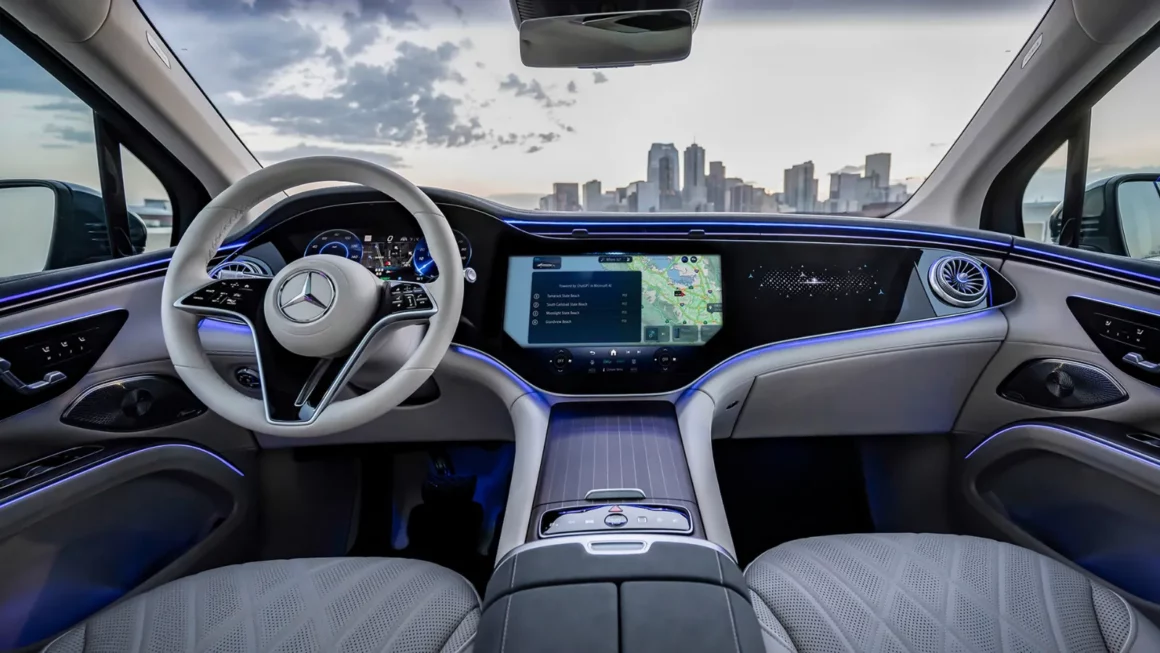
Mercedes-Benz has integrated ChatGPT into their vehicles, to augment the capabilities of the “Hey Mercedes” voice assistant. This integration allows for more natural and expansive conversations, handling a broader range of topics and providing more natural language interactions.
Volkswagen announced ChatGPT in their vehicles at CES 2025. This integration aims to provide more interactive and responsive AI interactions within the car. The voice assistant is activated by saying “Hello IDA” or pressing the button on the steering wheel. ‘IDA’ automatically prioritizes whether a vehicle function should be executed, a destination searched, or the temperature adjusted.
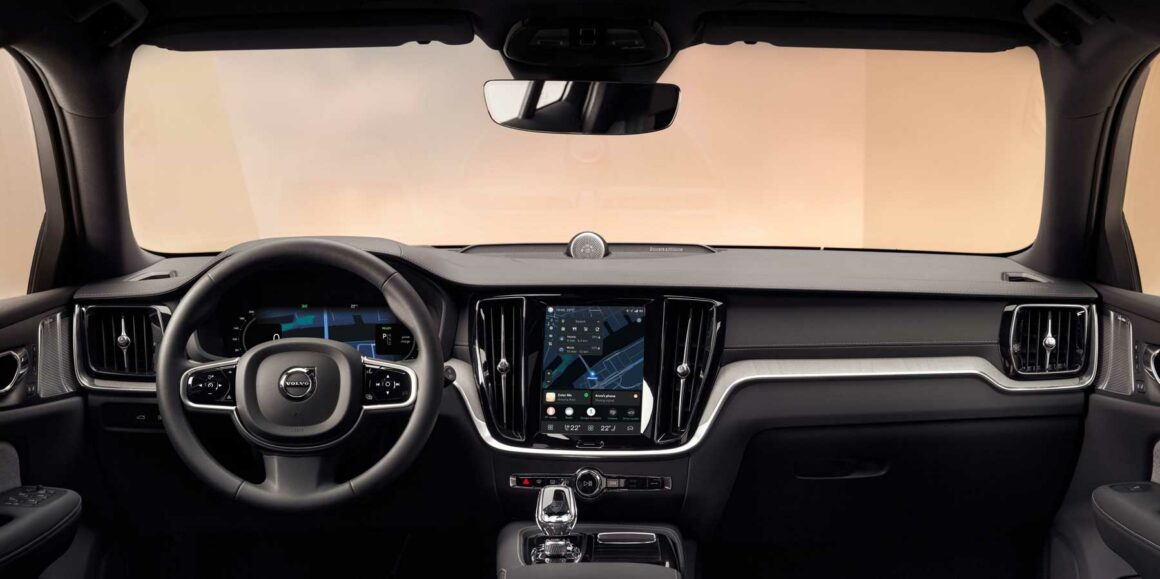
Volvo says their 2025 Volvo EX90 electric SUV will feature L3 autonomy, which includes advanced AI capabilities for understanding and generating text, like how a human would respond to questions and organize information.
Audi has integrated ChatGPT into their EVs, enabling the car to understand the full context of questions, find answers on the web, and assist in planning trips with human-sounding sentences.
Stellantis
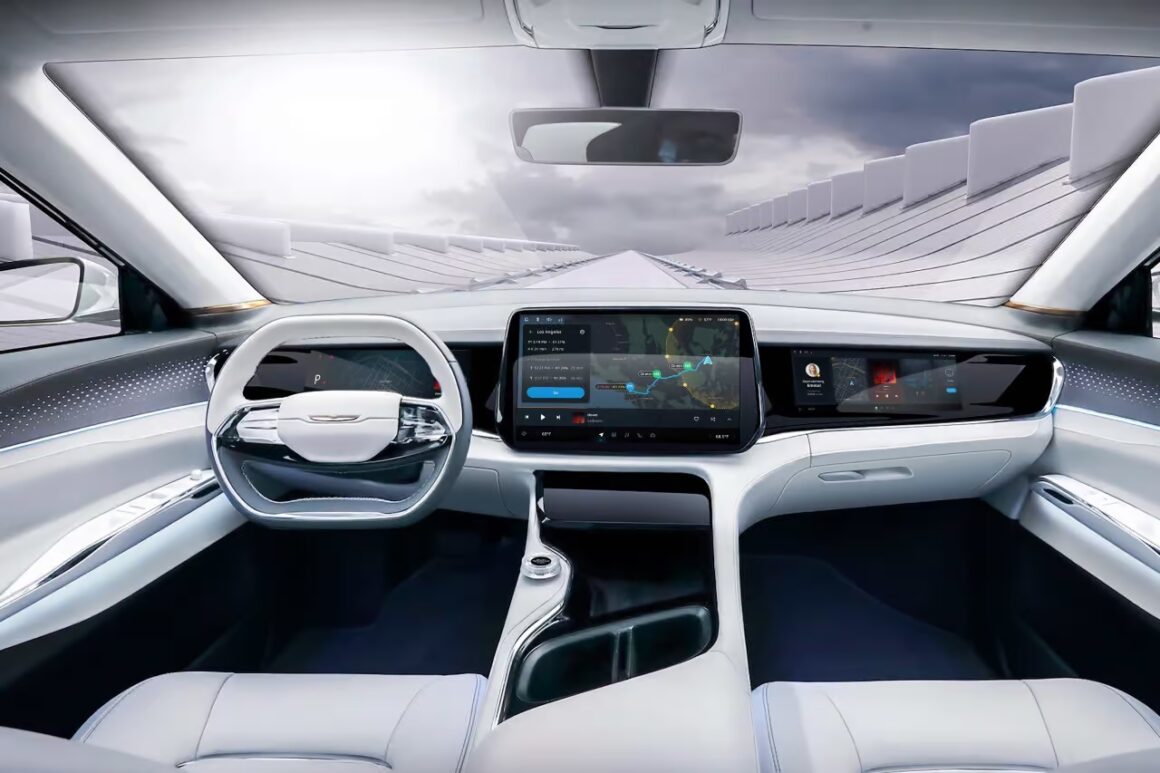
Stellantis and Mistral AI are strengthening their strategic partnership to integrate AI across various sectors, from vehicle engineering to enhancing in-car experiences. The collaboration leverages Mistral’s LLM expertise and AI-driven automation, enabling Stellantis to improve data analysis, streamline development and enhance customer interactions.
A key outcome of the partnership is developing an advanced AI-powered in-car assistant designed to provide real-time, conversational support for drivers. The initiative has been built on over a year of joint AI projects to increase customer satisfaction, optimize product development and improve manufacturing efficiency.
Mistral is a French AI startup, headquartered in Paris. They specialize in open-weight large language models.
Conclusion
All these integrations highlight the growing trend of AI chat features in new vehicles, aimed at providing a more interactive, safe, and convenient driving experience.
Be assured, dear reader: this newsletter has not been written or edited using any AI tools; you are getting 100 per cent genuine, actual, real human intellect in your DVN content. 😊


