By Paul-Henri Matha
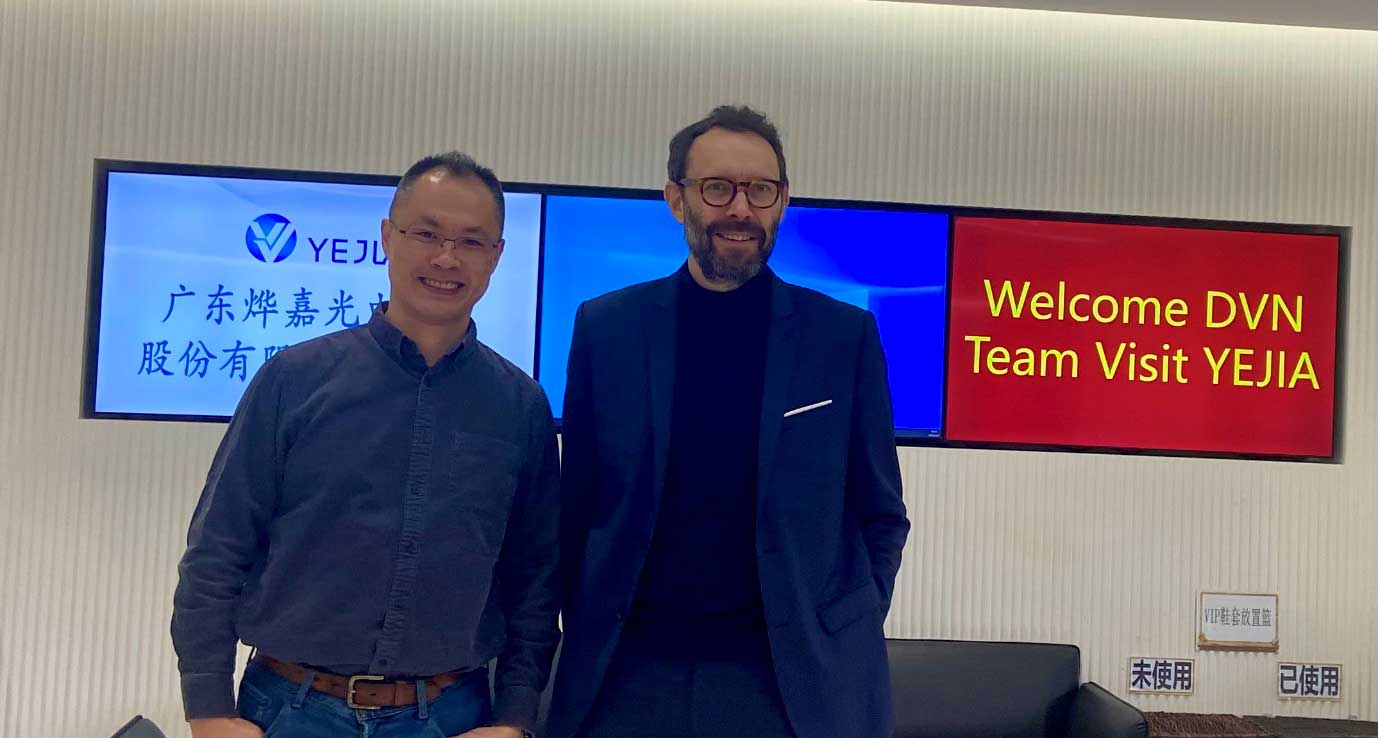
I took time to visit YEJIA in Dongguan with Anne. Yeija is an optical component provider for illumination optics, image optics and silicone optics. They started Silicone products in 2009 (Dongguan TronshinSilicone Products Co., Ltd.) and plastic optics in 2014 (Dongguan Yejia Electronic Technology Co.,Ltd), and then later merged into a unique company in 2015, Yejia Optical Technology.
Yeija is producing in 2 different factories. In Guangdong province, 20,000 square meters (600 people) and Zheijang (200 people), 12,000 square meters.
Revenue is around RMB 400 million, with main focus automotive-related business (70%). Yejia is one of the leading manufacturers in China for Headlamp plastic module lens and silicone. Main customers are all lighting tier1, including also camera and HUD players

Main components are thick lens optics, lens module, HUD primary optics and silicone optics

Yejia is not only a component injector and manufacturer. Yejia is realising all the optical inserts (250 insert tool per year capacity) for plastic (2 months lead time) and silicone (50 days lead time). They have around 100 injection machin in Dongguan and 100 in Zheijang, plus 50 silicon sets, 14 coating machines set and more than 10 assembly lines, all in clean room.
Yejia is also able to do the optical design of complete illumination and imaging optics thanks to IP rights.

About injection and optical capabilities, they are able to produce mono-shot (for 28mm thickness 70x45mm lens, cycle time around 1,000 seconds) and 2 shot plastic lens (for 28mm thickness 70x45mm lens, cycle time around 300 seconds). They can design and produce lenses with Microstructure and free form surface, including compression tool to keep optical properties and low tolerances

They are developing complete optical lenses system for pixel and HD modules including PMMA and PC-coated lenses (Glass lens are bought).
Optical control is done at 100% by different precision measurement equipment to guarantee optical and image properties: Mitakalarge 3D and Zeiss GOM, Trioptics HR, Panasonic UA3P, Luceo StrainEye.. After final check of the optical lens assembly, possibility to rework the module if needed

Yejia is also developing Gobo lens modules for projection systems, including high-illuminance silicone lens modules (no additional sealing rings required) and light carpet lamps (without MLA). These products are already in mass production and supplied to multiple automotive OEMs, such as General Motors (GM) and Volkswagen (VW).


In preparation of DVN Tokyo workshop, I took time to exchange with Nan Jixue, Chairman of Yejia Optical Technology, who will do a lecture in our event. From the bio of Mr Nan, he has obtained multiple degrees, including Northeast Heavy Machinery College,Computer Applications degree from Harbin Institute of Technology, an EMBA from Sun Yat-sen University, an AMP from Yonsei University in South Korea,and Changjiang Business School EMBA. He also serves in various positions such as the President of the Overseas Trade Committee of the China Asia Economic Development Association and a Visiting Professor at the Chinese Academy of Management Sciences, among others. He also attends the World Korean Business Conference LEADING CEO Forum.
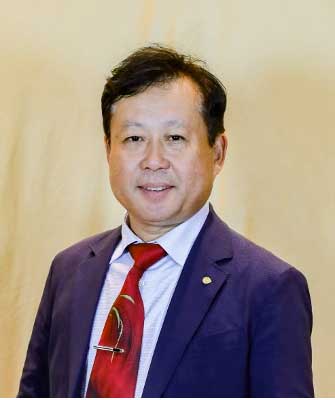
PHM: Mr Nan, Yejia have the plan to exhibit and do a lecture in DVN Tokyo. Can you explain your relationship with Japan?
NJ: Yejia is already a supplier to Koito and Stanley. Through DVN, we aim to expand our influence in the Japanese automotive lighting industry.
PHM: Your team explained me 2 difficulties you are facing in China: Silicone raw material supply chain and High temperature PMMA. Where does the material come from currently and do you have plan to find local supplier?
NJ: Silicone materials are primarily sourced from Dow, while high-temperature PMMA is supplied mainly by Trinseo. Material adoption in automotive lighting requires extensive validation and is ultimately determined through collaboration between OEMs, Tier 1 suppliers, and material providers.
PHM: Do you plan to open plants in Europe and North America?
NJ: The plan remains undefined at this stage.
PHM: What do you think about Silicone about automotive lighting business? Optical designer like it for optical accuracy for ADB system, but manufacturing does not really like it, same for purchasing (price). What is future for silicon according to you? why nobody produces it in Europe and is there a room for production in Europe?
NJ: Silicone-based solutions have become the preferred choice for cost-sensitive, low-pixel ADB designs, offering an effective balance between technical feasibility and affordability. Their use in automotive lighting continues to grow in parallel with the expanding adoption of ADB technology. As far as I know, there are some silicone component suppliers in Europe. Yejia distinguishes itself by leveraging its established capabilities in high-volume optical component production and testing to support its silicone manufacturing — a unique integration that enhances both efficiency and quality.
PHM: European glass and plastic optical tier2 are struggling in Europe. What is your secret in China? I see you are extending your capacities.
NJ: We are undoubtedly facing tough times. In response, we need to proactively leverage technology to enhance efficiency and rapidly scale automation — ensuring we stay competitive and aligned with evolving customer demands.
PHM: What is the next innovation in optical design? is it direct imaging? free form optics? which technology will disappear, and which one will emerge?
NJ: Freeform optics—especially discrete freeform optical design—has emerged as a highly promising technological frontier. Over the past two decades, rapid advancements in plastic optics manufacturing have enabled the large-scale production of freeform-based components, while parallel progress in theoretical research has driven continuous innovation. In collaboration with Prof. Rengmao Wu at Zhejiang University, we have conducted extensive experimentation in this domain. We look forward to applying these cutting-edge technologies to market through real-world product applications in the near future.
PHM: You are presenting design of optical systems for HD lamps with both PC, glass and PMMA: what are your criteria for these choices? Are you totally designing this group combination or is it the responsibility of the tier 1 supplier?
NJ: First, cost constraints prevent the use of molded aspheric glass lenses in our designs. Meanwhile, we are capable of producing high-quality plastic aspheric lenses with a PV value of less than 5 µm for lenses with a 50mm diameter. Next, to effectively control chromatic dispersion, materials with specific dispersion properties must be used. Finally, due to the limited material options approved by most OEMs, we rely on the most widely available polymers—PMMA and PC—for optical design. Our patents have been granted in China, Japan, and the United States. In most cases, we deliver fully assembled optical lens modules directly to Tier 1 suppliers.
PHM: For silicone, what are your limits for the shape?
NJ: The main issue with silicone is its relatively high thermal expansion, making it more suitable for use in collimator rather than lens. In this case, the precision of the product is closely related to its structure. The main challenge is controlling roughness and burrs, which are influenced not only by tooling but also by the injection process.
PHM: What do you think about MLA and could they replace traditional lenses for the future? Are you targeting to develop in the future MLA systems?
NJ: We have conducted extensive research on MLA and applied for several patents. At the same time, we have identified numerous technical challenges that need to be addressed, which significantly limit the application of MLA. The most key issues are dispersion and stray light.
PHM: In your revenues, what is the share of automotive parts compared to non automotive markets? And in the automotive revenues, the share for silicone parts?
NJ: The ratio between automotive parts and non-automotive markets is approximately 7:3. Silicone parts currently account for about 5%, and in the near future, this is expected to reach around 15%.
PHM: Thank you


