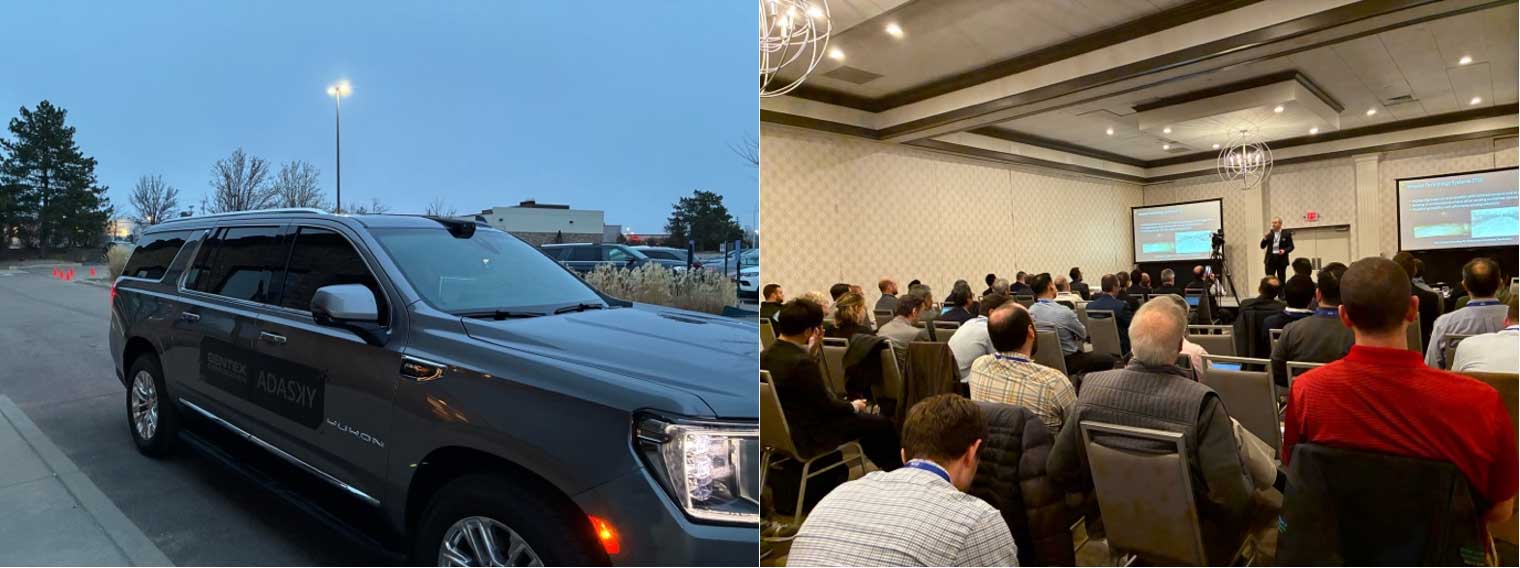
DVN held a AEB Workshop in Novi Michigan, April 9/10th and we had more than 80 industry attendees from OEMs, Tier1’s and technology suppliers.
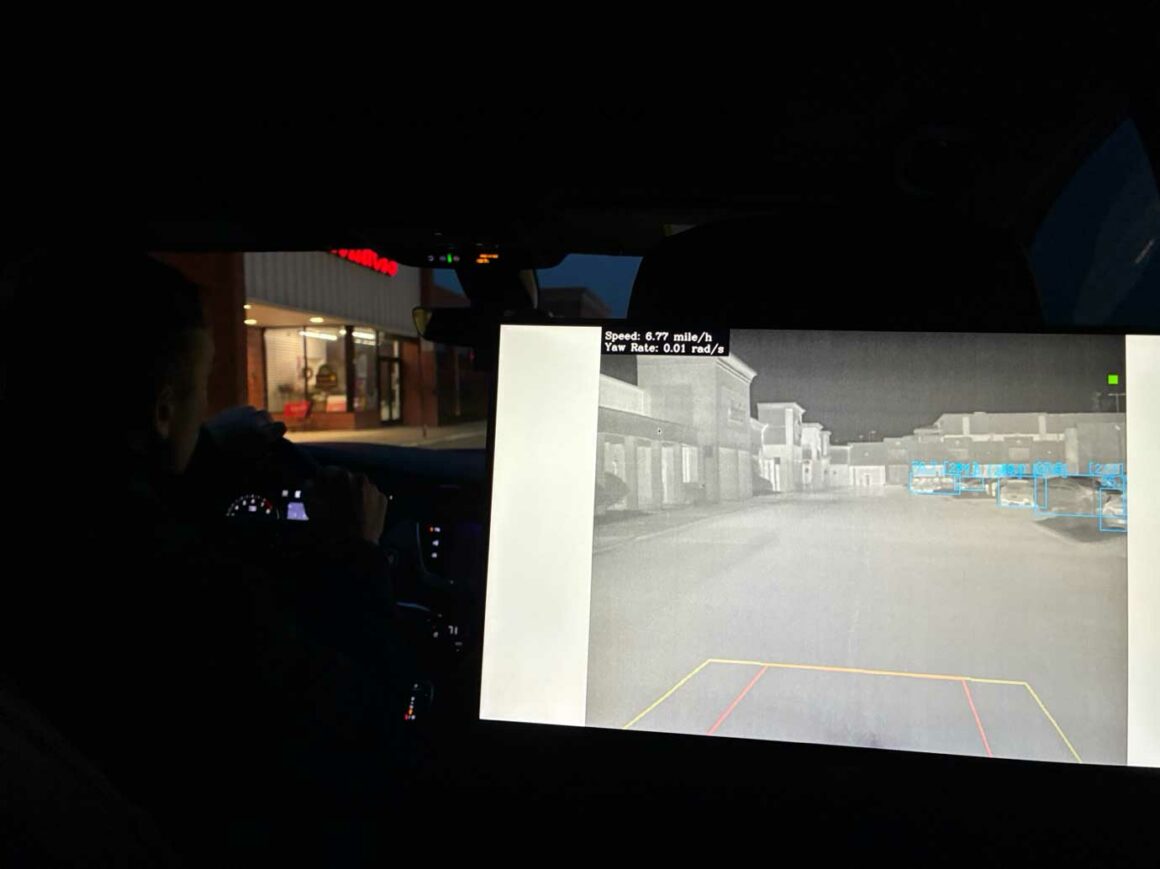
We also had live demos from Teledyne/Flir, Compal/Obsidian, Adasky, Forvia/Hella. Magna and Valeo showing next generation sensor performance. Eighteen speakers presented different solutions to the FMVSS 127 challenge from headlight improvements to image sensor advances, radar, AI software, thermal cameras, lidar and simulation.
Tests done on existing vehicles show that meeting the new standard is going to be challenging, especially for the nighttime and higher speed tests. New car models can be designed around improved headlight platforms and additional sensor architectures. For existing models, OEMs are going to try and squeeze more performance from the existing front camera architecture through software algorithm updates, but this will be a risky strategy. Camera sensor supplies like Omnivision are improving sensor low-light and dynamic range performance which might also be needed to pass the new tests.
OEMs should also consider driver experience factors like reducing false positives and smoother braking, beyond just meeting the basic standard.
Starting from a clean sheet of paper gives OEMs more options including radar based solutions that will require advanced AI perception software. Forvia-Hella, Perciv.ai and Zendar spoke about improvements possible with software enhancements. SABIC also spoke about the importances of plastics design to radar performance.
IR cameras clearly offer a compelling night-time solution that works well in other adverse lighting conditions. There were impressive demos from Teledyne-Flir, Compal and Adasky and Obsidian spoke about new manufacturing techniques to lower the cost of thermal sensors.
Lidar will also be increasingly deployed for L2+ and L3 driving and offers a good solution for AEB as well. Next generation technologies like FMCW reduce processing workload and can map stationary objects like bumps, potholes and debris on the road better than many of the other sensors.
Clearly there is no single ideal solution. Software improvements to existing solutions will be needed to keep costs down, however, as other more advanced ADAS features come to next generation cars, sensors such as radar, thermal and even lidar will play important roles. Drivers will likely look beyond just meeting the test requirements and consider the overall driving experience which will be better met with sensor redundancy and sensors that can also operate in adverse weather conditions.
Simulation will play an increasingly critical role in development of ADAS software as exponentially more scenario testing becomes impossible in the physical world. End-of-line calibration solutions and re-calibration after accident repair or even during routine service are also factors OEMs should consider as part of the solution.
A copy of the full report is available separately on the DVN website.


