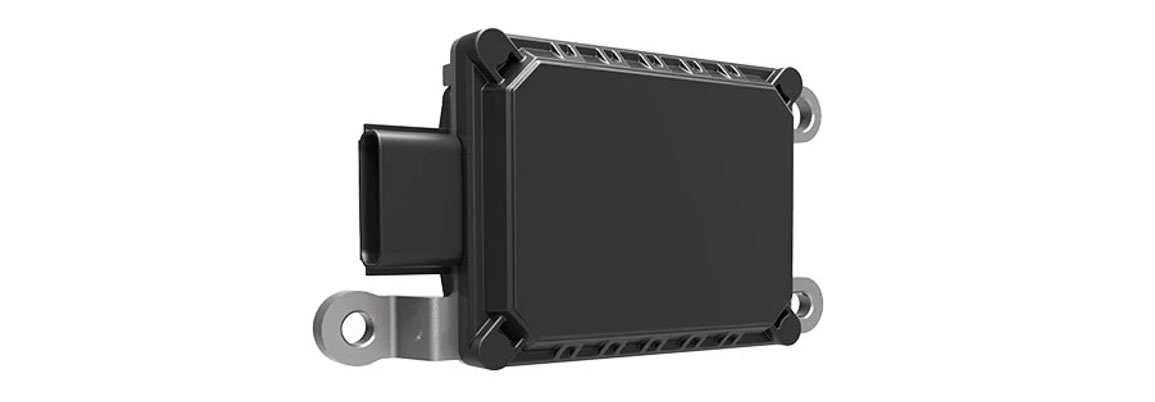
Radar With China’s First HD Waveguide Antenna
HiRain Technologies, a supplier of intelligent driving systems to the Chinese automotive market, announced the launch of their LRR615, a production-intended long-range imaging radar system powered by the Arbe Robotics high-performance chipset. Designed to deliver ultrahigh resolution and reliability in all weather and lighting conditions, the LRR615 is now available for automaker evaluation.

The LRR615 is the first radar system in China to feature a high-density waveguide antenna for improved image clarity and increased sensitivity and signal integrity. With its ability to detect at long ranges and maintain high resolution in challenging environments while minimizing false alarms, the scalable imaging sensor complements cameras and offers a less expensive alternative to lidar. The radar system is tailored for the growing demands of the Chinese autonomous driving market, delivering 10 times the detection capabilities compared to current radars on the market.
Notable functions and features include:
- Massive channel antenna array
- High angular resolution: 1.25°H × 1.8°V(real aperture)
- Dense point clouds: Over 10 kilopoints per frame on urban roads, providing a clear target outline
- Ultralong-distance detection: >100m for pedestrians, >250m for motorcycles, >350m for cars
- High dynamic detection range: capable of detecting weak targets near strong ones
- Long-distance early warning: reliable detection of stationary objects like tires and barrels over 100m
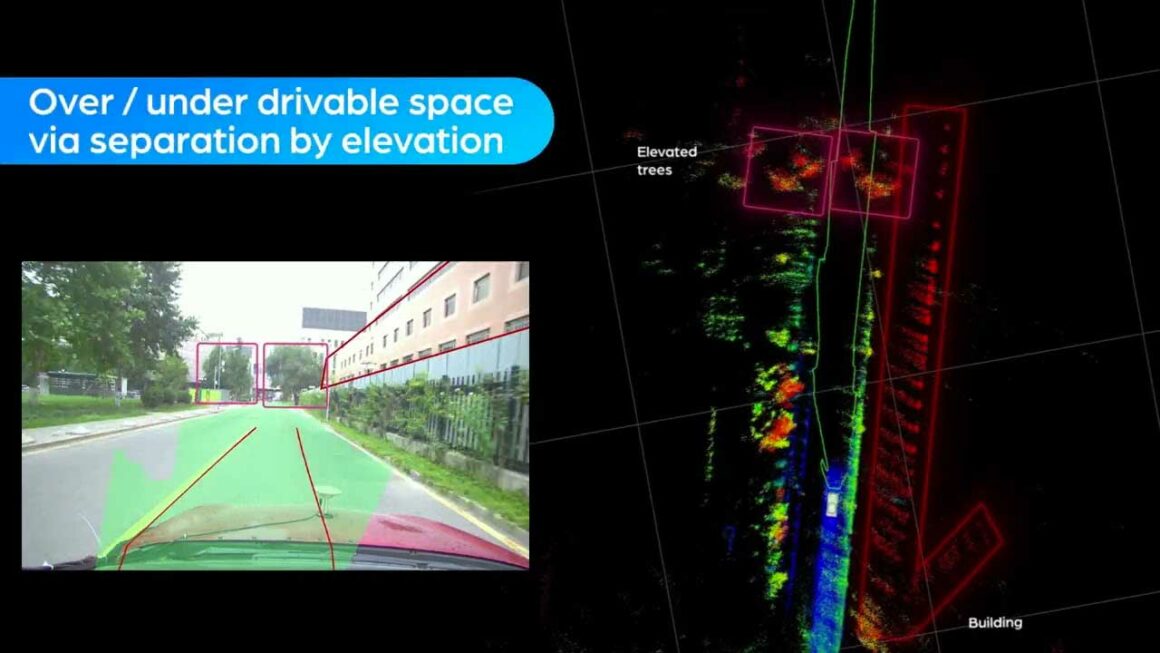
- Precise free-space detection
- Classification of traffic participants and infrastructure
- True imaging radar solution based on Arbe chipsets
- Time-frequency coding waveform design for improved target detection
- 2,034 virtual channel uniform arrays for a high dynamic detection range
- High-performance processor supporting imaging-level point cloud output
- AI algorithm extension for imaging radar applications
- Flexible communication interfaces (two CAN-FD and one 1,000-Mbps Ethernet)
HiRain Technologies CTO Fan Chengjian says, “Arbe’s cutting-edge radar chipset enabled us to develop one of the most advanced and production-ready radar systems in China. The LRR615 sets a new benchmark for performance and cost-efficiency, and we are proud to bring this next-generation solution to OEMs preparing for L2+ and L3 autonomy.”
The new radar system complements HiRain’s existing autonomous driving platform, which integrates cameras and radar to deliver comprehensive L2+ and L3 driving capabilities. HiRain has completed full system integration, calibration, and validation of the LRR615, and they’re preparing to ramp up production capacity to deliver tens of thousands of units annually.
Arbe CEO Kobi Marenko says, “HiRain’s launch of the LRR615 system marks an exciting milestone for Arbe’s expansion in China. Their ability to industrialize a radar system of this caliber, based on our chipset, reinforces the critical role high-resolution radar plays in the future of autonomous perception.”
Arbe and HiRain exhibited at the Auto Shanghai show on 25 – 26 April.
HiRain Technologies, founded in 2003, is a system provider of intelligent driving solutions to automakers in China, focuses on providing customers in the fields of automobile and unmanned transportation with electronic products, R&D services and overall solutions for high-level intelligent driving. Headquartered in Beijing, HiRain has established modern production plants in Tianjin and Nantong, forming a comprehensive R&D, production, marketing, and service system.
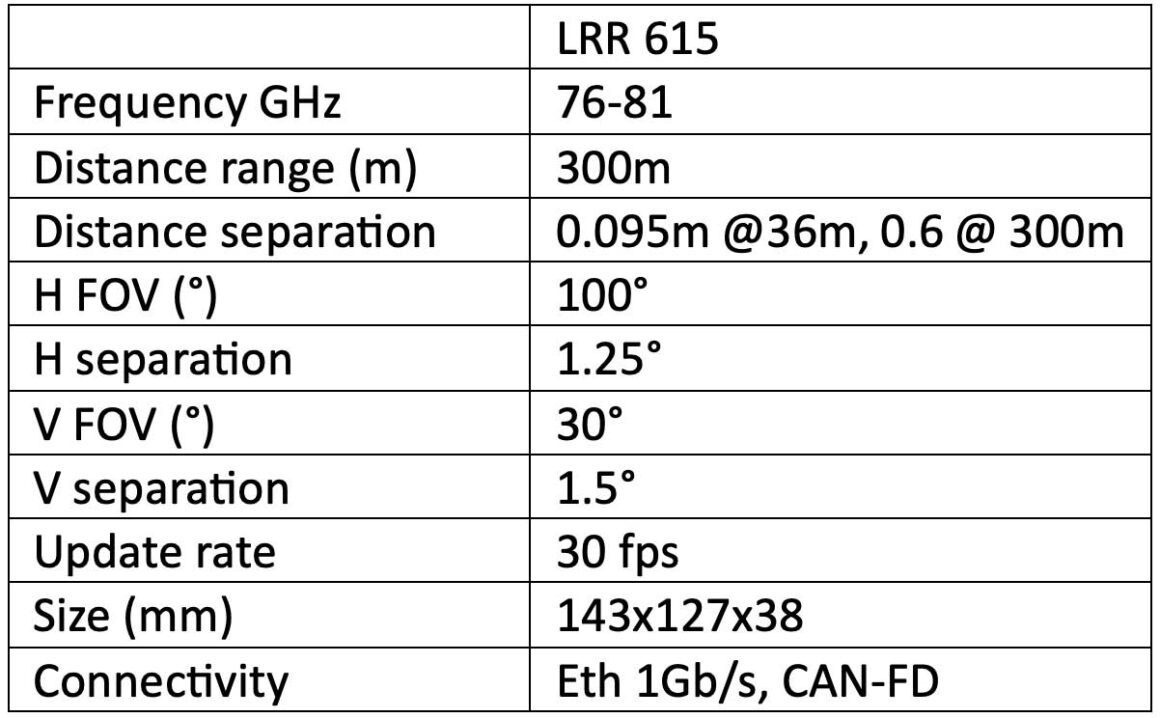
Specifications of LRR615
DVN comments
The global automotive 4D imaging radar market is expected to grow to USD $3.35bn by 2030. The high-resolution imaging capabilities of the 4D radar enable precise location and classification of objects, facilitating NOA, AEB and autonomous driving. Nevertheless, the current costs of 4D Imaging radars makes that generalist OEMs are still septic about their integration in sensing systems. The main market is midrange radars.
Imec’s Photonic Multiplexing 144-GHz Distributed FMCW Radar
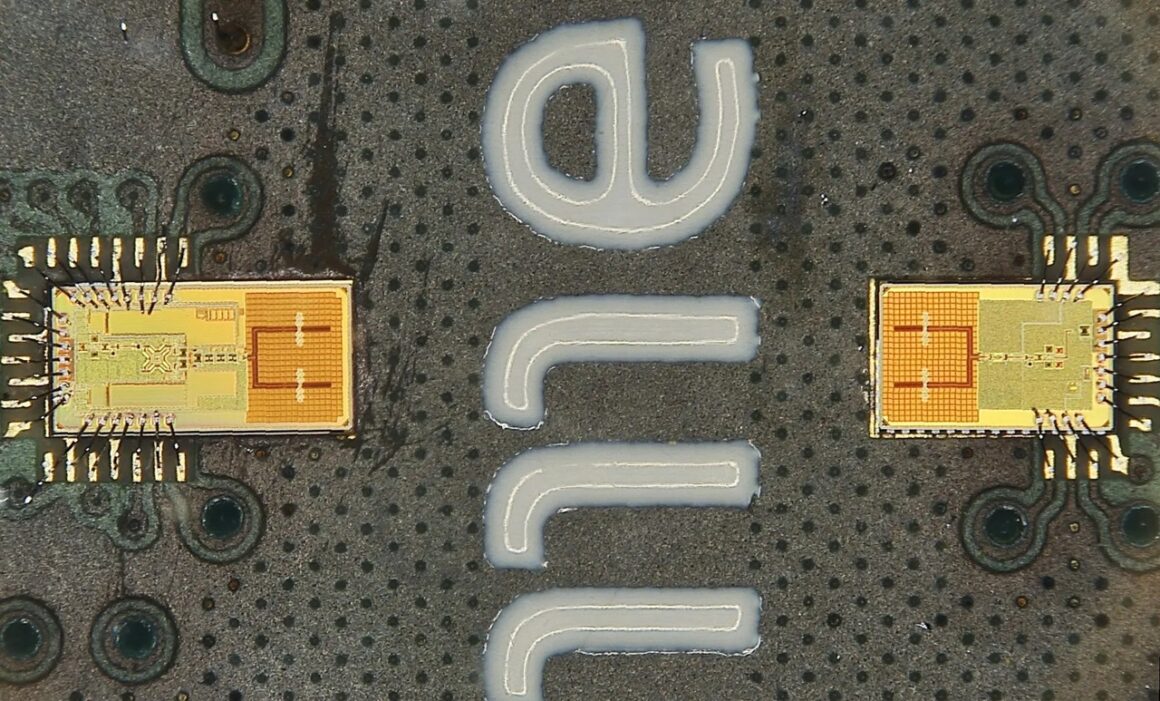
Imec, a research and innovation hub in nanoelectronics and digital technologies, has successfully developed and tested a proof-of-concept photonics-enabled code-division multiplexing (CDM) frequency-modulated continuous wave (FMCW) 144-GHz distributed radar system. This system ensures coherent chirps to remote radar units and demonstrates successful range measurements, paving the way for multi-node radar systems with better angular resolution compared to single-node setups. This technology has potential applications in driver assistance solutions and other high-precision sensing applications.
Achieving higher radar accuracy through enhanced angular resolution requires multiple radar nodes working together. A major challenge has been coherently distributing the shared local oscillator (LO) signal across these nodes over long distances without interference or attenuation.
At the Optical Fiber Communications conference, Ilja Ocket, who manages Imec’s automotive sensing portfolio, announced the functional proof-of-concept prototype. By combining analog radio-over-fiber technology with an efficient multiplexing scheme, this system ensures that radar units can work together seamlessly.
Imec’s innovation relies on a phase encoder using code-division multiplexing. Each node is assigned a unique code sequence for slow-time binary phase modulation, which allows multiple radar nodes to transmit signals over the same bandwidth simultaneously. This approach offers straightforward implementation and superior scalability for distributed radar systems.
Additionally, Imec’s optical signal distribution method integrates the phase encoder directly into the optical distribution network and uses analog radio-over-fiber technology, enabling low-loss transmission of the LO signal over long distances. This reduces electromagnetic interference while maintaining the signal integrity necessary for coherent multi-node radar operation.
The proof of concept demonstrated successful range measurements and the ability to separate monostatic and bistatic responses, validating both the setup’s potential and the viability of CDM for coherent photonic distributed radar systems. Imec plans to expand the system from two to four radar nodes to evaluate improvements in angular resolution and scalability.
Potential applications of this technology include high-resolution, 360° radar sensing for ADAS, as well as indoor sensing, biomedical imaging, and vital sign monitoring.
DVN comments
The development of distributed radars improves radar system resolution without the costs of imaging radars. However, precise synchronization between different radar front ends remains crucial. Zendar uses Gbit ethernet links for this synchronization. Imec’s solution uses high bandwidth provided by fiber optics. This technology is now well adapted to in vehicle environment.


