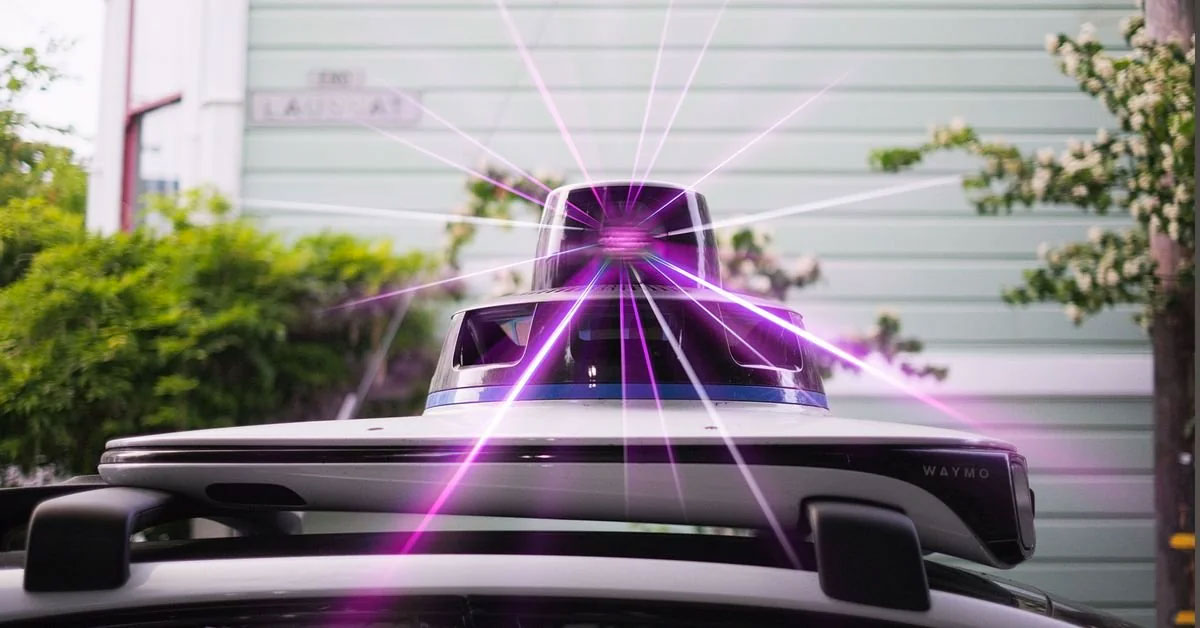
Aeva Wins Development Bid for Global Passenger Car Platform

Aeva has won a development program for a major automaker’s next-generation global passenger vehicle platform. The automaker, as yet unnamed, has also sent Aeva a letter of intent for a large-scale, multi-year production program award opportunity this year, including multiple vehicle models across maker’s global platform. The development program focuses on Aeva’s recently announced Atlas Ultra 4D lidar sensor, with SOP targeted for 2027.
Aeva has been gaining traction as a direct tier-1 supplier to top automakers and autonomous vehicle developers, including Aeva’s ongoing production program with Daimler Truck.
Aeva cofounder and CEO Soroush Salehian says “This win is a key milestone in our ongoing collaboration with a top-10 passenger OEM, and is a major validation of the capabilities of our new Atlas Ultra 4D lidar sensor (…) this further reinforces Aeva’s position as the leading supplier of next-generation sensing solutions for automated driving. It also represents another major automotive manufacturer moving to FMCW technology to expand its operational design domain and enable highway-speed L3 automation. We believe these trends are just beginning and will ultimately benefit the automotive industry and Aeva as the emerging leader in the market”.
DVN comments
The particularly high sensitivity of FMCW lidars, and good performance in harsh conditions like fog and rain, mean AEVA could leverage these advantages with collision avoidance rule evolutions (US FMVSS 127, for example) and futures L2+ and L3 system deployments. This technology remains expensive but accessible for premium carmakers.
Mercedes Partners with Hesai

Mercedes-Benz has reportedly chosen Hesai to equip their vehicles with advanced lidar sensors. This is the first instance of a non-Chinese automaker integrating Chinese-made lidar technology into models intended for international markets.
Hesai faced challenges with U.S. regulators and security agencies. Listed on NASDAQ since 2023, Hesai was designated as a Chinese military company by the U.S. Department of Defense in 2024. After a temporary removal following a lawsuit, the designation was reinstated. The Mercedes-Benz partnership announcement led to a 30-per-cent rise in Hesai’s stock value.
Hesai CEO and cofounder Yifan Li says Hesai achieved a monthly production rate of 100,000 units in December 2024. The company intends to start new production lines in the first quarter of 2025, with production commencing in the third quarter, targeting an annual capacity of two million units by end of year—a significant increase from their production figures of 220,000 units in 2023 and 500,000 units in 2024.
Hesai offers a variety of lidar scanners with various resolutions, ranges, and FOVs. One notable product could be integrated in future Mercedes cars; that is the AT512 long-range lidar. It offers 300 meters’ range at 10-per-cent reflectivity, and a point rate is 12.3 megapoints per second, resulting in a high-resolution point cloud with an angular resolution of 0.05° horizontally and vertically. Combining the angular resolution and the field of view – 120° × 25.6° – results in a pixel resolution of 2,400 × 512.
DVN comments
Hesai faces challenges from proposed U.S. tariffs on China and a focus on American manufacturing, impacting competition. Mercedes’ partnership with Hesai enhances the supplier’s credibility, an important factor for other automotive lidar makers.
Luminar Iris Lidar for Volvo ES90
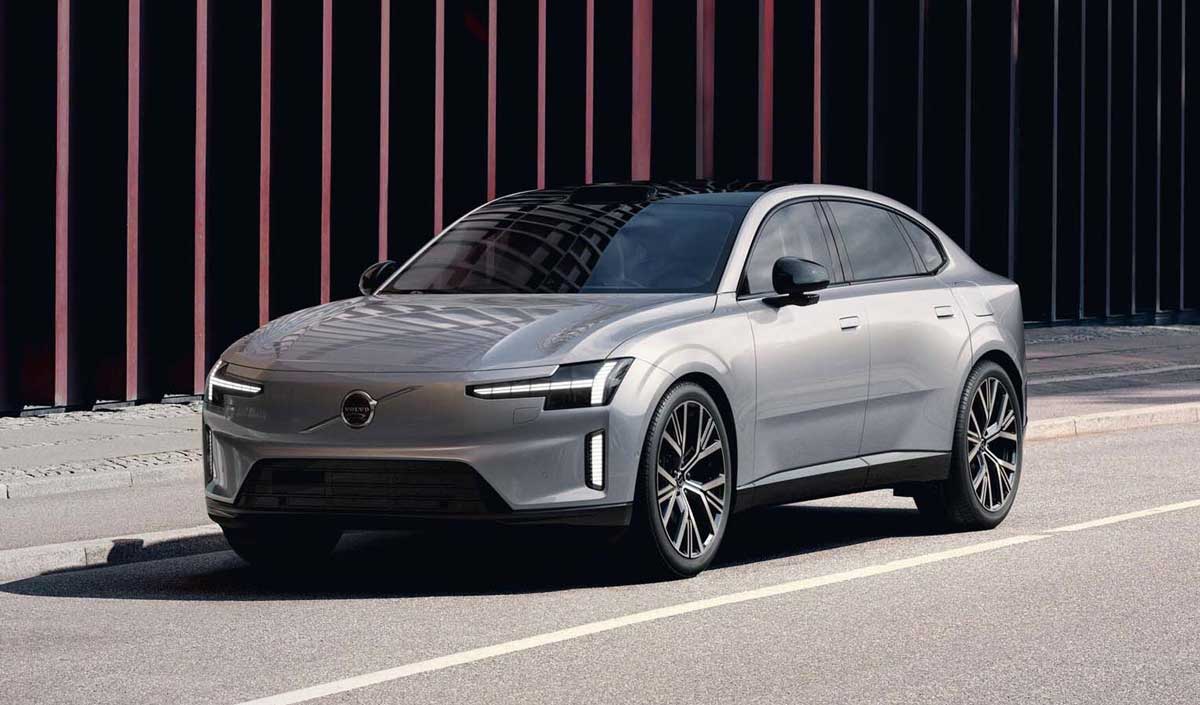
Luminar’s lidars will be integrated into Volvo’s new ES90 model, slated for production this year. This follows the successful launch of the Volvo EX90 SUV.
Luminar founder and CEO Austin Russell says the inclusion of Iris lidar in the ES90 “will scale our safety-critical technology at a time when consumers, auto makers, and regulators demand advanced sensing capabilities”.
Volvo Cars Head of Software Engineering Alwin Bakkenes says, “The Iris lidar on ES90 will complement other sensors and enable exceptional perception to keep everyone safe. This selection builds on our partnership with Luminar and our shared commitment to automotive safety”.
Volvo Cars is introducing advanced driver assistance features in the ES90 using a state-of-the-art sensor set, including lidar. By integrating Luminar’s lidar into the roofline, along with radars, cameras, and ultrasonic sensors, Volvo aims to enhance safety for everyone in and around the car. The ES90, built on the latest SPA2 platform like the EX90, will expose more buyers to this advanced technology.
DVN comments
Despite the successful launch of the Volvo EX90 SUV and now positive expectations on ES90, Luminar’s gross loss is expected to be $5m to $10m per quarter in 2025 due to low volumes preventing positive gross margins. It is necessary for Luminar to find new customers or other markets.


