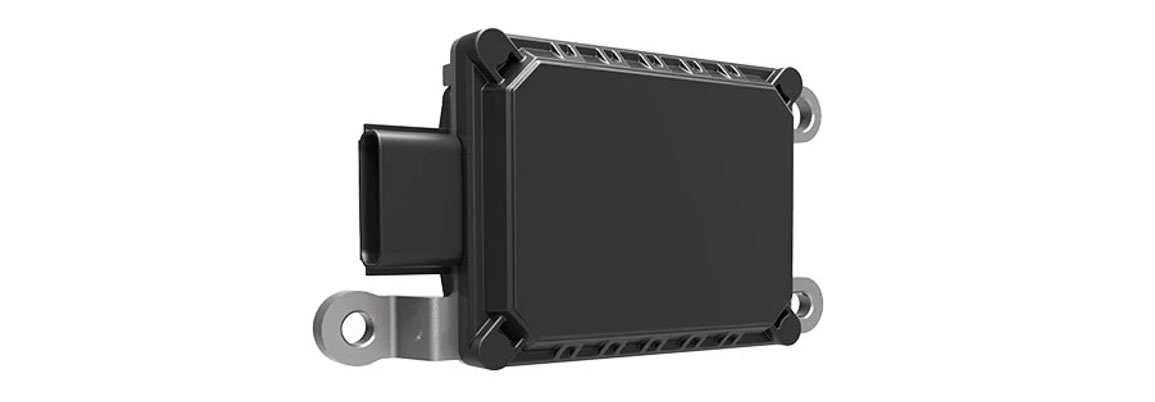
TI Edge AI Radar Sensor, Audio Processors Facilitate New In-Car Experiences
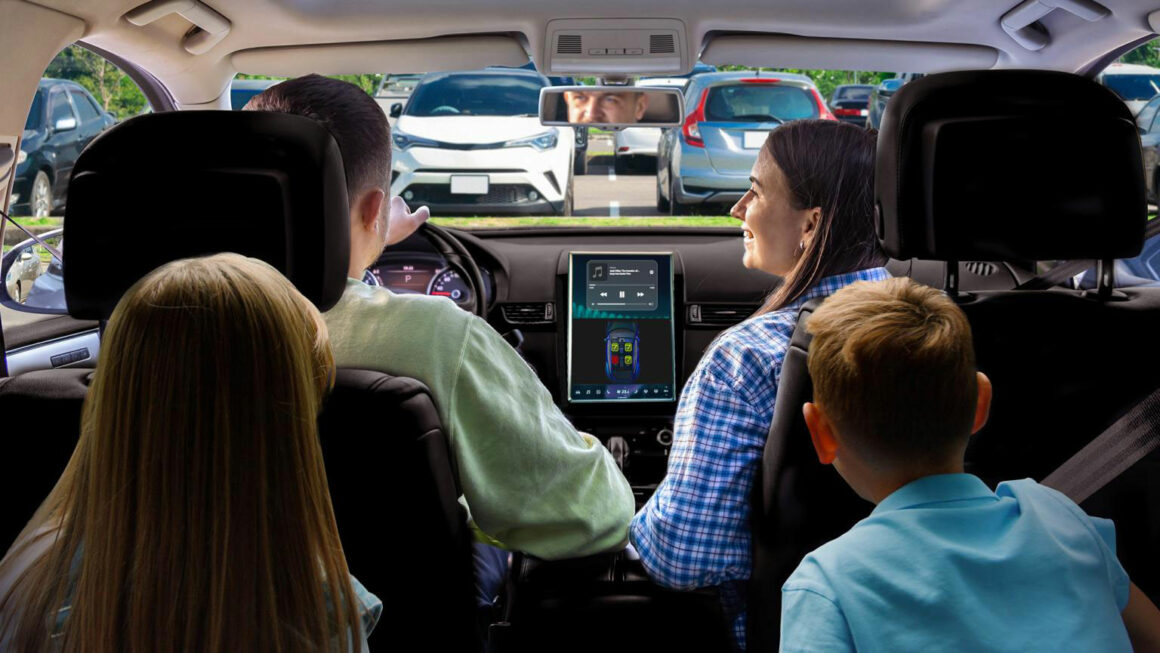
Texas Instruments recently introduced new integrated automotive chips to enable safer, more immersive driving experiences. The supplier’s AWRL6844 60GHz mm-wave radar sensor supports occupancy monitoring for seat belt reminder systems, child presence detection and intrusion detection with a single chip running edge AI algorithm, enabling a safer driving environment. With TI’s next-generation audio DSP core, the AM275x-Q1 MCUs and AM62D-Q1 processors make premium audio features more affordable. Paired with TI’s latest analog products, including the TAS6754-Q1 Class-D audio amplifier, engineers can take advantage of a complete audio amplifier system offering. TI showcased these devices at the 2025 CES in Las Vegas.
“Today’s drivers expect any car – entry-level to luxury, combustion to electric – to have enhanced in-cabin experiences,” said Amichai Ron, TI’s Senior VP of Embedded Processing. “TI continues to provide innovative technologies to enable the future of the automotive driving experience. Our edge AI-enabled radar sensors allow automakers to make vehicles safer and more responsive to the driver, while our audio systems-on-chip elevate the drive through more immersive audio. Together they create a whole new level of in-cabin experiences.”
Automakers are gradually designing in more sensors to enhance the in-vehicle experience and meet evolving safety standards. TI’s edge AI-enabled AWRL6844 60GHz mmWave radar sensor enables engineers to incorporate three in-cabin sensing features to replace multiple sensor technologies, such as in-seat weight mats and ultrasonic sensors, lowering total implementation costs by an average of $20 per vehicle.
The AWRL6844 integrates four transmitters and four receivers, enabling high-resolution sensing data at an optimized cost for OEMs. This data feeds into application-specific AI-driven algorithms on a customizable on-chip hardware accelerator and DSP, improving decision-making accuracy and reducing processing time. The edge intelligence capabilities of the AWRL6844 sensor that help improve the driving experience include these examples:
While driving, it supports occupant detection and localization with 98% accuracy to enable seat belt reminders.
After parking, it monitors for unattended children in the vehicle, using neural networks that detect micromovements in real time with over 90-per-cent classification accuracy. This direct sensing capability enables OEMs to meet 2025 European NCAP design requirements.
When parked, it adapts to different environments through intelligent scanning, reducing false intrusion detection alerts caused by car shaking and external movement.
DVN comments
TI’s 60GHz AWRL6844 radar sensor supports occupancy monitoring for seat belt reminder systems, child presence detection, and intrusion detection with a single chip using an AI algorithm at the edge, enabling a safer driving environment. The AWRL6844 radar sensor, featuring a 4TX/4RX antenna structure like traditional ADAS radars, integrates AI and can replace multiple sensor technologies, reducing implementation costs by about $20 per vehicle.
Forvia Hella Awarded for 77GHz Radar

Forvia Hella has received the ZhILU Award from Auto Observer for their innovative fifth-generation 77GHz radar. This radar offers 360° environmental detection and supports levels L1 to L5 in autonomous driving. As demand for ADAS systems increases, Hella has started mass production of these radar sensors at their Shanghai plant.
“We’re delighted that Forvia Hella’s fifth generation of 77GHz radar has earned recognition from the esteemed local media outlet ‘Auto Observer’ and industry experts. This accolade not only underscores our technical strength but also validates our foresight and proactive approach to local industry trends”, said Xia Jingchu, Hella’s China Director of Radar Products. “Forvia Hella remains dedicated to meeting market demands, offering innovative, high-quality, and competitive products to support the advancement of autonomous driving in the Chinese automotive industry.”
The supplier has been deeply engaged in the research and development and manufacturing of corner radar for more than 20 years. Leveraging deep expertise in this field, FH’s fifth generation of 77GHz radar is based on a radar system chip with RF-CMOS technology and processes, a specific array antenna design, and uses MIMO technology, bringing a wider field of view for both horizontal and vertical directions. Featuring a modular architecture, it offers versatile chip combinations with varying interfaces and computing power specifications, catering to diverse architectural requirements from L1 to L5. The radar offers three operational modes—near-range, short-range, and medium-range—enabling comprehensive coverage across various application scenarios in both near-field and far-field environments. Thanks to the enhanced antenna miniaturization facilitated by increased radar beam frequency, FH’s fifth generation of 77GHz radar delivers significantly improved performance in a more compact size, facilitating effortless installation on vehicle fronts, rears, and sides to achieve 360° all-round environmental detection.
Hella radar sensors have undergone rigorous testing and validation in the Chinese market, with specialized performance optimization tailored to the region’s complex urban and harsh weather conditions. Therefore, they demonstrate exceptional stability across various scenarios, providing high-quality raw data to bolster research into autonomous driving strategies.
FH has established a localized supply chain for their fifth generation 77GHz radar in China, demonstrating robust local production capabilities. Their Shanghai electronics plant boasts extensive automated production lines.
Unlike traditional radar systems, high-resolution radar (HRR) offers improved accuracy in detecting distances, angles and velocities, enabling multiple objects tracking and precise obstacle detection. This function is vital for automated driving at L3 and above, where safety and situational awareness are paramount. One primary advantage of the high-resolution radar is its performance in various environmental conditions, including low-visibility scenarios such as fog or heavy rain, where cameras and lidar struggle. This ability allows autonomous vehicles to navigate complex situations safely. Advancements in high-resolution radar will likely focus on refining sensor fusion algorithms and integrating data from multiple sensor types such as cameras and lidar. This will create a more comprehensive understanding of the vehicle’s surroundings, improving decision-making processes. The development of wider aperture radar systems will further elevate resolution and accuracy for better differentiation between various objects, such as pedestrians and cyclists. As these technologies evolve, high-resolution radar will play a pivotal role in achieving higher levels of autonomy and ensuring safer roadways for all users.
DVN comments
This standardized radar structure uses RF-CMOS technology and an adaptable antenna design, providing three native modes of operation: short-range, medium-range, and long-range, allowing for comprehensive coverage in various scenarios. The radar has been optimized for China’s complex urban conditions and harsh weather conditions. Forvia Hella’s Chinese supply chain for this radar demonstrates robust local production capabilities (now radar SoCs can be also supplied by local silicon chips suppliers).


