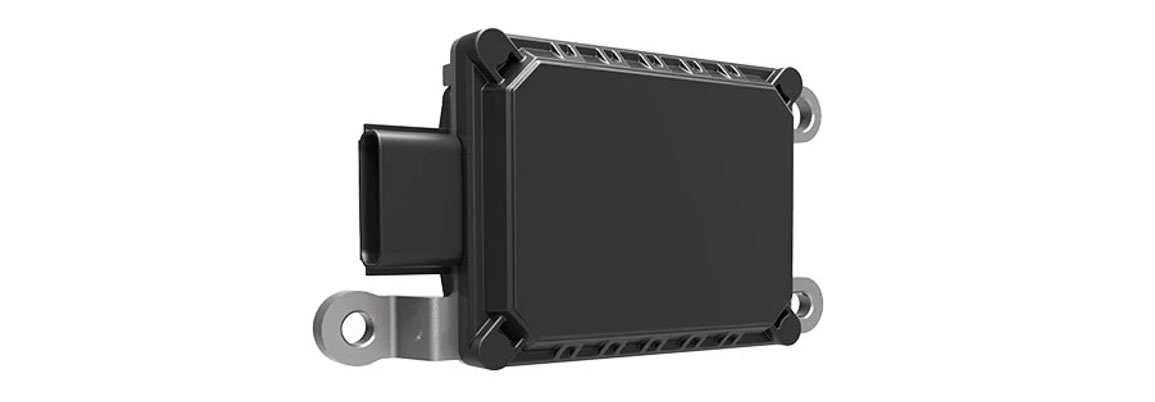
# Provizio demonstrated its single chip 4D Imaging radar in collaboration with Texas Instruments at CES 2025


Provizio has expanded its automotive portfolio with a software-defined antenna reference board using radar technology from Texas Instruments. Provizio aims to enhance mobility safety through affordable perception imaging radar that operates reliably in challenging weather conditions.
Provizio’s software-defined antenna solution utilizes the AWR2944 radar sensor from Texas Instruments. This solution establishes new standards for imaging radar perception and safety systems in the automotive sector.
Central to this imaging radar system is the integration of Provizio’s MIMSO® Software Defined Antenna Reference Design with Texas Instruments’ single-chip 77GHz 4D Imaging Radar chip. This design converts a single radar SoC into 48 virtual receiver channels, achieving sub 0.5° angular resolution and enabling precise object detection and tracking, including pedestrians, cars, and trucks.
Powered by Provizio’s MIMSO® and SPTDMA® technologies, the design delivers 20 times higher resolution from a single chip, addressing cost and performance challenges in high-performance radar systems.
- MIMSO® is a software defined active antenna technique, which embeds proprietary surface-mount technology (SMT) integrated circuits (ICs) into a novel planar antenna design. This allows designers to lower the receive path noise floor and discriminate more of the radar beam by essentially recycling parts of the radar beams that have traditionally been filtered. On the transmit path, the SMT ICs allow to carry out instantaneous beam switching, which multiplies transmit channels and further increases resolution.
- SPTDMA® increases the number of tasks that can be performed simultaneously, by dynamically dividing and assigning radar hardware resources. When combined with MIMSO® Active Antenna, this technique enables improved efficiency, signal to noise ratio and, detection & tracking. SPTDMA also enables robust performance in all weather conditions, with the added benefit of protecting against interference from other sensors.
Transforming automotive safety and perception
This reference design is crucial for improving safety in automotive and industrial OEMs and Tier 1s. By offering precise, real-time detection and tracking of objects like pedestrians and vehicles, it helps vehicles respond to hazards, reducing accident risks and building trust in autonomous technology.
Barry Lunn, CEO & Co-Founder of Provizio, stated: “4D Imaging radar is essential for safer driving and advanced ADAS, but cost has hindered widespread adoption. Our collaboration with TI addresses these cost challenges.”
# NPS showcased its World’s First AI-Powered Hyper-Definition Radar at CES 2025
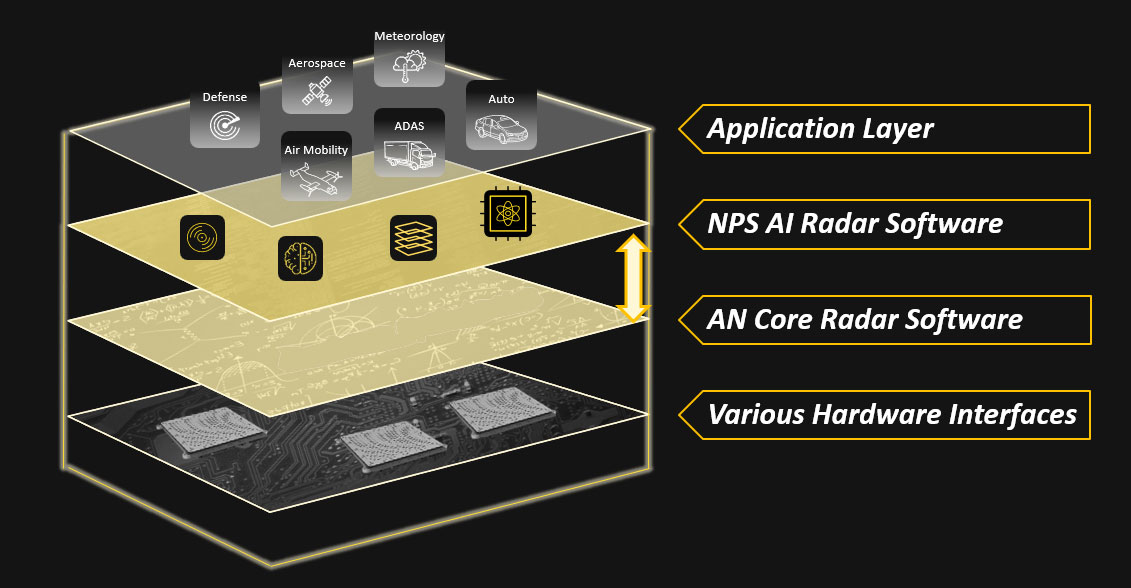
On December, Neural Propulsion Systems (NPS), a pioneer in next-generation radar operating systems, announced the availability of its Hyper-Definition Radar Operating System (HROS™) for advanced driver assistance system (ADAS) providers. This hyper-definition, AI-powered software-defined radar solution is becoming essential for automakers that are racing to differentiate offerings and meet increasing consumer expectations for safety, convenience and performance at a reasonable cost.
With pedestrian fatalities in the U.S. having doubled since 2010 and new automotive safety mandates forthcoming, the auto industry is under increasing pressure to enhance road safety through ADAS technology. The National Highway Traffic Safety Administration (NHTSA) has set 2029 as the deadline for all new passenger vehicles and light trucks to include automatic emergency braking (AEB) systems capable of preventing collisions with other vehicles at 62 mph and pedestrians at 45 mph—thresholds that current AEB systems are not yet able to meet even in optimal driving conditions.
HROS leverages advanced mathematics, AI, and patented algorithms on standard hardware to deliver a solution that meets consumer and regulatory needs. It can differentiate a pedestrian next to a car at 150 meters in any weather or time of day, providing Crystal-Clear Visibility™ and accuracy. This enhances ADAS performance, even in low light, fog, and high speeds, where both camera and LiDAR sensors struggle.
Unlocking Crystal-Clear Visibility
“Our mission is to provide clear visibility for life-saving applications,” said Dr. Behrooz Rezvani, Founder and CEO of NPS. “Our HROS is a commitment to saving lives by setting a new standard for roadway safety. It uses advanced mathematics and AI to offer exceptional clarity and responsiveness, helping vehicles and robotaxis navigate complex roads reliably.”
HROS uses patented technology that allows vehicles to “see” better than humans and current systems. It delivers optimal radar performance with early hazard detection and fewer false positives, outperforming traditional radar technologies.
HROS is a practical and essential platform for diverse industries, including automotive, autonomous driving, aerospace, and defense systems.
HROS will be commercially available in Q1 of 2025.
About Neural Propulsion Systems (NPS)
NPS is a leader in next-generation radar operating systems, offering exceptional visibility for critical applications. Its premier product, the Hyper-Definition Radar Operating System (HROS), represents an advanced radar solution that leverages AI-powered, patented mathematical frameworks to provide exceptional clarity and responsiveness. This innovative solution is available at a cost-effective price, making advanced applications practical and accessible for various industries. HROS is currently employed in automotive and defense sectors, where early detection and minimal false positives are crucial, ensuring users have confidence and awareness of their surroundings in any scenario.
DVN comments
Founded in 2018 by Silicon Valley experts, NPS develops advanced digital imaging radar technology. Their initial AtomicSense platform, was dedicated to develop radar algorithms on Graphic Processing Units (GPUs).
# Infineon’s RASIC CTRX8191F radar MMIC targets radar imaging modules for automated and autonomous driving applications.
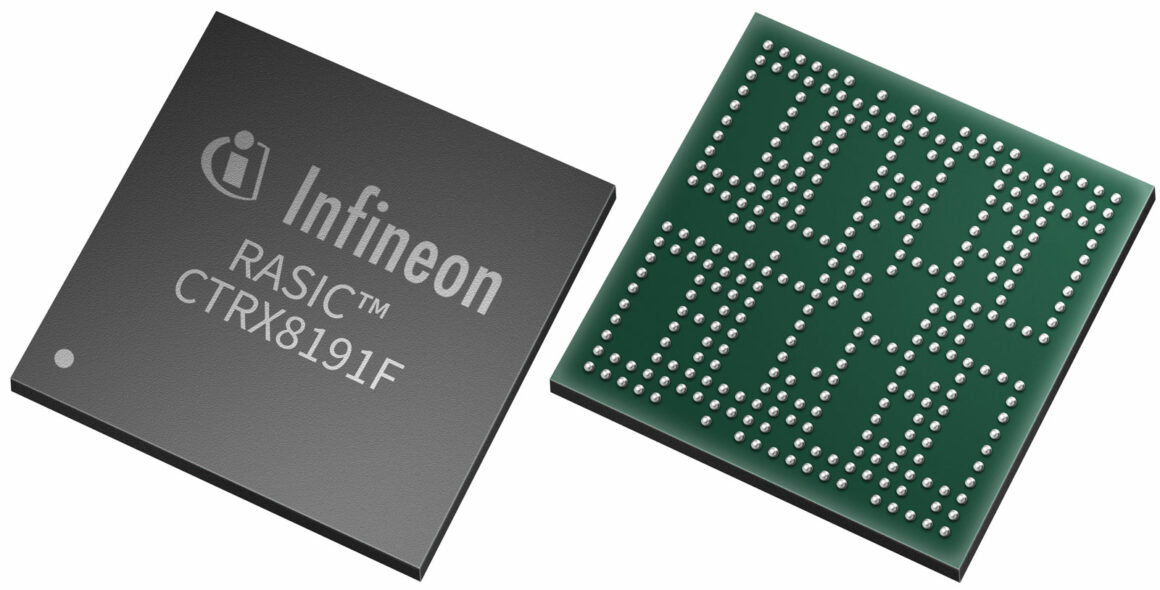
Targeting automated and autonomous driving requirements, Infineon Technologies AG has released the final samples of its 28-nm radar MMIC, the RASIC CTRX8191F. The radar sensor supports the development of next-generation radar imaging modules that meet the requirements of SAE-defined L2+ to L4 autonomous driving.
The CTRX8191F radar MMIC offers higher performance, and a better signal-to-noise ratio compared to previous generations. This is required to detect vulnerable road users and vehicles at up to 380 meters, using system configurations with eight transmitters and eight receivers, Infineon said.
The RASIC radar MMIC enables cascading of multiple devices at low frequencies, which reduces the need for expensive RF materials on the circuit board, and optimized launcher-on-package design also allows for the use of low-cost waveguide antennas, the company said. In addition, the digital PLL offers high flexibility in generating complex waveforms with the shortest flyback time on the market at <1 µs, according to the company.
Infineon also offers the CARKIT radar development kit to help with the design and deployment of radar systems. The dev kit is based on the CTRX8191F sensor prototyping module, which supports various system configurations, including the transmission of raw ADC data, FFT intermediate results or radar detections via a Gigabit Ethernet interface.
The CARKIT also includes example code, a graphical user interface and a waveguide antenna that can be replaced with a custom antenna to meet customer requirements. Several versions of CARKIT are available, including a 4D front radar configuration with eight transmitters and eight receivers, and a corner/front radar solution for the standard market with four transmitters and four receivers. Samples of the CTRX8191F radar MMIC and CARKIT modules in various configurations are available now.
DVN comments
Infineon has been providing automotive radar sensor solutions, for many years. In 2008, an Infineon chip was still named RASIC (Radar System IC) and used in Bosch’s new 77GHz LRR3 radar sensor system (third generation long range radar). The range of radar transceiver MMICs (RASIC™) meets now the requirements of 77/79 GHz radar for safety-critical applications, such as automatic emergency braking (AEB) and high-resolution radars in automated driving. These sensors support precise distance measurement and simultaneous transmitter operation for MIMO.


