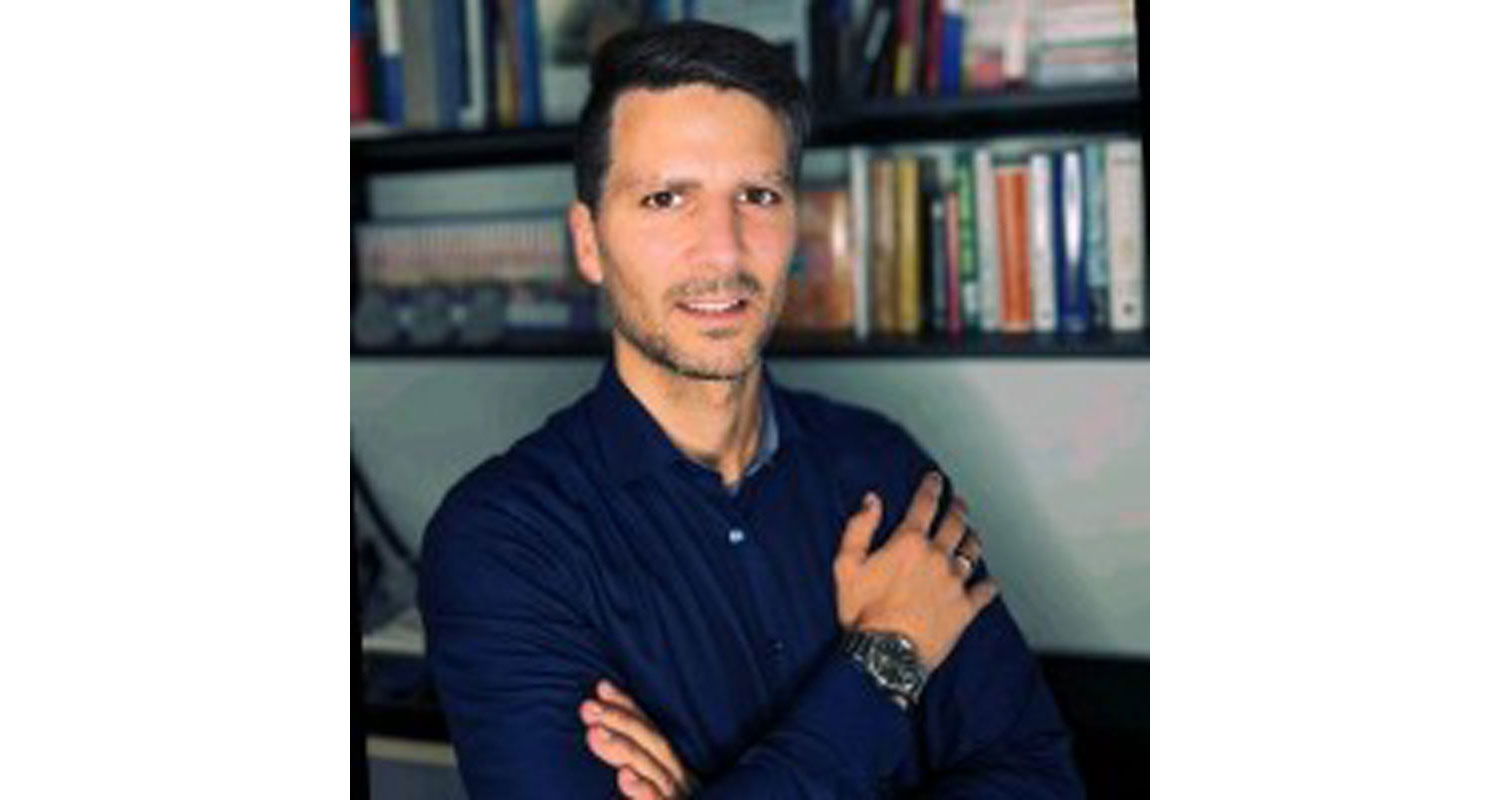
Leonard Germic is Renesas’ Lidar Product Manager. He oversees the coordination of efforts across the R&D team, application and system engineering, and other stakeholders to drive innovation and business growth in lidar technologies.
He joined Renesas in 2019 as a technical lead for validation, focusing on lidar front-ends. Before, Germic worked at Integrated Device Technology as a validation engineer for lidar front-end systems from 2018 to 2019. He began his career in academia, spending eight years as a scientist at the University of Bonn, where he completed his PhD in physics. His doctoral research concentrated on data-handling ICs and signal integrity for a pixel detector—part of one of the world’s most sophisticated experiments, in Tsukuba, Japan.
DVN-Lidar: Renesas! Tell us about Renesas.
Leonard Germic: Renesas stands at the forefront of innovation, offering an expansive portfolio of cutting-edge technologies and solutions. Our products range from advanced connectivity devices and intelligent power solutions to AI-enabled System-on-Chips (SoCs), serving a multitude of industries. Renesas is uniquely positioned to deliver comprehensive, end-to-end solutions, seamlessly integrating sensing technology with cloud processing. In the area of sensing, we are enhancing our robust presence in automotive and industrial sectors, while also exploring new applications and achieving deeper vertical integration across hardware and software.
DVN-L: What can you share about your sensor developments?
L.G.: At the core of our business line lies our dedication to sensor development. Our diverse portfolio includes resistive and capacitive signal sensor conditioners (SSCs), environmental sensors, optical sensors, cutting-edge inductive position sensors, and state-of-the-art lidar analog front-end (AFE) solutions. Our lidar AFE captures and processes signals from photodiodes simultaneously, using an advanced sampling architecture to leverage full waveform data. This technology enables multi-echo detection, which is crucial for precise distance measurements and detailed point cloud reconstruction. Such precision and reliability are essential for the safety and efficiency of Advanced Driver Assistance Systems (ADAS) and autonomous driving technologies. Moreover, our lidar AFE solutions serve as heart of the lidar system. This ensures synchronized and efficient data collection, crucial for generating high-quality data. Our advanced AFE technology guarantees the delivery of high-resolution, reliable lidar data, addressing a wide range of automotive and industrial applications.

DVN-L: Where are you in lidar technology development?
L.G.: We are working on two solutions at the moment. The first solution is production-ready, while the second generation is nearing completion. Renesas is actively collaborating with development partners and key market players to stay ahead of the latest trends and meet evolving customer needs.
DVN-L: What makes Renesas lidars different?
L.G.: A key highlight of our lidar AFE solution is its exceptional integration level, which includes the implementation of vital Functional Safety (FuSa) mechanisms on-chip. Our platform, the “Renesas lidar Receiver and Control solution” (RxC), seamlessly integrates our lidar AFE with data processing SoC/MCU platforms, forming the heart of each lidar system. It is specifically designed to leverage the unique hardware accelerators in our R-Car SoCs, enabling efficient processing of lidar data streams alongside other ADAS functionalities. This makes the RxC platform an ideal choice for L2+ and L3 automated driving systems. The compact size and cost-effectiveness of the RxC platform, combined with a short time-to-market, represent the core values we deliver to our customers.
DVN-L: What are your main target markets?
L.G.: Our offering is highly adaptable. As an ASIL B-certified solution, it is well-suited for automotive applications, ensuring compliance with stringent safety standards. At the same time, the high level of integration makes this product highly attractive for industrial and robotics markets. The flexibility of our lidar RxC platform allows us to seamlessly meet a diverse range of customer needs and application scenarios, including delivery systems, precision farming, warehouse automation, manufacturing, drones, surveillance, autonomous shuttles, and various automotive uses. This adaptability ensures that our solutions can effectively address the demands of both emerging and established markets.
DVN-L: How do you manage safety and reliability, and how does this play into your pricing?
L.G.: Safety and reliability are highly developed in our lidar solutions. Our systems are designed with high-level functional safety (FuSa) in mind, ensuring they meet stringent automotive (ASIL B) safety standards. Moreover, by integrating our solutions into embedded systems, we can significantly reduce both the size and cost of lidar solutions. This miniaturization and cost-efficiency are crucial for broad adoption in various applications. By leveraging our extensive expertise in semiconductor solutions, especially in automotive sensors, we ensure that our lidar systems are not only efficient but also reliable and safe for deployment in ADAS, autonomous driving, and industrial applications.
DVN-L: What’s in the pipeline?
L.G.: Looking ahead, we’re dedicated to further enhancing our lidar systems to deliver the best possible experience for our customers. Our goal is to provide a plug-and-play platform, making integration as seamless as possible. We’re focusing on expanding the capabilities of our existing product portfolio to offer a comprehensive system embedded within a robust software stack. This platform will enable our customers to easily incorporate their own perception algorithms, providing a flexible and powerful foundation for various applications.
DVN-L: Thank you for your thoughts! Is there anything you’d like to add?
L.G.: At Renesas, we are dedicated to driving innovation in the industrial and automotive markets. Our goal is to provide comprehensive, end-to-end solutions that address the complex challenges of autonomous vehicle and system designs. We believe that through continued collaboration and technological advancement, we can contribute significantly to the development of safer and smarter vehicles for the future; making our lives easier.


