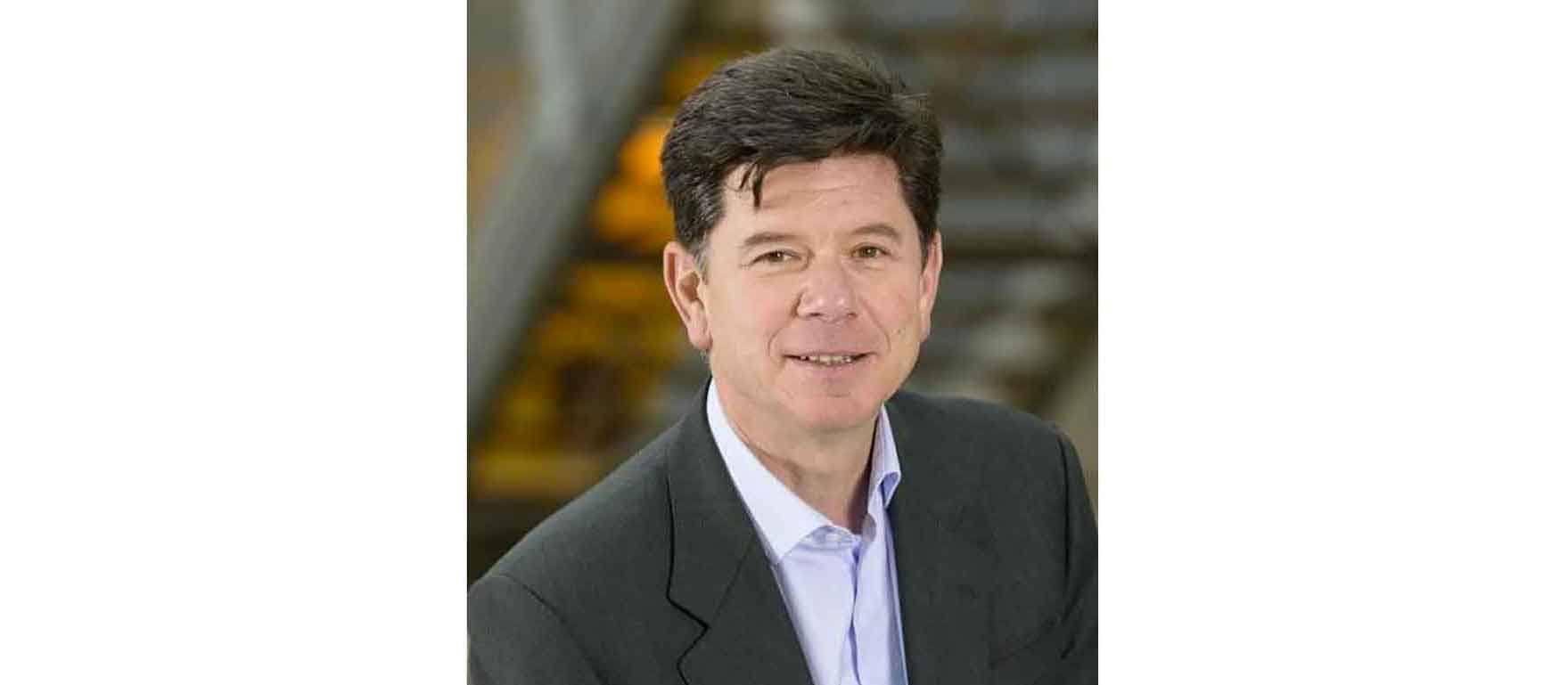
Luc Bourgeois’ passion for embedded systems and automation led him to work for 13 years in the aircraft industry at various positions at Thales, developing avionics such as flight management and guidance systems.
In 2000, he joined the Renault Group as Manager of Embedded Software and Systems control. Starting in 2012, he was the company’s Expert Leader for ADAS and AD Systems.
He is also President of the SIA (French society of automotive engineers) ADAS and AD community, and is the FISITA representative to the World Forum for Harmonization of Vehicle Regulations (WP.29). And now he is DVN-Lidar’s newest Senior Advisor!
DVN-L: Welcome to the team! What brought you to join us?
Luc Bourgeois: In 2021 I created Nautilus, a company that help automotive players to understand where the ADAS and AD technologies and business are going. I also lead the SIA think tank for ADAS and AD , with the participation of Renault, Stellantis, Bosch, Valeo, Continental, Michelin, AVL, UTAC, and LAB representatives.And I’m also the FISITA member towards the WP.29 regulation on DCAS (driver control assistance systems).
My first contact with DVN happened through Benazouz Bradai from Valeo. Benazouz told me about the need to reinforce the DVN lidar team. Then I had contact with Hector Fratty and Paul-Henri Matha.
Three things led me to choose to join DVN:
- Quality of the managing team: I have a very positive experience with Paul-Henri at Renault.
- Technology: lidar is clearly at stake for ADAS and AD.
- Networking: quality of the automotive network is key to succeed in the ADAS and AD systems.
DVN: How do you see DVN-Lidar today, and how do you foresee your contribution?
L.B.: I’m impressed by the worldwide DVN Lidar community. But some important legacy and disruptive automakers and tier-1s are missing, and I think we will have to convince them to join the community.
I think also that lidar technology is still foreseen by generalist automaker as research and therefore the DVN lidar topic should be extended to include sensor architecture for AD; safety of lidar-based architecture, validation of lidar-based architecture, and more.
My background is more at system level rather than technology; therefore, I foresee my contributions in helping to close the gap between the expectation of technology players and the expectation of automakers and suppliers.
DVN: What do you consider the key factors influencing the adoption rate of automotive lidar?
L.B.: The cost of the lidar technology is the main thing to consider in order to boost the adoption rate for generalist automakers. Benchmark: radar cost is less than USD $40, camera is less than $70. There is also the ease to integrate the lidar in the car, which needs to be considered, as well as the lidar packaging.
DVN: What did you learn about lidar benefits at Renault?
L.B.: Renault developed a lot of prototypes using Valeo Scala lidar, either on ZOE or specific prototypes. We found three main benefits: redundancy for the safety concept; extended ODD for some ADAS and AD functions when the camera faces performance limits, and lidar can replace radar and a lot of perception functions managed by cameras for L1 and L2 ADAS.
DVN: For automakers like Renault-Nissan, with a focus on family cars, how do you see a future adoption of lidar?
L.B.: Adoption of lidar for family cars is mainly a question of cost. The known road map of lidar cost, whatever the technology (mechanic, MEMS, flash) is not yet relevant for family cars. Targeted cost should be less than $50. Unfortunately, the road map for 2030 is showing higher cost than that.
DVN: For safe L2+,3,4 systems, are cameras, radars, and lidars sufficient?
L.B.: ADAS up to L2+ (hands on) only need camera plus radar or lidar (at relevant cost). L3 and L4 need triple redundancy with camera plus radar plus lidar and also specific sensor like tire monitoring, sound monitoring, infrared camera, and connectivity with infrastructure.
The safety targets have been demonstrated only for a very restrictive ODD: L3 up to 60 km/h on limited highways in Germany and Japan. All other configurations (L3 high speed or L4 ) are only ‘prototypes’ that are hitting a glass ceiling to prove the safety.
DVN: What do you think of artificial Intelligence in perception and control systems?
L.B.: Artificial Intelligence (deep learning) has been introduced step by step since 2015 in the perception function. It allows to deliver real time information for almost all the driving scene, but the safety of the information is not at the relevant level for safety critical applications. Therefore, automakers have tuned their ADAS function to avoid false positive situation which led to the appearance of false negative situations. This compromise is possible for ADAS functions because the driver is doing the safety loop. But this compromise is not applicable for AVs.
AI for control systems is a very powerful tool as long as it is not asked to manage safety critical functions. The automotive industry still has a long road map to deliver safety critical driving functions relying on AI .
DVN: For what type of ADAS function would you prefer lidar over other technologies?
L.B.: In the time being, due to the cost of the lidar, there are no candidate ADAS functions to be delivered by lidar technology. Meanwhile, lidar technology can combine specific detection capabilities of radar (real time relative speed of objects) plus camera (classification and lateral positioning) and then to replace radar plus camera configuration for ADAS such as ACC (Adaptative Cruise Control) ; AEB (Advanced Emergency Braking); LCA (Lane Centering Assist) and more.


