
Stella Xie joined RoboSense in 2019 and is currently responsible for the company’s product strategic development planning and intellectual property management.
From 2016 to 2019, he worked at DJI as intellectual property manager, with a leadership role in the research and development of lidar; chips; deep learning algorithms; flight controllers; navigation; and other technologies, and responsible for patent planning; mining, and application as well as participating in industry standard tracking. From 2012 to 2016, he was a patent engineer at Huawei.
He earned a bachelor’s degree in applied chemistry and master’s degree in optics from Peking University, and master’s degree in intellectual property from Shenzhen University. He graciously shared his perspective and views with us:
DVN: Robosense, founded in 2014, is now a well-known lidar company. What more can you tell us?
Xie: RoboSense was founded with the mission of enabling robots to have perception capabilities superior to humans. We are always cooperating with global partners to explore environment perception solutions together. By the end of 2022, our staff reached over 1,600, and lidar-related global patents over 1,000. Since establishment, RoboSense always follow the principle of simultaneous development of hardware products together with software, leading the lidar transformation from precision instruments to automotive pre-installation mass production.
In 2016, RoboSense achieved the mass production of R-platform mechanical lidar, and simultaneously started to develop the M-series lidar based on 2D MEMS scanning. With the second-generation smart solid-state lidar RS-lidar-M1, Robosense took the lead in realizing the world’s-first SOP for MEMS lidar in June 2021. The success of M series lidar became a milestone, representing the lidar industry began entering large-scale mass production.
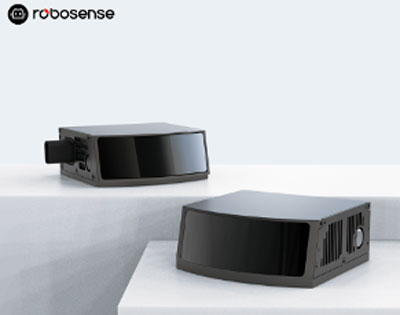
In November 2022, based on self-developed chips and a new technology platform, RoboSense released the solid-state blind spot lidar, RS-lidar-E1, which is the first product of the RoboSense E platform and the last piece of the puzzle for automotive-grade, mass-production lidar.
RoboSense has become the lidar company winning most design wins worldwide—over 50 with BYD; FAW; GAC; Xpeng; Geely; Great Wall, and other car manufacturers, and we’ve built the world’s first and only automotive lidar laboratory accredited by CNAS, as well as an intelligent manufacturing system with top efficiency of a lidar unit built in 12 seconds.
DVN: You’re marketing automotive MEMS lidars with no moving parts. What makes them better?
Xie: M series lidar adopts two-dimensional MEMS intelligent chip scanning architecture, with advantages including high performance; simplified architecture; high reliability; and high scalability, all of which go toward large-scale mass production.
The M series is the most fully tested and verified lidar in industry; it’s passed dozens of strict automotive-level test verifications. Its core component MEMS galvanometer module is currently the world’s only AEC-Q100 certified item for lidar products.
It has a unique intelligent “gaze” function, which can be applied to different driving scenarios such as high-speed and urban areas. In this mode, the vertical resolution of the ROI (region of interest) area at center of the field of view can be dynamically increased from 0.2° to 0.1° or even higher, doubling the imaging density of obstacle point clouds, greatly improving the perception ability for intelligent driving systems in various scenes.
And the M series can achieve seamless iterative upgrades as long as the size, installation specifications, connectors and communication protocols are consistent.
Since July 2020, RoboSense has received design wins from nearly 20 leading automakers worldwide totalling over 50 models, including BYD; GAC AION; FAW Hongqi; FAW Jiefang; Chery Automobile; Great Wall; Xpeng; SAIC IM; SAIC Rising; Zeekr; Lynk & Co; Lotus, and Lucid, for passenger cars and commercial vehicles.
DVN: What can you tell us about the specifications of your lidars?
Xie: The wavelength of the M series is 905nm. Compared with 1550nm lasers, 905nm lasers have great advantages in power consumption; cost; efficiency; heat generation, and manufacturability for large-scale applications. In addition, through continuous research and development on 905nm, RoboSense found the ranging performance of 905nm had a much higher potential than expected.
The M series has a horizontal field of view of 120°, vertical field of view of 25°, and can detect up to 250 meters, with an impressive near field detection ability. With both horizontal and vertical resolutions averaging 0.2°, the M Series has a unique intelligent “gaze” function that dynamically increases the vertical resolution of the ROI region to 0.1°, or even higher. In addition, the M series has a relatively small size of 108 (L) × 110 (W) × 45 (H) mm.
DVN: How does your lidar do in bad weather, compared to a camera or a radar?
Xie: Conventional sensors have limitations: cameras do not work properly in poor ambient lighting conditions, while millimeter-wave radar has limitations in detecting stationary non-metallic obstacles. They cannot ensure sufficient safety redundancy for autonomous driving perception system. A robust perception system will fuse lidar, millimeter-wave radar, and camera data together for redundancy.
With over 7 years’ lidar mass production experience, RoboSense has accumulated a huge number of point cloud test scenarios and developed a point cloud optimization algorithm for extreme weather conditions, to help our customers ensure the performance of lidar under extreme weather conditions.
DVN: What about power?
Xie: The power of a lidar system is composed by multiple modules such as transmitting module; receiving module; scanning module, and digital back-end module. The power of M series, RS-lidar-M1, is 15W.
For transmitting and receiving modules, the power depends on lidar ranging capabilities and resolution requirements. The higher the resolution of the product, the higher the ranging capability, and the higher the power consumption. However, based on specific performance requirements, manufacturers can improve the efficiency of electro-optical conversion and optical transmission efficiency by optimizing circuit and optical design, to reduce the transmission and reception power.
Different lidar scanning architectures also impact the power consumption. The M series products use 2D scanning MEMS galvanometer architecture, equipped with very few transmitters and receivers, which greatly reduces the power of scanning unit. For example, while the M1Plidar has a rated power of 15W, its MEMS galvanometer module only uses 2W.
The power consumption of digital back-end module depends on the computing power requirements. By reducing number of channels and integrating the chip, the power can be greatly reduced. In addition, the power can also be realized by improving power supply efficiency.
DVN: How do you see the applications and market segments regarding lidar range?
Xie: Long-range lidar, take M series as example, its detection range reaches 200 meters @ 10%. Our RS-Ruby plus, as a 128-beam flagship mechanical lidar product, has detection range of 240 meters @ 10%. The market for medium- and long-range lidar is now mature. The lidar industry is now entering into the large-scale mass production stage, and short-range lidar is part of i
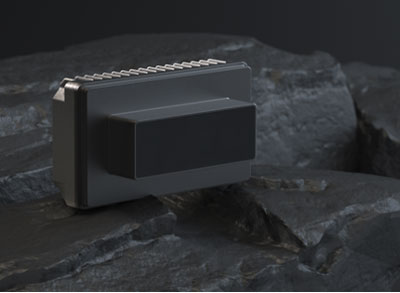
Short-range lidar has advantages of ultra-large vertical and horizontal field of view, by complementing forward-looking lidar to realize coverage of 360° horizontal field of view. Take our blind spot lidar E1: our customer only needs to add 2 E1s on the basis of M1 to realize the ultimate cost-effective solution of 360° full coverage. M1 not only reduces the hardware cost of lidar solution, but also reduces the communication cost for working with different lidar teams, while also reduces the lidar perception solution cost in R&D design, installation and deployment, and offline calibration.
Short- and long-range lidars can be widely used in autonomous and assisted-driving passenger cars and commercial vehicles; unmanned logistics vehicles; robots; robotaxis; robotrucks and buses, and new infrastructure of intelligent transportation and other sub-fields.
DVN: What’s the technical future of lidars? Will FMCW technology come soon?
Xie: At present, many lidar companies adopt ToF as the technical route, which is the mainstream. Mechanical; hybrid solid-state; and solid-state, all of them use the ToF principle for ranging. Although FMCW technology has advantages of long detection distance and direct radial speed, there are still many disadvantages such as big size; high cost, and difficulty in mass production, so it will still be some time before its automotive mass production. In general, RoboSense remains open to all technical routes to quickly respond to customer requirements and market demand.
The main technical challenge of current FMCW solution lies in the integration of silicon photonics chips with lasers and amplifiers, and the industrial chain is still immature; At the same time, ranging ability of TOF solution is getting stronger, accordingly the enthusiasm for FMCW is not so keen, which dampens the promotion of FMCW solution.
DVN: Are lidar and imaging radar competing or complementary? Do you think the radar/lidar performance and cost gaps will narrow?
Xie: Lidar and imaging radar are complementary technologies and have their own advantages in different scenarios and applications. lidar uses laser beams to measure the reflection time and intensity to obtain the three-dimensional spatial information of targets. It is suitable for indoor and outdoor environments and has very high precision and stability. Imaging radar, on the other hand, uses electromagnetic waves reflected from targets to obtain their image information. It is suitable for outdoor environments with low light conditions and can provide a wider field of view and faster data acquisition speed.
The performance and cost gap between radar and lidar is still relatively significant, but this gap is gradually narrowing. The development of new optoelectronic devices and algorithms has made lidar more affordable, while high-resolution imaging radar can improve performance by collecting data in multiple frequency bands and using advanced signal processing techniques.
In summary, lidar and imaging radar are complementary technologies with their own advantages in different application scenarios. As technology advances, the performance and cost gap between them will gradually narrow, making them more suitable for a wider range of applications.
DVN: How do the world’s automotive markets differ in terms of lidar market development? Is autonomous driving a key factor for lidar growth?
Xie: Lidar companies have shown a positive trend in terms of R&D, product strength, mass production progress, and design wins. Differences between countries can be viewed from two perspectives:
• The speed from R&D to mass production
Chinese lidar companies have shown particularly strong interest in automotive-grade lidar technology. It can be said that after 2021, the progress of China’s top lidar manufacturers’ automotive products has basically exceeded that of overseas manufacturers. For example, RoboSense’s second-generation smart solid-state lidar achieved mass production and delivery in June 2021, which as the first case globally on two-dimensional MEMS scanning route, while most overseas enterprises’ products were in the B-sample stage during the same period. In 2022, China leading automotive-grade lidar companies have entered mass production, while most overseas products still in prototype stage.
• Demand for lidar products from carmakers
Thanks to rapid development of electric vehicle in China market, intelligent driving has gradually become the second battlefield for brand differentiation competition among car manufacturers, and China has quickly become the largest market for lidar, the demand for lidar embraces explosive growth. Due to the advantages in large-scale mass production progress, Chinese lidar companies have won a large number of design wins, for example, RoboSense has obtained design wins from nearly 20 leading carmakers with a total of over 50 models and has built the industry’s largest intelligent manufacturing system. We believe, the global market for lidar is large enough, and all the lidar companies will embrace satisfactory future development with the future expansion of market scale.
Lidar development is linked to autonomous driving. As the first large-scale application in automotive, it is necessary to obtain design wins from carmakers to obtain the complete development requirements, so as to carry out complete test verification and automated production line design and operation. It can bring stable funding sources while achieving large-scale mass production and delivery. In addition, after the harsh test of vehicle reliability, the reliability of lidar will jump to a new level.
But this does not mean lidar is only for autonomous driving. We believe robot will bring more lidar application. After mass adoption on vehicles and with the scale effect, lidar cost will get to a much lower level, so various robots will have opportunity to equip with better sensors…that means lidar.


