
As DVN, we would like to keep the ADAS/AV community informed about sensors, architecture and applications. Our second DVN conference on this spectrum will take place in Stuttgart from 16 to 18 November. For the first time there will be special sessions on Dual Use and “Road to Type Approval: Mastering E2E AI Systems”. In preparation, we are presenting key players and their results and views in this field.
The first article in this series is a report on a preview drive with the latest Wayve vehicle.
In this instalment, we would like to introduce an important hub of expertise in the field of radar and defence that has so far been known only to insiders.
Interview with Prof. Peter Knott, Director of the Fraunhofer Institute for High Frequency Physics and Radar Techniques (FHR), on ADAS and dual use
Interview by Dr Juergen Dickmann, Senior Advisor, DVN
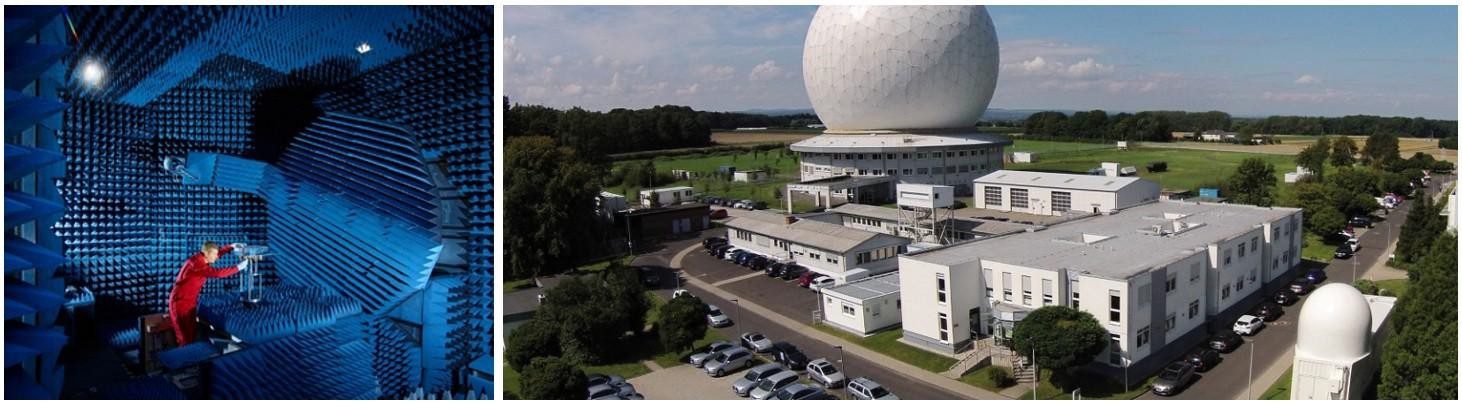
DVN: For those who do not yet know it: what exactly is Fraunhofer FHR, and what history does the institute look back on?
Prof. Knott: The Fraunhofer Institute for High Frequency Physics and Radar Techniques FHR in Wachtberg near Bonn has a history of more than 60 years. It was founded in the 1950s during the Cold War to develop early-warning systems against ballistic medium-range missiles. A key outcome from that period is the TIRA system (Tracking and Imaging Radar), which remains the most powerful radar system in Europe today. It is a prime example of dual use: on the one hand, we use it to monitor space for the German Armed Forces and the ESA, detect space debris, track orbits and produce high-resolution radar-imaging pictures of satellites in order to assess their capabilities. On the other hand, for example, we participate in the ESA “Clean Space” programme to record the distribution of debris statistically and to develop strategies to avoid space debris. In 2009 we were integrated into the Fraunhofer-Gesellschaft and have since grown to around 400 employees. Today we have expertise in radar that is recognised across Europe.
DVN: Fraunhofer FHR has grown significantly over the years. Where are your current focus areas beyond space surveillance?
Prof. Knott: Today we cover the entire radar technology spectrum. Since our integration into the Fraunhofer-Gesellschaft in 2009, we have expanded our portfolio considerably – from drone defence and maritime radar, through industrial metrology, to radar applications for the automotive industry. Radar is superior wherever optical sensing reaches its physical limits – for example under extreme heat, dust or steam in rolling mills. A current research project is also “Black Value”, where we use radar to sort black plastics in recycling.
DVN: A major topic is ADAS (driver assistance systems). How did Fraunhofer FHR come into contact with the automotive industry?
Prof. Knott: Getting started was challenging at first. When we began in 2009, many OEMs (vehicle manufacturers) indicated that they primarily buy from Tier 1 suppliers. However, we were able to gain market access through various suppliers such as Hella, ZF and Continental. We developed antennas and front ends for 24 and 80 GHz systems, solved problems such as multipath propagation and contributed additional algorithmic approaches. We are currently even working directly with Volkswagen on the robustness of systems for fully automated driving. Our goal is to develop radar with such high resolution that it reaches the point density of a lidar – but independent of weather and cost-effective. In this way, sensor suites for higher levels of automation can be scaled economically, which offers considerable economic potential.
DVN: Could Fraunhofer FHR, in theory, act as a Tier 1 supplier in the market itself?
Prof. Knott: No, that would contradict our statutes as a non-profit organisation. The Fraunhofer philosophy is that we develop technologies, demonstrators and prototypes and then hand them over to industry. We generate licensing income from patents or software, but we do not compete in the market ourselves. Spin-offs are theoretically possible, but are subject to strict compliance rules. Our added value lies in our enormous pool of algorithms and AI methods based on more than 60 years of cutting-edge research.
DVN: Where can you create added value for Tier 1s and OEMs?
Prof. Knott: Our added value lies in our many years of experience in almost all areas of radar technology and in the extensive pool of algorithms and methods that we are now transferring to modern assistance systems. We are particularly strong in AI and cognitive signal processing. Another area where we are already seeing further points of connection is our overall system competence. For example, high resolution through conventional aperture enlargement is only one path – we create added value here through new concepts.
Interestingly, we are also currently supporting Tier 1s in adapting their automotive radar technologies for defence applications and civil security, for example drone defence.
DVN: What trends do you see for the near future in radar?
Prof. Knott: In the ADAS domain, the clear aim is cost reduction while simultaneously increasing performance (lidar-like resolution). Other topics include interference avoidance, as more and more vehicles are on the road with radar sensors, and networking with infrastructure (V2X). Technologically, we see progress in W-band radars up to 100 GHz, higher bandwidths and dynamic range, more sophisticated object classification and radar networks. Whether communicating radars will be used for V2V communication in future is still an open question.
DVN: On the topic of dual use: is drone defence the main field for dual-use technologies?
Prof. Knott: Drones are a highly relevant topic. Another trend concerns the protection of critical infrastructure against hybrid threats. Terrorism, vandalism or “crime as a service” are key words in this context – here, radar can monitor movements cost-effectively and in a privacy-compliant way without identifying individuals. Another aspect concerns different paths to industrialisation: in the automotive sector, we have learned how to realise high performance at low cost and how to manufacture millions of units reliably. These experiences also provide approaches for dual use.
DVN: Some say drone defence only works in the terahertz range now. What is your view?
Prof. Knott: We need centimetre-level resolution to classify a 30-centimetre drone. We can already achieve that easily from 100 GHz (W band) upwards. The real challenge is dynamics: it is not about tracking a single drone, but detecting, classifying and simultaneously tracking swarms of 20 or 30 objects. That requires intelligent signal processing and micro-Doppler analyses. There are also exciting concepts such as the “drone umbrella”, where one’s own drones are used for defence. But the danger is not only in the air: ground-based systems (unmanned ground vehicles) as “mines on wheels”, which have so far been scarcely detected by sensors, also pose a major threat.
DVN: The topic of “trade wars” and the fragmentation of supply chains is on everyone’s lips. Do you feel these effects concretely in your work, or are you not affected at all?
Prof. Knott: Unfortunately, it affects us massively. Last year, for example, we experienced this painfully with our space radar “GESTRA”. Components that had previously been considered completely uncritical were suddenly discontinued for an indefinite period shortly after the US election. Whether this was due to administrative delays or geopolitical restrictions remained unclear.
DVN: What are the consequences of such a supply stop for a highly complex technical project?
Prof. Knott: It is an immense handicap. We do look for alternative suppliers, but a different component often means the entire circuit has to be redesigned because the parameters do not match exactly. In addition, we are seeing capacity bottlenecks at US companies because they prioritise work for their own military. The whole ecosystem has become extremely sensitive. On top of that, there have been major price increases due to tariff escapades – these additional costs have to be covered.
DVN: In Europe, people have been talking for a long time about a “non-dependence strategy” to become more independent of the US and China. Why does the situation still not seem to be easing?
Prof. Knott: This is a frustrating point: already 15 years ago I worked in expert groups at the European Defence Agency on lists of critical components for the European Union. Examples include RF power transistors, FPGAs and high-performance general-purpose processors. Unfortunately, these gaps still have not been closed today. All players emphasised the relevance of the goal of becoming independent of suppliers outside the EU, but concrete steps did not follow. The hurdles are, of course, high – many components contain a great many patents that would have to be newly developed in any attempt to reproduce them.
DVN: Are there no signs of improvement at all, or new initiatives at European level?
Prof. Knott: There is movement now. Funding programmes such as the “Forschungsfabrik Mikroelektronik Deutschland” or, currently, the “European Chips Act” are strengthening Germany’s and Europe’s sovereignty and competitiveness in semiconductor technologies. Major players in different countries are working together to build capacity at scale. The aim is not to lose touch with the global leaders and to be able to meet our needs ourselves again.
Prof. Knott, thank you very much for the interview and your insights. We are already looking forward to exploring some of your thoughts in more depth on 16 November in the Special Session on dual use.


