
Ryan Rummer, Engineering VP and Regional Business Unit Leader ADAS & Automated Driving
Ryan Rummer is the engineering vice president and regional business unit leader for ADAS & automated driving at Bosch in North America. In this role, he leads the development of advanced driver assistance systems that enhance safety, comfort, and automation in modern vehicles. Under his leadership, Bosch is driving the evolution of ADAS by integrating cutting-edge sensor technology, artificial intelligence, and software-driven solutions that enable higher levels of automation.
Bosch was showing its latest ADAS technologies at CES and I was able to interview Ryan post show to get an update on ADAS technologies. Bosch has separated its software and hardware solutions, so customers can buy the hardware only, or a full-stack solution.
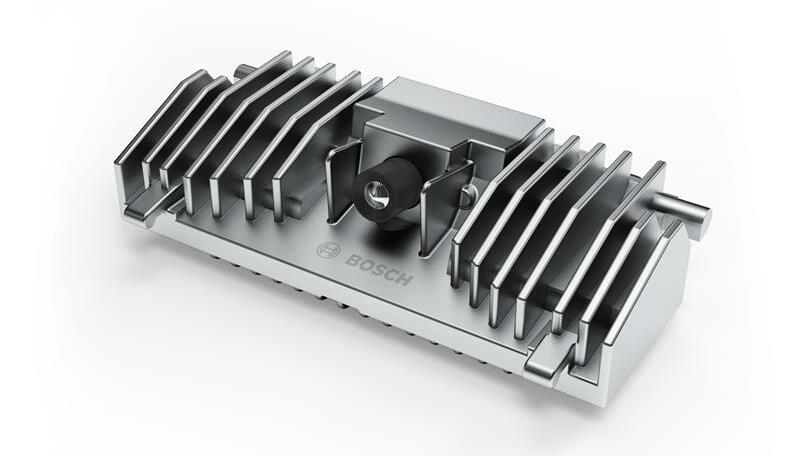
The MPC4 smart camera system was shown and is in series production in China using a Horizon Robotics SoC. A ROW solution is coming soon with a few other SoC options. A camera head unit is also available if the OEM is using a central compute solution. Forward facing cameras are 8MP with 3MP for rear and side view.
Ryan does not see IR cameras coming to the mainstream market and believes they can cover all driving scenarios with Camera + Radar fusion without the cost creep of adding another sensor.
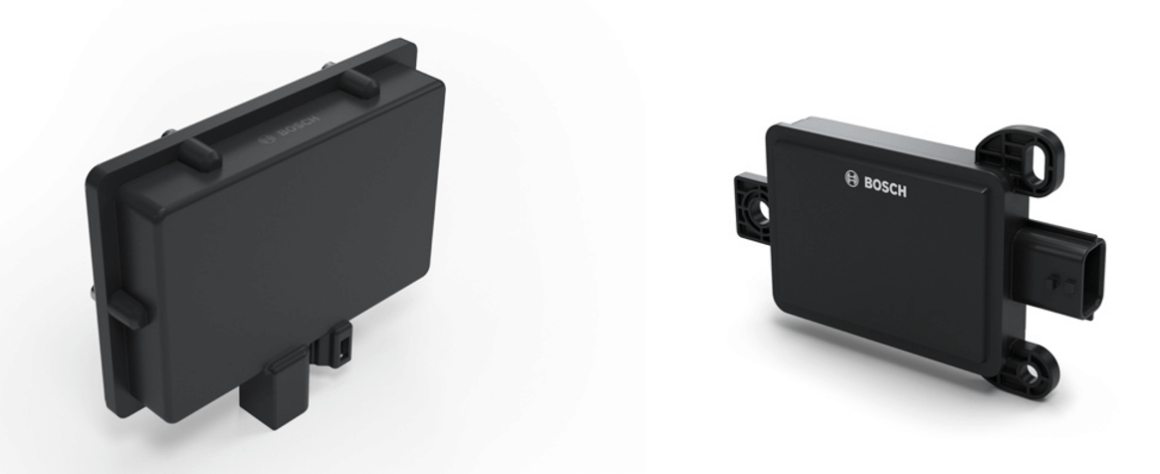
The recently introduced Gen 7 radar uses Bosch’s own SoC and waveguide antenna and is available in both 4×4 and 8×8 configurations. The 4×4 is targeted at the mass market while the 8×8 offers better distance and separation for long range applications, including robotrucking. Raw spectrum data can also be fed out of the radar unit (typically over 1Gb Ethernet) and used by Ai models to produce an image close to that of a camera based CNN.
Ryan stated that for next generation AEB (FMVSS 127) a camera only solution maybe possible, but the most robust solutions will fuse Camera + Radar data together which will reduce false positives and work better in the lowest lux situations. The fused data can be further enhanced with AI software.
Bosch has partnered with WeRide in China and offers a NOA solution for that market which has been #1 rated in a couple of independent surveys. Outside of China, Bosch is part of the CARIAD Automated Driving Alliance and has already secured customers outside of VW. We might expect to see those solutions on the road in 2027.
Bosch continues to monitor other sensor technologies, such as gated cameras, but still sees the camera+radar solutions as giving most users the best cost/performance/safety tradeoffs.
As customers move towards central compute systems, Bosch has partnered with Qualcomm and Nvidia as well as some China SoC vendors to make sure its sensors and software are well integrated into those platforms. The larger OEMs typically dictate what SoC they want to use and Bosch has made its software as portable as possible.
AI is extensively used in the development tool chain as well these days. AI tools are used to collect road data, auto label the data and generating simulation scenarios for testing the stack.
One of the challenges that all OEMs and Tier1’s are facing in 2026 is geo-political issues. Supply chain resilience is key when you have global customers and partners, and this is something that Bosch has spent a lot of time working on.


