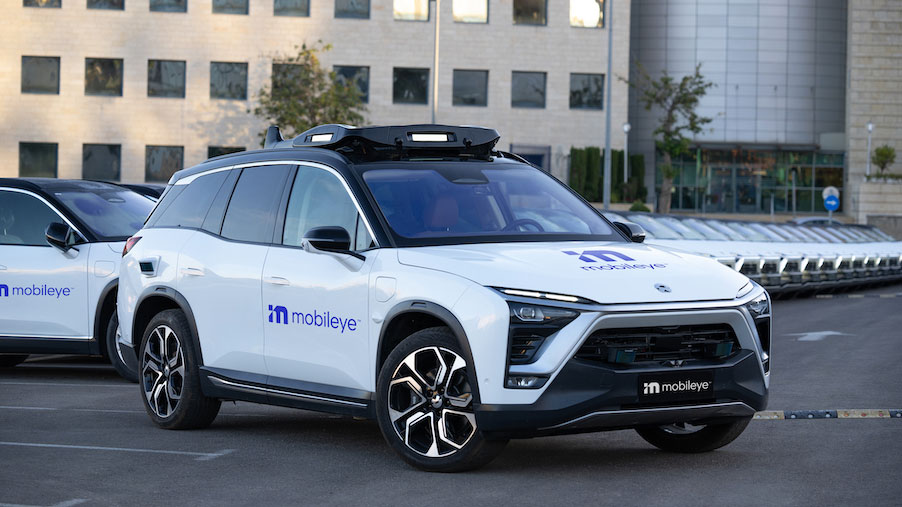
Mobileye reported $506M revenue for Q2 ’25, a 15% increase over the same period in 2024. VW demonstrated Mobileye’s advanced autonomous driving product in June and is on track for driverless deployments in 2026. Mobileye’s in-house developed imaging radar is a key differentiator versus competitive solutions. More than 200M vehicles have now been built using Mobileye’s EyeQ ADAS technology, with 9.7M systems shipped in Q2 at an average price of close to $50. China represented around 750Ku of that volume.
The next generation Supervision (hands-off L2++) is expected to ship 40,000 units for the year (primarily with Zeekr outside of China and Polestar 4). Mobileye sees consumer L3 (eyes off) adoption (and hence OEM availability) of its Drive/Chauffeur systems by 2027-2028 with Audi being a lead partner.
For robotaxi, Mobileye’s business model currently combines an upfront cost and a contribution per mile component. The Mobileye solution uses just 20% of the power of a current Waymo platform which can be a significant impact to driving range. Mobileye currently uses cameras, imaging radar and lidars (from Innoviz) but is looking to reduce or eliminate the lidars by the end of the decade to further cost reduce. VW and HOLON are the lead customers for the robotaxi platform with Uber and others as deployment partners.


