Lidar Lasers can fry Smartphone Camera Sensor
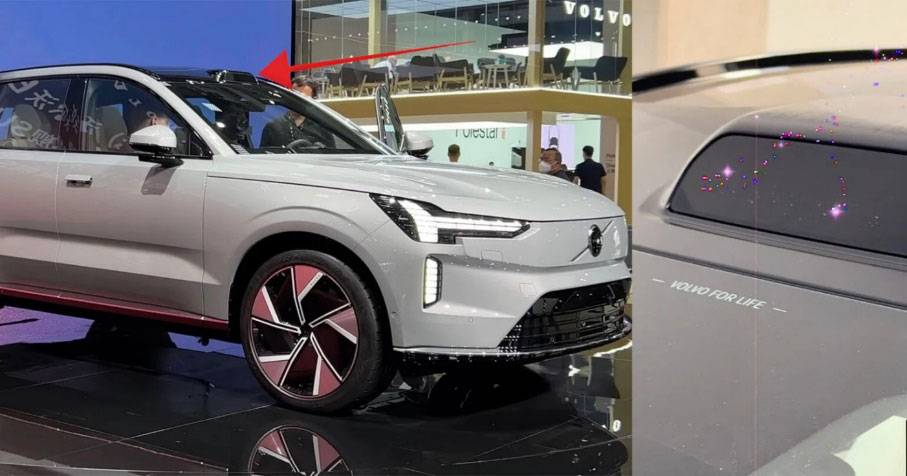
Recently, a Volvo showroom’s visitor shared the video on the r/Volvo subreddit showing permanent damage to his iPhone 16 Pro Max after filming the lidar sensor on a Volvo EX90.
As this visitor filmed the car, colourful specks started appearing on the screen. These artifacts indicate physical damage to the phone’s telephoto lens sensor.
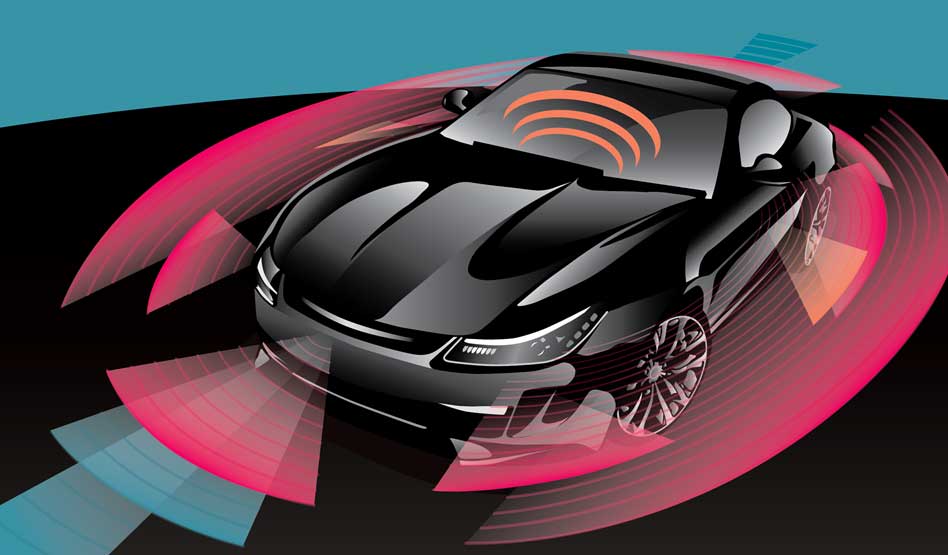
The Volvo EX90 is equipped with a roof-mounted lidar sensor that emits high-powered infrared laser beams to map the vehicle’s surroundings. These beams are invisible to the human eye but can be highly disruptive — or even destructive — to image sensors in cameras.
Volvo has acknowledged the risk. A warning on its website advises: “Do not point a camera directly at the lidar. The lidar, being a laser-based system, uses infrared light waves that may cause damage to certain camera devices. This can include smartphones or phones equipped with a camera.”
Volvo added that, “Using filters or protective covers on the camera lens can help reduce the impact of lidar exposure. Some cameras are designed with built-in protections against high-intensity light sources.”
It must be noted that the risk isn’t exclusive to Volvo’s system. “It should be said that the risk here is inherent to lidar technology and has nothing to do with Volvo’s specific implementation on the EX90,” reports the car-focused news website.
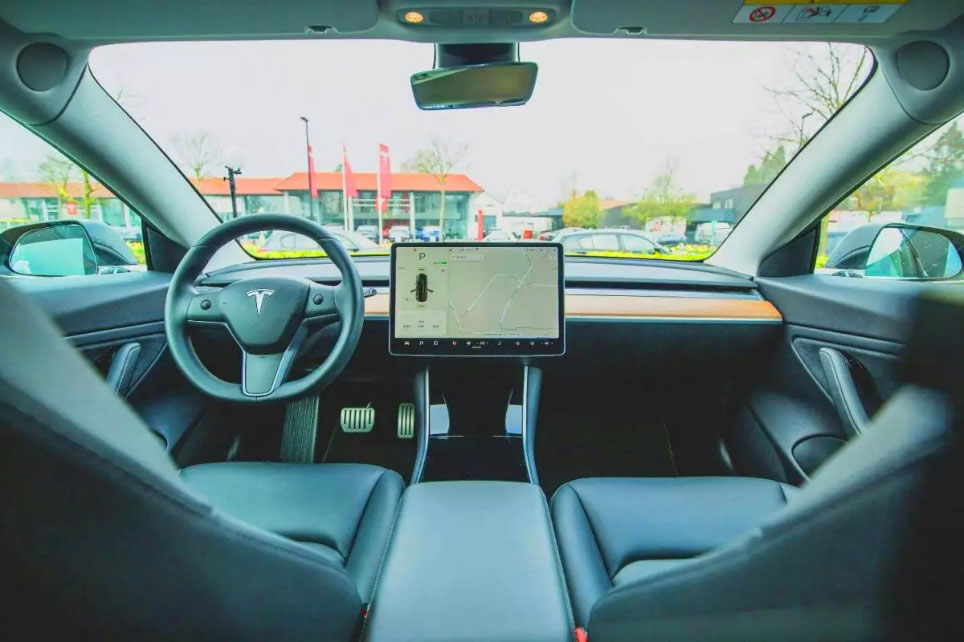
The lidar system is used for autonomous features, and there is ongoing debate in the automotive industry over which system is best for self-driving purposes: lidar or cameras. Tesla relies solely on cameras, and Elon Musk has criticized lidar as “a crutch.”
While lidar systems used in vehicles are eye-safe due to the use of longer wavelength infrared light — typically around 1550nm — camera sensors remain vulnerable. That wavelength allows for higher power output, which extends the range but increases the potential to damage sensitive imaging hardware.
Online commenters point out that damage appears to occur primarily when the phone switches to a telephoto lens, which uses a different sensor more susceptible to laser interference. In this typical case, the phone’s wide-angle camera showed no signs of harm.
DVN comments
Recent studies on 1550nm laser effects on ADAS cameras have provided valuable insights into damage mechanisms. This data can guide camera and windscreen design, enhancing autonomous driving technology by adding a low-transmittance infrared filter in the 1550 nm band before CIS to block infrared light.
Hesai Leads Development of China’s First National Automotive Lidar Standard

GB/T 45500-2025, titled “Performance Requirements and Test Methods for Automotive Lidar,” is a newly established national standard in China that has officially come into effect. Hesai Group, a global leader in lidar technology for automotive mobility and robotic applications, served as the lead drafting organization. This initiative involved collaboration with over 50 leading lidar manufacturers and automotive OEMs over a span of three years.
The new standard establishes unified testing methodologies and performance benchmarks for automotive lidar systems, including ranging accuracy, angular resolution, anti-interference measures, and environmental durability. These guidelines are designed to support the safe and scalable deployment of advanced driver-assistance systems (ADAS) and autonomous vehicles.
Advancing Global Standardization
Hesai leads in international lidar standardization. In September 2024, ANSI adopted ANSI/UL 4740, a lidar safety and performance standard initiated by Hesai, developed with Intel, Bosch, and Continental. These standard address functional safety, cybersecurity, and electromechanical integrity.
Hesai is also active in ISO standards, heading the working group for ISO/PWI 13228 on automotive lidar test methods with participation from 13 countries’ experts.
Notably, Hesai is the only lidar company to present peer-reviewed papers at the 2025 International Laser Safety Conference (ILSC), underscoring its leadership in laser safety research.
Commitment to Industry-Wide Impact
The issuance of GB/T 45500-2025 marks the beginning of a new phase characterized by standardized and high-quality advancements within the automotive lidar sector. Hesai remains committed to working in conjunction with international standard-setting organizations to advocate for safer, more reliable, and broadly applicable lidar technologies.
UNECE approves deployment of L2+ Systems, Implementation in European States can start
The United Nations Economic Commission for Europe (ECE or UNECE) is an intergovernmental organization or a specialized body of the United Nations. The UNECE is one of five regional commissions under the jurisdiction of the United Nations Economic and Social Council. It was established in 1947 in order to promote economic cooperation and integration among its member states. The commission is composed of 56 member states, most of which are based in Europe, as well as a few outside Europe. Its transcontinental Eurasian or non-EU member states include Armenia , Azerbaijan , Canada , Cyprus, Georgia , Israel , Kazakhstan , Kyrgyzstan , the Russian Federation , Tajikistan , Turkey , Turkmenistan , the United States of America and Uzbekistan.]
UNECE recently made a major decision regarding the “System-Initiated Manoeuvres” of autonomous vehicles. These manoeuvres, long considered too risky to be authorised in Europe, will finally be able to be implemented on the continent’s motorways from the start of the school year. This follows the UNECE regulation implemented in September 2024 (see extract at the bottom). This breakthrough marks a significant turning point in the evolution of autonomous driving, paving the way for significant technological and legislative changes for the L2+ systems in Europe.
States have the final say
Although the UNECE has endorsed autonomous driving in Europe, this progress will not come without conditions. Each Member State of the European Union retains the right to oppose this decision. They can object and delay the implementation of the autonomous technology for as long as they deem it necessary. This possibility of opposition ensures that each country can consider its own security and infrastructure concerns. The development of autonomous driving represents a major opportunity for car manufacturers, especially for Tesla, which is at the forefront of this technology. However, some point out that the use of cameras, as Tesla does, could pose security problems compared to Lidar sensors, which are said to be more reliable.
From September 26, all Tesla users in Europe who have subscribed to the FSD option will be able to experience autonomous driving on the highway. However, they will still need to supervise the actions of the on-board computer and remain vigilant, as they remain responsible in the event of a failure. This raises important questions about accountability and trust in autonomous systems, a debate that will likely continue to evolve over time.
As Europe prepares to welcome increasingly autonomous cars on its roads, many questions remain. How will governments manage this technological transition? Are drivers ready to embrace these innovations? These questions underscore the importance of ongoing dialogue between regulators, manufacturers and the public to ensure that autonomous driving is not only possible, but also accepted and safe for all.
Announcement of DCAS regulation adopted by UNECE
8 January 2025
A new United Nations Regulation on Driver Control Assistance Systems (DCAS) adopted by the United Nations Economic Commission for Europe (UNECE) World Forum for the Harmonization of Vehicle Regulations (WP.29) in March 2024, entered into force at the end of September 2024. The regulation ensures improved safety and performance for driver assistance systems.
The Regulation describes DCAS as systems that assist the driver in controlling the longitudinal and lateral motion of the vehicle on a sustained basis while not taking over the entire driving task. DCAS are categorised as Automated Driving Systems corresponding to SAE Level 2. This means that while using such systems, the driver retains responsibility for the control of the vehicle and must, therefore, permanently monitor the surroundings as well as the vehicle/system’s performance to be able to intervene if needed.
The Regulation specifies DCAS’ safety and performance requirements. Effective warning strategies are mandated if a lack of driver engagement is detected to ensure that drivers remain available and engaged.
The regulation also requires vehicle manufacturers to proactively communicate to users via all available means, including online, in advertising, and at dealerships when purchasing a vehicle, about the limitations of DCAS and drivers’ responsibility when using the systems, in order to address drivers’ potential overreliance on some assistance systems
The adoption of the Regulation enhances safety, unlocks innovation to develop next-generation assistance technologies, and helps to harmonise standards that support European manufacturers in reaching global markets efficiently.


