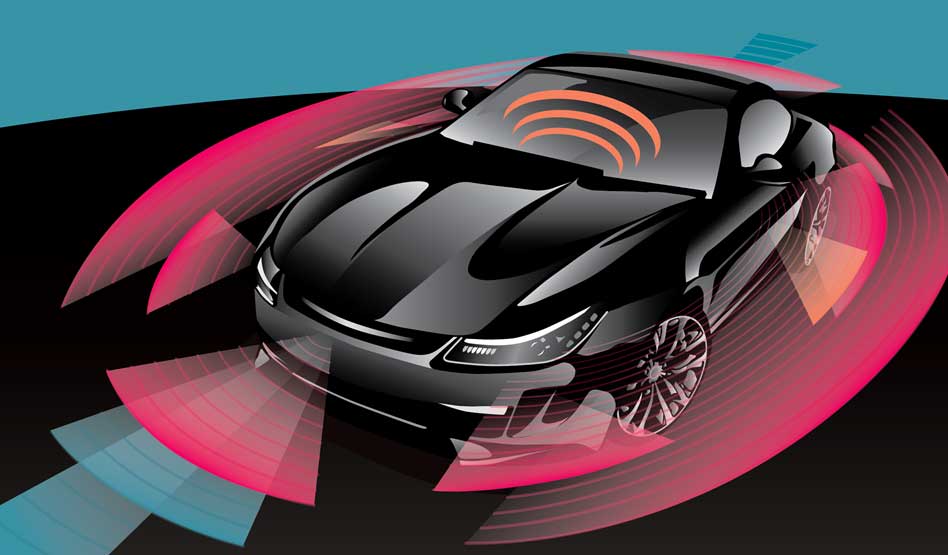
VW Group, Valeo, Mobileye cooperate on MQB platform
Volkswagen Group is working with Valeo and Mobileye to upgrade their advanced driver assistance systems up to L2+ (enhanced partially automated driving) in their upcoming vehicle portfolio based on the MQB platform.
This cooperation will improve safety and driving comfort in high-volume vehicles, addressing both customer expectations and regulatory requirements.
The new system features a 360-degree ring of multiple cameras and radars, along with software-defined capabilities, enabling hands-free driving on approved roads, smart parking, and improved occupant and pedestrian safety.
Valeo provides high-performance ECUs, sensors, and parking solutions, while Mobileye supplies their Surround ADAS™ platform, including the EyeQ 6 High processor and mapping technologies. For the first time, these elements are integrated into a single system, replacing multiple ECUs with a centralized unit. This improves efficiency, system performance, and allows for over-the-air updates.
Valeo Brain Division CEO Marc Vrecko says his company is “excited to embark on a new journey and to offer to Volkswagen, together with Mobileye, this complete solution of affordable, state-of-the-art, advanced driving features”.
And Amnon Shashua, President and CEO of Mobileye, says, “By improving efficiency and costs while upgrading capabilities for safety and comfort in driver assist, this system points the way to a new class of driving technology”.
Magna, Nvidia Partner for Automotive Tech
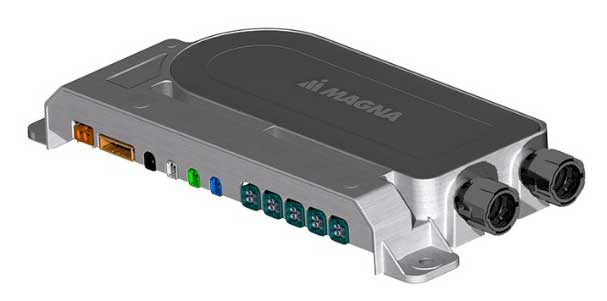
Magna International is partnering with Nvidia to integrate the Nvidia Drive AGX platform into Magna’s advanced technology offerings. The next-generation Nvidia Drive AGX Thor SoC, which runs the safety-certified DriveOS operating system and is built on the Blackwell GPU architecture, consolidates increased functionality to improve efficiency, speed, and scalability. This will help Magna enable cutting-edge functionality and varying levels of autonomous driving and interior cabin applications.
Magna will develop and test the latest advancements in L2+ through L4 active safety solutions on Drive Thor, which helps position Magna as a leader in automotive electronics and AD solutions. By using this SoC’s accelerated computing performance and scalability, these solutions aim to enhance vehicle safety, and comfort.
Steven Jenkins, VPof Technology Strategy at Magna Electronics, says, “Our collaboration allows us to develop market applications for AI-powered solutions that could redefine the driving experience and address the evolving demands of the automotive industry”.
Magna’s expertise in developing, integrating and launching advanced features such as adaptive cruise control, driver and occupant monitoring, highway and urban navigate-on-autopilot, and interior cabin companion functionalities positions the company well for this pilot program. This initiative focuses on solving the complexity of computing availability with performance for integrating ADAS, AD and interior cabin features, providing scalable, flexible and customizable system solutions that meet specific market needs and regulatory requirements.
“As the automotive industry transitions to safer, more intelligent vehicles with autonomous driving capabilities, our collaboration with Magna is the latest in our endeavours to bring our safety-certified in-vehicle accelerated compute and AI to the transportation industry,” said Ali Kani, Vice President of Automotive at Nvidia. “By combining core technologies and Magna’s integration expertise, we aim to shape the future of mobility.”
Nvidia Drive AGX Thor delivers up to 1,000 trillion operations per second of computing power, featuring 8-bit floating point support optimized for transformer models, large language models and generative AI workloads.
Magna plans to unveil a working demonstration platform expected in Q4 2025. As part of this, Magna will tap Nvidia Drive-OS for development, integration, validation and production workflows.


